

SpaceX launches secret Space Force mission after first Starship upper-stage catch
SpaceX will launch a classified U.S. Space Force payload on November 19, four days after it caught the Starship upper stage with mechanical arms for the first time. While the Falcon 9 booster on this mission is flying its eleventh flight, the recent Starship test showed both progress—successfully recovering the upper stage—and setbacks, as the Super Heavy booster exploded in the Gulf of Mexico.

Editor, Lazyfounder
30 SEC SUMMARY
- SpaceX will fly a secret U.S. Space Force payload, USSF-317, on November 19 using a Falcon 9 rocket that has already flown ten times.
- Five days earlier, SpaceX made history by catching Starship’s upper stage with mechanical arms during its 15th test flight.
- The Falcon 9 booster will attempt its eleventh landing on a droneship in the Pacific after delivering the classified cargo.
- SpaceX’s Super Heavy booster aborted its return and exploded in the Gulf of Mexico during the same test flight.
- Elon Musk wants SpaceX to launch 10,000 Starships a year by 2030, expanding launches to Florida and Louisiana.
TABLE OF CONTENTS
- Secret Space Force payload set for launch after Starship milestone
- Eleventh Falcon 9 flight contrasts with Starship’s partial success
- Starship expansion moves to Florida and Louisiana
- Musk sets 2030 target of 10,000 Starship launches a year
- Starship’s first upper-stage catch masks persistent booster challenges
- What this means
- Key takeaways
- Sources
Secret Space Force payload set for launch after Starship milestone
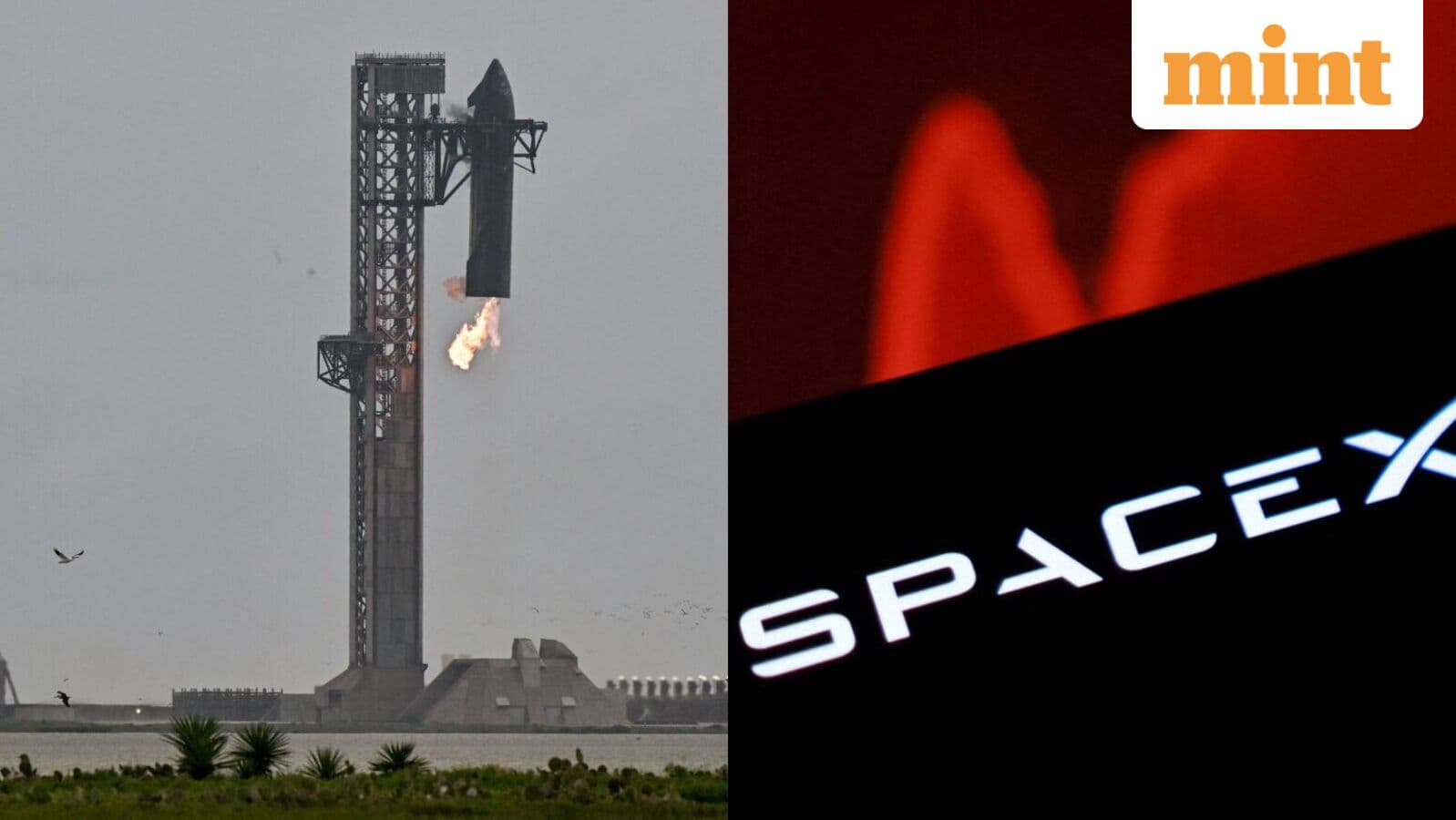
SpaceX will launch a classified payload for the U.S. Space Force on November 19, four days after it caught Starship’s upper stage for the first time. The USSF-317 mission lifts off from Vandenberg Space Force Base in California aboard a Falcon 9 rocket that has already flown ten times. The successful tower catch during Starship’s 15th test flight on November 14 marked the first recovery of an orbital upper stage using mechanical arms.
Eleventh Falcon 9 flight contrasts with Starship’s partial success
The Falcon 9 booster assigned to USSF-317, tail number B1100, is on its eleventh flight. It will carry the classified Low Earth Orbit payload, then attempt a landing on the droneship Of Course I Still Love You in the Pacific. Meanwhile, Starship’s latest test flight delivered mixed results. SpaceX caught the upper stage with mechanical arms—the first time an orbital rocket’s upper stage has been recovered this way—but the Super Heavy booster never made it back.
Low fuel mass forced an automated abort during the booster’s boostback burn, diverting it to a water landing in the Gulf of Mexico. After a successful landing burn, the booster exploded when the flight termination system triggered.
Starship expansion moves to Florida and Louisiana
SpaceX is already expanding Starship operations beyond Texas. The next test, Flight 16, will lift off from NASA’s Kennedy Space Center in Florida, where the company plans its first attempt to catch both stages. Within months, Starship launches could shift to Florida, with Louisiana to follow within a few years.
Kiko Dontchev, SpaceX’s vice president of launch, said the company must scale infrastructure to match its ambitions. Smaller Falcon rockets will continue to fly crewed missions to the International Space Station and deploy Starlink satellites, but SpaceX intends to replace them with Starships.
Musk sets 2030 target of 10,000 Starship launches a year
Elon Musk wants SpaceX to launch 10,000 Starships a year by 2030. Hitting that target means reusing both stages within days, not months. So far, SpaceX has reflown only two boosters, each requiring months of refurbishment. Gwynne Shotwell, SpaceX’s president and COO, expects the first reflight of a Starship upper stage by early 2027.
Starship’s first upper-stage catch masks persistent booster challenges
Flight 15 proved the tower-catch system works by recovering the Starship upper stage. The Super Heavy booster, however, exploded in the Gulf after an early boostback abort. SpaceX has caught boosters before, but Flight 15 failed because the new Raptor 3 engines ran low on fuel. The detonation served as a reminder that rapid reusability still faces significant risks.
What this means
Lazyfounder analysis — our interpretation, not reported fact.
Catching the Starship upper stage proves the tower system works, but losing the booster shows SpaceX must still solve rapid turnaround before it can hit Musk’s 2030 launch target.
Key takeaways
- The Falcon 9 booster flying USSF-317 is now on its eleventh mission, underscoring SpaceX’s lead in rocket reuse.
- Starship’s first upper-stage catch marks a technical win, while the lost Super Heavy booster reveals lingering hurdles.
- SpaceX plans to bring Starship launches to Florida within months and Louisiana within years to scale operations.
- Musk’s goal of 10,000 Starship flights a year depends on cutting refurbishment time from months to days.
Related on Lazyfounder
Sources
- Mint (Technology) · 2026-11-16
SpaceX launch: After Starship’s spectacular midair catch, Musk’s firm to launch Falcon 9 on Thursday - Gizmodo · 2026-11-17
SpaceX Just Caught a Falling Starship. Now What?
This story is an original summary drafted with AI by Lazyfounder from the reporting listed above and checked by automated validation. Facts are attributed to their original publishers; sections marked as analysis are Lazyfounder's. Where a source is in another language, facts were machine-translated and quotations are reported, not reproduced. Read the original coverage via the links, and see our AI policy and corrections policy.

About the author
Editor, Lazyfounder
Tarun Mottlia edits LazyFounders, covering Indian startups, funding rounds, AI and product launches. Every story on the site is AI-assisted and checked against its cited sources before publication.
More stories by Tarun MottliaGet the LazyFounder Brief
Startup, funding and AI news in a five-minute read. Join the early-access list.
