
SpaceX Starship Reaches Orbit for First Time in Milestone Flight
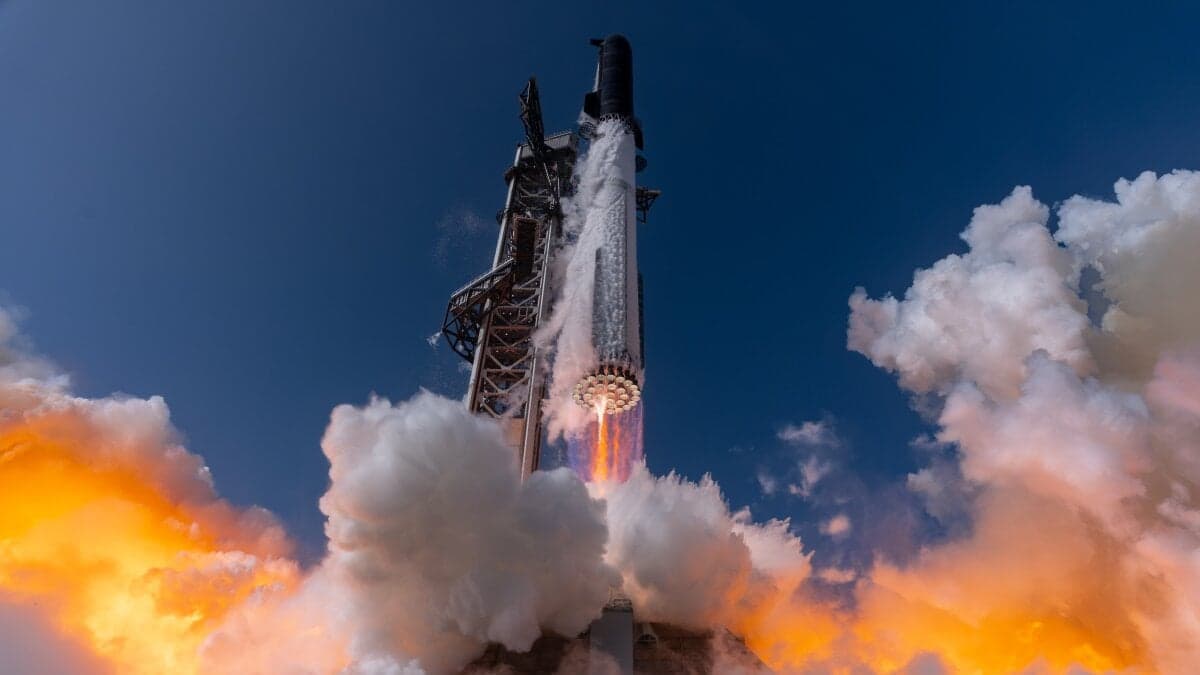
SpaceX achieved a major milestone on September 28, 2026, as its Starship rocket reached low-Earth orbit for the first time during its 14th test flight. The mission, though shortened due to an early engine shutdown, successfully deployed 26 Starlink satellites and demonstrated progress in booster reusability.

Editor, Lazyfounder
30 SEC SUMMARY
- SpaceX’s Starship successfully reached low-Earth orbit for the first time during its 14th test flight on September 28, 2026.
- The mission deployed 26 Starlink V3 satellites, adding 26 terabits per second of internet capacity.
- One of Starship’s six engines shut down early, but the mission proceeded, completing three hours of flight instead of the planned 10.
- The Super Heavy booster achieved a soft splashdown in the Gulf of Mexico, testing reusability.
- The test was deemed 'wildly successful' by SpaceX hosts despite the early termination.
TABLE OF CONTENTS
KEY HIGHLIGHTS
- Starship’s 14th test flight on September 28, 2026, marked its first successful orbital insertion.
- The mission deployed 26 Starlink V3 satellites, adding 26 terabits per second of internet capacity to SpaceX’s network.
- One of the six Raptor engines on Starship’s upper stage shut down early, but the mission proceeded toward orbit.
- The Super Heavy booster achieved a soft splashdown in the Gulf of Mexico, a key test for reusability.
- SpaceX hosts described the test as 'wildly successful' despite ending after three hours instead of the planned 10.
A Milestone for Starship
SpaceX’s Starship rocket reached low-Earth orbit for the first time during its 14th test flight on September 28, 2026. The mission, launched from Starbase, Texas, marked a significant milestone in SpaceX’s efforts to achieve orbital flight and demonstrate the viability of its fully reusable spacecraft. According to reports, the launch window opened at 8:15 a.m. ET, with live coverage beginning 30 minutes prior on SpaceX’s website and X.
The test flight aimed to complete six orbits around Earth over a 10-hour period, with Starship circling the planet at an altitude of 170 miles—below the International Space Station. While the original plan included a splashdown in the Pacific Ocean west of Chile, the mission was adjusted mid-flight due to an early engine shutdown.
Engine Challenges and Adaptations
Shortly after liftoff, one of the six Raptor engines on Starship’s upper stage shut down unexpectedly. SpaceX flight controllers initially considered aborting the orbital insertion but ultimately decided to proceed. A single engine fired briefly to push the spacecraft into orbit, compensating for the loss of the malfunctioning engine, which was part of a set designed for the thin air of space.
The mission was cut short after approximately three hours, instead of the planned nine-hour flight. SpaceX took the first available deorbit opportunity, bringing Starship back to Earth early. Despite the adjustments, the test was described by hosts Dan Huot and Jake Berkowitz as "wildly successful."
Satellite Deployment and Booster Recovery
Starship successfully deployed 26 Starlink V3 internet satellites into orbit, adding 26 terabits per second of capacity to SpaceX’s satellite network. The satellites, equipped with cameras on three of their dishes, provided imagery of the spacecraft and its heatshield during the test. All 26 satellites reportedly made contact with the Starlink team post-deployment.
The Super Heavy booster, which separated from the upper stage about two minutes after launch, achieved a soft splashdown in the Gulf of Mexico. This marked another step toward demonstrating the reusability of SpaceX’s most powerful rocket, though the company has not yet attempted to retrieve the booster using its "chopsticks" recovery system.
Background: Starship’s Role in Space Exploration
Starship is central to SpaceX’s long-term vision of enabling commercial spaceflight, deep-space exploration, and satellite deployment at scale. The rocket’s fully reusable design is intended to drastically reduce the cost of accessing orbit, a critical factor for missions to the Moon, Mars, and beyond. NASA has also selected Starship as a key component of its Artemis program, relying on the spacecraft to land astronauts on the lunar surface.
The 14th test flight followed a series of suborbital tests, each building toward the goal of achieving orbital insertion and demonstrating the reliability of Starship’s hardware and software systems. Earlier tests focused on refining the spacecraft’s launch, staging, and landing capabilities, with varying degrees of success.
What this means
Lazyfounder analysis — our interpretation, not reported fact.
This milestone is a critical step for SpaceX’s ambitions in commercial spaceflight, satellite deployment, and deep-space exploration. Achieving orbital flight—even with compromises—demonstrates progress toward full reusability and scalability, which are essential for lowering costs and enabling missions to the Moon and Mars. For founders and operators, this highlights the importance of iterative testing and rapid adaptation in high-stakes engineering challenges. The early termination also underscores the risks inherent in pushing technological boundaries, where partial success can still drive meaningful advancement.
Key takeaways
- Starship’s 14th test flight marked its first successful orbital insertion, a key milestone for SpaceX’s long-term goals.
- The mission deployed 26 Starlink V3 satellites, boosting the network’s capacity by 26 terabits per second.
- An early engine shutdown forced a shortened flight, but SpaceX adapted by taking the first available deorbit opportunity.
- The Super Heavy booster’s soft splashdown in the Gulf of Mexico demonstrated progress in reusability.
- SpaceX’s ability to adjust plans in real time reflects its operational resilience in high-risk environments.
FAQ
Why was Starship’s 14th test flight significant?
This flight marked the first time Starship achieved orbital insertion, a critical step toward demonstrating its capability for commercial spaceflight, satellite deployment, and deep-space missions like those planned for NASA’s Artemis program.
What went wrong during the flight?
One of the six Raptor engines on Starship’s upper stage shut down shortly after liftoff. While the mission proceeded, flight controllers opted to end the test after three hours instead of the planned 10.
What did the mission accomplish despite the early termination?
Starship deployed 26 Starlink V3 satellites, adding significant capacity to SpaceX’s internet network. The Super Heavy booster also achieved a soft splashdown in the Gulf of Mexico, testing reusability.
Related on Lazyfounder
Sources
- Mashable · 2026-09-27
SpaceX's Starship is about to attempt a 10-hour spaceflight: Watch live. - Gizmodo · 2026-09-28
Watch Live as SpaceX’s Starship Attempts to Reach Orbit for the First Time - Mashable · 2026-09-28
SpaceX Starship test: Spaceship reaches orbit before returning early - Engadget · 2026-09-28
SpaceX's Latest Starship Mission Reached Low-Earth Orbit
This story is an original summary drafted with AI by Lazyfounder from the reporting listed above and checked by automated validation. Facts are attributed to their original publishers; sections marked as analysis are Lazyfounder's. Where a source is in another language, facts were machine-translated and quotations are reported, not reproduced. Read the original coverage via the links, and see our AI policy and corrections policy.

About the author
Editor, Lazyfounder
Tarun Mottlia edits LazyFounders, covering Indian startups, funding rounds, AI and product launches. Every story on the site is AI-assisted and checked against its cited sources before publication.
More stories by Tarun MottliaGet the LazyFounder Brief
Startup, funding and AI news in a five-minute read. Join the early-access list.
