
Tesla unveils Roadster 2 with flying capabilities and 1-second 0-60 acceleration
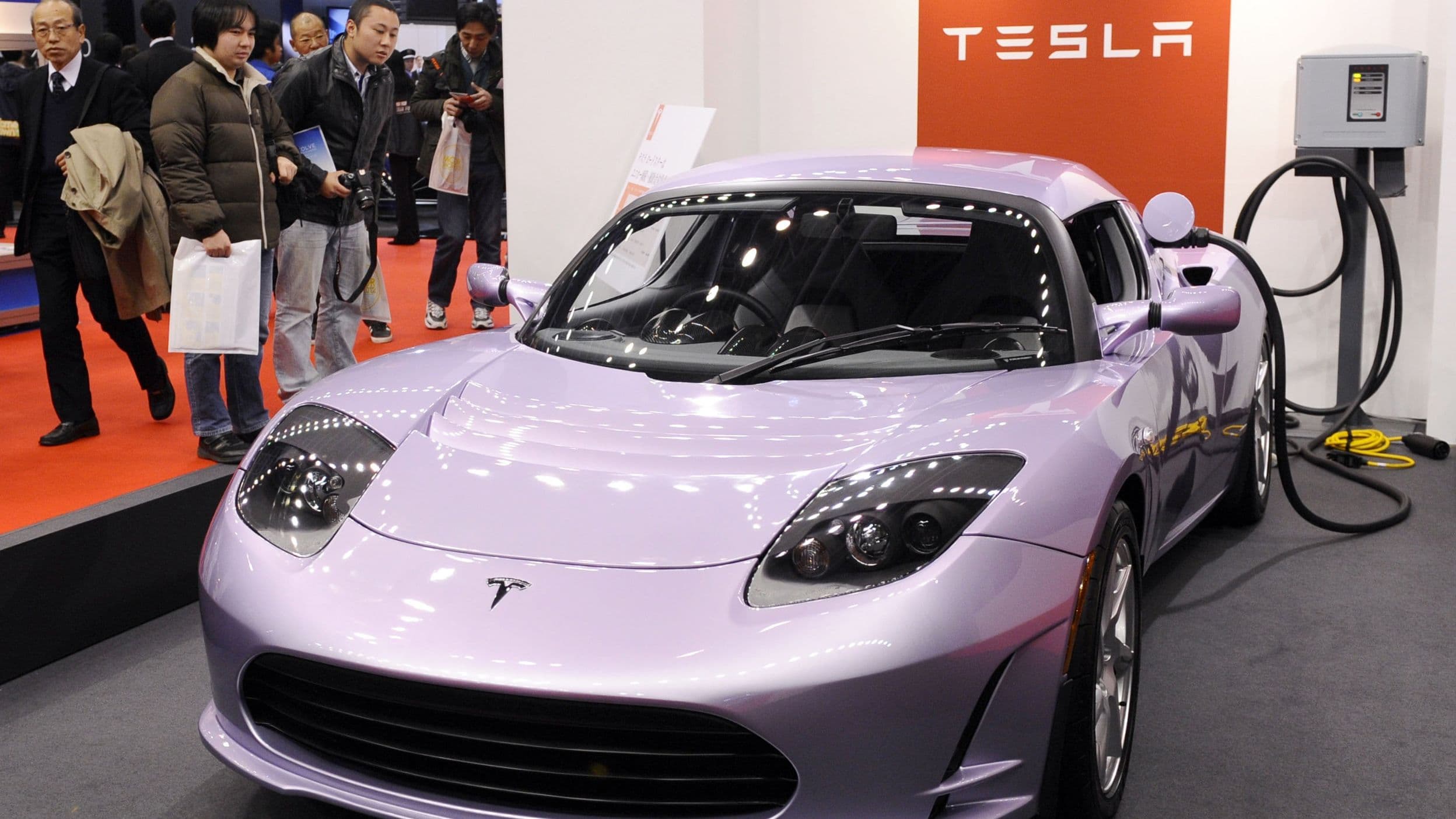
Tesla has revealed its long-awaited Roadster 2, a luxury electric hypercar with flying capabilities and record-breaking acceleration. The event, held at SpaceX’s Texas facility, showcased technology borrowed from aerospace, including cold-gas thrusters and a suction system for extreme maneuvers. The vehicle, first announced in 2017, is now scheduled for production in 2028.

Editor, Lazyfounder
30 SEC SUMMARY
- Tesla has unveiled the long-delayed Roadster 2, a luxury electric hypercar with promised flight capabilities and record-breaking acceleration.
- The vehicle, first announced in 2017, is now set for production in 2028, with deliveries beginning in 2025.
- Tesla positioned the Roadster 2 as a niche product for luxury buyers, not mainstream EV consumers, amid a shifting EV market.
- The event featured advanced technology, including SpaceX-derived thrusters and a suction system for extreme maneuverability.
- Reservations require a $5,000 deposit, with additional costs for premium packages like the "Thrust" and "Rocket" versions.
TABLE OF CONTENTS
KEY HIGHLIGHTS
- Tesla unveiled the Roadster 2 at an event in McGregor, Texas, demonstrating flying capabilities using SpaceX-derived thrusters.
- The vehicle can accelerate from 0 to 60 mph in 1 second, according to Tesla executives.
- Production is scheduled for 2028, with reservations requiring a $5,000 deposit and an additional $45,000 due within 10 days for the base model.
- The "Thrust" package, including suction and acceleration thrusters, costs an additional $245,000, while the "Rocket" version is invite-only.
- The Roadster 2 was first announced in 2017 with a promised $200,000 starting price and a sub-2-second 0-to-60 acceleration time.
- Tesla's event included a stunt where the Roadster drove up a ramp and stuck upside-down using a suction system.
A long-delayed reveal amid a changing EV market
Tesla unveiled the second-generation Roadster at an event in McGregor, Texas, nearly nine years after the original concept was announced in 2017. The company had initially promised deliveries by 2020, but production is now scheduled for 2028, with deliveries expected to begin in 2025.
The delay reflects broader shifts in the EV market. When the Roadster 2 was first announced, Tesla was one of the few companies pushing electric vehicles. Today, consumers in the US have nearly 90 EV models to choose from, according to WIRED. However, political and regulatory changes have slowed EV adoption in the US, while global markets continue to grow.
Flying capabilities and record-breaking performance
The Roadster 2 demonstrated flying capabilities during the event, using four thrusters derived from SpaceX technology. Tesla executives claimed the vehicle can accelerate from 0 to 60 mph in just 1 second, a significant improvement over the sub-2-second time promised in 2017.
The car also features a suction system that allows it to stick to surfaces, enabling a stunt where it drove up a ramp and remained upside-down. This system uses a multi-mode fan and ground sealing technology to generate downforce, as reported by Engadget.
Pricing and reservations for a niche market
Tesla is positioning the Roadster 2 as a luxury hypercar, targeting a niche audience rather than mainstream EV buyers. Reservations require a $5,000 deposit, with an additional $45,000 due within 10 days for the base model. The "Thrust" package, which includes the suction system and acceleration thrusters, costs an additional $245,000 and must also be paid within 10 days.
An invite-only "Rocket" version, featuring the full-flight system, is available for select buyers. The base price remains at $200,000, as originally advertised in 2017, though the $50,000 deposit for early reservations is now worth over $68,000 in 2026 dollars.
Tesla’s shift away from human-driven vehicles
Elon Musk has repeatedly stated that Tesla is no longer focused on manufacturing cars but instead prioritizes robotics and autonomy. According to WIRED, Musk instructed investors to view Tesla as a "robotics and autonomy company," signaling a strategic shift away from human-driven vehicles like the Roadster.
This pivot aligns with Tesla’s broader ambitions, including the development of the Optimus robot, which was seated in the Roadster during the unveiling for demonstration purposes. The event may mark Tesla’s final unveiling of a human-driven vehicle.
Market and political challenges for EVs
The launch of the Roadster 2 comes amid a challenging landscape for EVs in the US. Political shifts have led to the removal of federal incentives for EV purchases, slowing sales growth. According to WIRED, EV sales in the US have stalled, while global markets, particularly in China, continue to expand.
Luxury automakers like Lamborghini, Porsche, and Ferrari have also adjusted their EV strategies, with some delaying or shelving electric models in favor of traditional gas engines. This trend underscores the volatility of the EV market and the need for adaptability in long-term product planning.
What this means
Lazyfounder analysis — our interpretation, not reported fact.
Tesla’s Roadster 2 unveiling is less about reviving the mass-market EV dream and more about reinforcing its identity as a moonshot company. For founders, this launch offers several key lessons:
First, delays and shifting priorities are par for the course in hardware development, especially when integrating cutting-edge technology. Tesla’s nine-year gap between announcement and production is an extreme example, but it highlights the risks of overpromising on timelines or capabilities. Founders must balance ambition with transparency to avoid eroding customer and investor trust.
Second, the Roadster 2’s niche appeal underscores the challenges of competing in the luxury hypercar space. While the vehicle’s flying capabilities and record-breaking acceleration generate buzz, they also limit its addressable market. Startups targeting premium or speculative products must carefully assess whether the hype justifies the investment, particularly in industries where regulatory and economic headwinds can shift demand overnight.
Finally, Tesla’s pivot toward robotics and autonomy reflects a broader trend of companies diversifying beyond their original value propositions. For founders, this is a reminder that business models must evolve alongside technological and market changes. Tesla’s ability to leverage its partnership with SpaceX for the Roadster’s thrusters is a unique advantage, but it also introduces complexity. Startups should weigh the benefits of vertical integration against the risks of overreach, especially when entering highly regulated or capital-intensive industries like aerospace.
Key takeaways
- The Roadster 2 reflects Tesla’s shift toward niche, high-performance vehicles rather than mass-market EV adoption.
- Startups in the automotive space should note the challenges of delayed launches and changing market dynamics when setting expectations for investors and customers.
- Integrating aerospace technology (e.g., SpaceX thrusters) can create buzz but may also introduce complexity and delay timelines.
- Luxury hypercars like the Roadster 2 cater to a small, dedicated audience, offering lessons for founders targeting premium or speculative markets.
- Political and regulatory shifts can significantly impact EV demand, underscoring the importance of adaptable business strategies.
FAQ
Why was the Roadster 2 delayed for so long?
The Roadster 2 was first announced in 2017 with a promised launch in 2020. Delays were caused by Tesla’s shifting priorities toward robotics and autonomy, as well as the technical challenges of integrating advanced aerospace technology, such as SpaceX-derived thrusters. Production is now scheduled for 2028.
What makes the Roadster 2 different from other EVs?
The Roadster 2 is a luxury hypercar with flying capabilities, enabled by four thrusters and a suction system. It is designed for extreme performance, including a claimed 0-to-60 mph acceleration time of 1 second, and targets a niche market of high-net-worth buyers rather than mainstream EV consumers.
How much does the Roadster 2 cost, and how can I reserve one?
The base model starts at $200,000, with reservations requiring a $5,000 deposit. An additional $45,000 is due within 10 days for the base vehicle. The "Thrust" package, which includes the suction system and acceleration thrusters, costs an additional $245,000, while the invite-only "Rocket" version features the full-flight system.
Is Tesla still focused on making cars?
Elon Musk has stated that Tesla is no longer primarily a car manufacturer. The company is now positioning itself as a robotics and autonomy company, with a focus on developing autonomous vehicle technology and robots like Optimus.
Related on Lazyfounder
Sources
- WIRED · 2026-10-14
Tesla’s Roadster 2 Is Late—and Entering a Different EV World - Engadget · 2026-10-15
Tesla Roadster Reveal Live: Updates From The Launch Of The Next-Gen Sportscar - WIRED · 2026-10-16
The Tesla Roadster 2 Is Here—and It Flies - Engadget · 2026-10-16
Tesla's Redesigned Roadster Has A Cold-Gas Thruster Option, But You'll Need $250,000 Just To Reserve It
This story is an original summary drafted with AI by Lazyfounder from the reporting listed above and checked by automated validation. Facts are attributed to their original publishers; sections marked as analysis are Lazyfounder's. Where a source is in another language, facts were machine-translated and quotations are reported, not reproduced. Read the original coverage via the links, and see our AI policy and corrections policy.

About the author
Editor, Lazyfounder
Tarun Mottlia edits LazyFounders, covering Indian startups, funding rounds, AI and product launches. Every story on the site is AI-assisted and checked against its cited sources before publication.
More stories by Tarun MottliaGet the LazyFounder Brief
Startup, funding and AI news in a five-minute read. Join the early-access list.
