
Trump Rebrands AI as "Super Intelligence" as Musk Renames Company to SpaceXSI
President Donald Trump has issued an executive order rebranding "artificial intelligence" as "Super Intelligence," a move that has prompted AI industry leaders to adjust their terminology. Elon Musk announced he will rename one of his companies to SpaceXSI to align with the change. A new federal task force, the "Super Intelligence Force," will oversee AI policy under Trump’s administration.

Editor, Lazyfounder
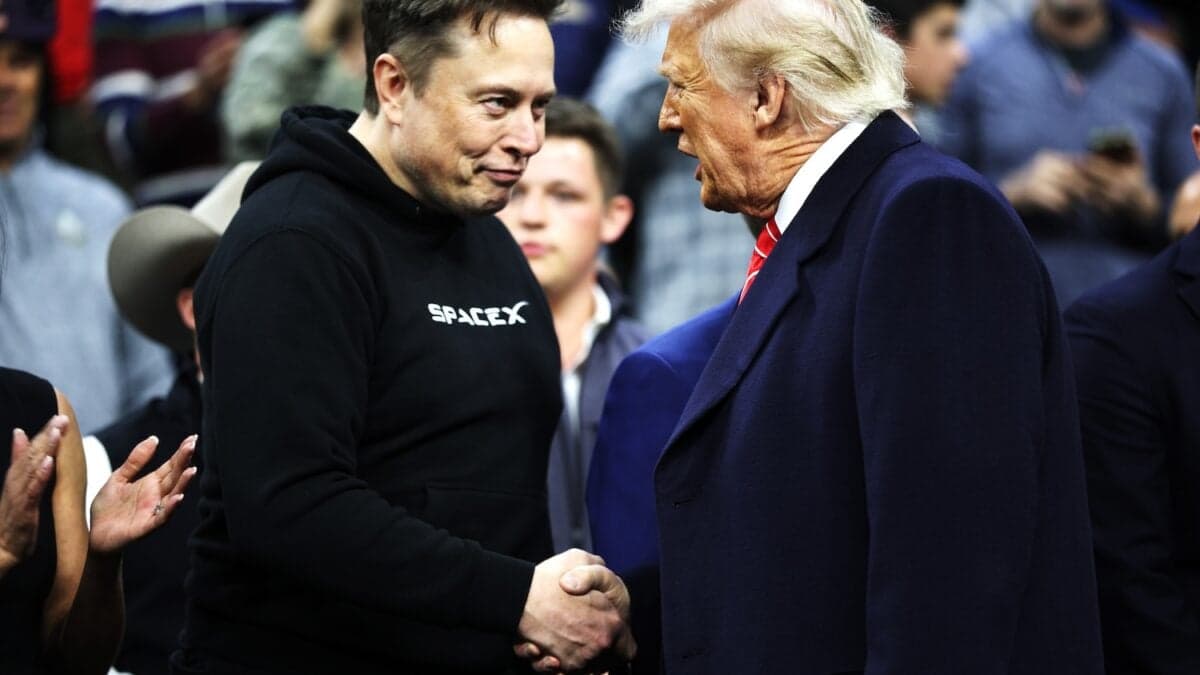
President Donald Trump has issued an executive order rebranding "artificial intelligence" as "Super Intelligence," a move that has prompted AI industry leaders to adjust their terminology. Elon Musk announced he will rename one of his companies to SpaceXSI to align with the change. A new federal task force, the "Super Intelligence Force," will oversee AI policy under Trump’s administration.
30 SEC SUMMARY
- President Donald Trump issued an executive order rebranding "artificial intelligence" as "Super Intelligence."
- Elon Musk announced he will rename one of his companies to SpaceXSI to align with the new terminology.
- A new task force, the "Super Intelligence Force," will oversee AI policy under Trump’s administration.
- AI leaders from Meta, OpenAI, Nvidia, and others attended Trump’s summit, seen by some as a loyalty test.
- The term "superintelligence" has historical roots but is now central to Trump’s AI policy push.
TABLE OF CONTENTS
- Trump’s Executive Order Rebrands AI as "Super Intelligence"
- Elon Musk Aligns with Trump’s Terminology
- AI Industry Response and Historical Context
- Task Force to Oversee AI Policy
- What this means
- Key takeaways
- FAQ
- Sources
KEY HIGHLIGHTS
- President Trump signed an executive order replacing "artificial intelligence" with "Super Intelligence."
- Elon Musk will rename his company SpaceXAI to SpaceXSI to adopt the new terminology.
- Trump created a task force called the "Super Intelligence Force," led by Director of National Intelligence Jay Clayton.
- AI leaders from Anthropic, Meta, OpenAI, Nvidia, and Google attended Trump’s AI summit, seen by some as a compliance gesture.
- The term "superintelligence" has historical roots but is now central to Trump’s AI policy agenda.
Trump’s Executive Order Rebrands AI as "Super Intelligence"
President Donald Trump issued an executive order last month replacing the term "artificial intelligence" with "Super Intelligence." According to Gizmodo, the order claims that Super Intelligence can surpass human intelligence in ways current AI technologies cannot.
Trump announced the creation of a new task force, the "Super Intelligence Force," to oversee AI policy. The task force will be led by Director of National Intelligence Jay Clayton and includes Federal Trade Commission Chair Andrew Ferguson and Undersecretary of Defense for Research and Engineering Emil Michael, BBC News reports.
The order frames Super Intelligence as a transformative force, distinct from traditional AI, and positions it as a priority for federal policy.
Elon Musk Aligns with Trump’s Terminology
Elon Musk announced on X that he will rename one of his companies, formerly known as xAI, to SpaceXSI. The move aligns with Trump’s preferred term, "Super Intelligence," and replaces the company’s previous name, SpaceXAI, adopted earlier this year.
Musk’s public embrace of the term "SI" over "AI" follows his attendance at Trump’s AI summit, where leaders from Anthropic, Meta, OpenAI, Nvidia, and Google were also present. According to Gizmodo, some observers view these actions as a gesture of political loyalty to Trump.
SpaceXSI’s rebranding reflects a broader trend of AI companies adapting their language to match federal terminology, though the practical impact remains unclear.
AI Industry Response and Historical Context
The term "superintelligence" is not new. Gizmodo notes that it originally referred to divine or mysterious universal order, with early recorded use by author R.H. Black. Philosopher Nick Bostrom later popularized the term in his book Superintelligence: Paths, Dangers, Strategies, which explores the intersection of AI and advanced intelligence.
Mark Zuckerberg and Meta have previously used the term to describe aspirational AI development. However, Trump’s executive order marks the first time the term has been formalized in federal policy, according to BBC News.
AI leaders who attended Trump’s summit are reportedly facing scrutiny over whether their participation signals compliance with the administration’s agenda. Critics argue the summit served as a loyalty test for the industry.
Task Force to Oversee AI Policy
Trump’s new task force, the "Super Intelligence Force," will coordinate government engagement with the public on AI-related matters. BBC News reports that the group will be led by Jay Clayton and includes key officials from defense and regulatory agencies.
The task force’s creation follows Trump’s earlier announcement of a non-binding safety pact signed by major AI executives, including Musk and Zuckerberg. The pact, described by Trump as "morally binding," lacks legal enforceability but signals a symbolic commitment to AI governance.
What this means
Lazyfounder analysis — our interpretation, not reported fact.
Trump’s rebranding of AI as "Super Intelligence" is more than a semantic shift—it’s a deliberate attempt to reframe the conversation around AI governance. By formalizing the term in federal policy, the administration is signaling a focus on AI as a transformative, almost existential, force rather than a tool for automation or imitation of human intelligence. This could have implications for how AI is regulated, funded, and perceived in the long term.
For AI founders and operators, the move presents a dilemma. Adopting the new terminology may curry favor with the current administration, but it also risks alienating stakeholders who see the rebrand as politically motivated or divorced from technical reality. Musk’s swift alignment with SpaceXSI suggests that some high-profile leaders are willing to adapt, but others may resist, particularly if the term feels like a loyalty test rather than a meaningful policy change.
The creation of the "Super Intelligence Force" also hints at a more centralized approach to AI oversight, which could either streamline policy or create bureaucratic hurdles for startups. Founders should watch how this task force defines its priorities—whether it focuses on innovation, safety, or a mix of both—and adjust their strategies accordingly.
Key takeaways
- Trump’s executive order replaces "artificial intelligence" with "Super Intelligence" in federal terminology.
- Elon Musk is renaming SpaceXAI to SpaceXSI to reflect the new term, signaling alignment with Trump’s policy.
- A new task force, led by key government officials, will coordinate AI policy under the "Super Intelligence" framework.
- AI industry leaders’ attendance at Trump’s summit is viewed by critics as a political loyalty test.
- The rebranding effort has sparked debate about its implications for AI governance and industry compliance.
FAQ
What is the "Super Intelligence Force"?
The "Super Intelligence Force" is a new task force created by President Trump to oversee AI policy. It will be led by Director of National Intelligence Jay Clayton and includes officials from the Federal Trade Commission and the Department of Defense. The task force will coordinate government engagement with the public on AI-related matters.
Why is Elon Musk renaming SpaceXAI to SpaceXSI?
Elon Musk is renaming SpaceXAI to SpaceXSI to align with Trump’s executive order replacing "artificial intelligence" with "Super Intelligence." The move reflects Musk’s public embrace of the new terminology and his attendance at Trump’s AI summit.
What does the term "superintelligence" mean in this context?
In Trump’s executive order, "Super Intelligence" refers to a form of intelligence that can surpass human capabilities in ways current AI cannot. The term has historical roots but is now being formalized in federal policy as part of a broader effort to rebrand AI governance.
Are AI companies required to use the term "Super Intelligence"?
There is no legal requirement for AI companies to adopt the term "Super Intelligence." However, Trump’s executive order formalizes its use in federal policy, and some companies, like SpaceXSI, are voluntarily aligning with the new terminology.
How might this rebranding affect AI startups?
The rebranding could influence how AI startups frame their work, particularly if federal funding or regulatory approvals become tied to the new terminology. It may also create pressure to align with the administration’s agenda, though the practical impact on day-to-day operations remains uncertain.
Related on Lazyfounder
Sources
- Gizmodo · 2026-10-04
Elon Musk Fully Surrenders to Trump on ‘Super Intelligence’ - BBC News (Tech & Business) · 2026-10-05
Trump announces 'Super Intelligence Force' to oversee AI policy
This story is an original summary drafted with AI by Lazyfounder from the reporting listed above and checked by automated validation. Facts are attributed to their original publishers; sections marked as analysis are Lazyfounder's. Where a source is in another language, facts were machine-translated and quotations are reported, not reproduced. Read the original coverage via the links, and see our AI policy and corrections policy.

About the author
Editor, Lazyfounder
Tarun Mottlia edits LazyFounders, covering Indian startups, funding rounds, AI and product launches. Every story on the site is AI-assisted and checked against its cited sources before publication.
More stories by Tarun MottliaGet the LazyFounder Brief
Startup, funding and AI news in a five-minute read. Join the early-access list.
