
Tesla’s Cybercab battery pack includes space for future LFP upgrades
Tesla has designed its Cybercab robotaxi with a battery pack that includes spare space to accommodate cheaper lithium iron phosphate (LFP) cells in the future, even though it currently uses 4680 cells. The move highlights Tesla’s focus on cost efficiency and durability as it prepares to deploy its autonomous fleet.

Editor, Lazyfounder
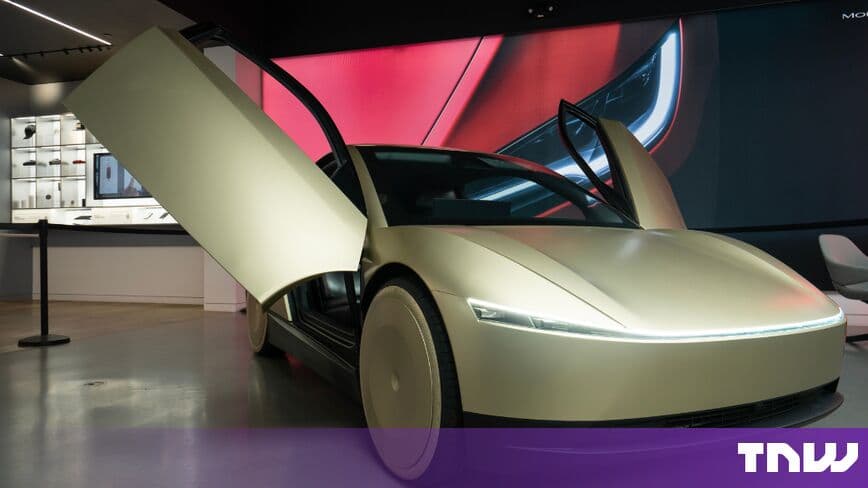
TABLE OF CONTENTS
Battery design leaves room for cheaper cells
Tesla’s Cybercab robotaxi is equipped with a battery pack designed to accommodate future upgrades to lithium iron phosphate (LFP) cells, despite currently using the company’s 4680 cells with nickel-based chemistry. According to reports, the pack includes spare space next to and beneath its modules, allowing Tesla to switch to LFP cells without redesigning the vehicle.
Robert Sumpf, Tesla’s battery engineer leading mechanical design for modules and packs, said the extra space was included because "we didn’t need as many batteries as we thought we did." This flexibility could allow Tesla to offset LFP’s lower energy density by adding more cells, preserving range while reducing costs.
LFP cells offer durability and cost advantages
LFP cells are cheaper, more stable, and capable of enduring more charging cycles than nickel-based alternatives. These traits make them particularly suited for fleet vehicles like the Cybercab, which Tesla claims is built to last 500,000 miles. Last year, LFP chemistry became the most widely used in electric vehicles globally.
The Cybercab’s modular battery design also allows individual modules to be sealed and swapped if they fail, unlike the glued-together pack in the Model Y. This could simplify maintenance for a fleet operating at scale.
Production outpaces deployment as regulatory hurdles emerge
Tesla’s Cybercab factory line is reportedly producing vehicles faster than the company can deploy them. Every unit built so far has been allocated to Tesla’s own fleet, with rides scheduled to begin in Dallas in November.
Regulatory challenges are already apparent. In August, Nevada approved only 10 of the 5,000 robotaxis Tesla requested for Las Vegas. Meanwhile, US regulators have opened an investigation into Tesla’s certification process for the Cybercab, which lacks a steering wheel or pedals.
How this connects to Tesla’s broader strategy
This design choice aligns with Tesla’s recent efforts to expand its autonomous vehicle offerings, including a partnership with Turo to promote Full Self-Driving (Supervised) in rental cars. The focus on durability and cost efficiency in the Cybercab’s battery design reflects Tesla’s long-term goal of scaling robotaxi fleets, where operational longevity and lower per-mile costs are critical.
Earlier reporting also highlighted Tesla’s advancements in robotics, particularly its work on humanoid robots alongside companies like Unitree and Figure. The Cybercab’s modular, upgradeable battery system suggests Tesla is applying similar forward-looking engineering principles to its autonomous vehicles.
What this means
Lazyfounder analysis — our interpretation, not reported fact.
Tesla’s decision to build flexibility into the Cybercab’s battery pack is a bet on the future of fleet economics. By designing for LFP upgrades now, Tesla is positioning itself to reduce costs later—without sacrificing range or durability. For founders and operators in the EV or autonomous vehicle space, this signals a shift in how hardware margins could be protected: through modular, adaptable engineering rather than static designs.
The regulatory pushback Tesla is facing also serves as a reminder that scaling autonomous fleets isn’t just a technical challenge. Approval processes for steering-wheel-free vehicles may require new frameworks, and competitors should watch how Tesla navigates these hurdles.
Related on Lazyfounder
Sources
- The Next Web · 2026-10-27
Tesla built the Cybercab’s battery pack with room for cheaper LFP cells
This story is an original summary drafted with AI by Lazyfounder from the reporting listed above and checked by automated validation. Facts are attributed to their original publishers; sections marked as analysis are Lazyfounder's. Where a source is in another language, facts were machine-translated and quotations are reported, not reproduced. Read the original coverage via the links, and see our AI policy and corrections policy.

About the author
Editor, Lazyfounder
Tarun Mottlia edits LazyFounders, covering Indian startups, funding rounds, AI and product launches. Every story on the site is AI-assisted and checked against its cited sources before publication.
More stories by Tarun MottliaGet the LazyFounder Brief
Startup, funding and AI news in a five-minute read. Join the early-access list.
