
Unitree, Tesla, and Figure push humanoid robotics forward with AI and production breakthroughs
Unitree, Tesla, and Figure have revealed progress in humanoid robotics, from AI-driven autonomy to scaled production and durability achievements. While challenges remain, these developments signal growing momentum in the sector.

Editor, Lazyfounder
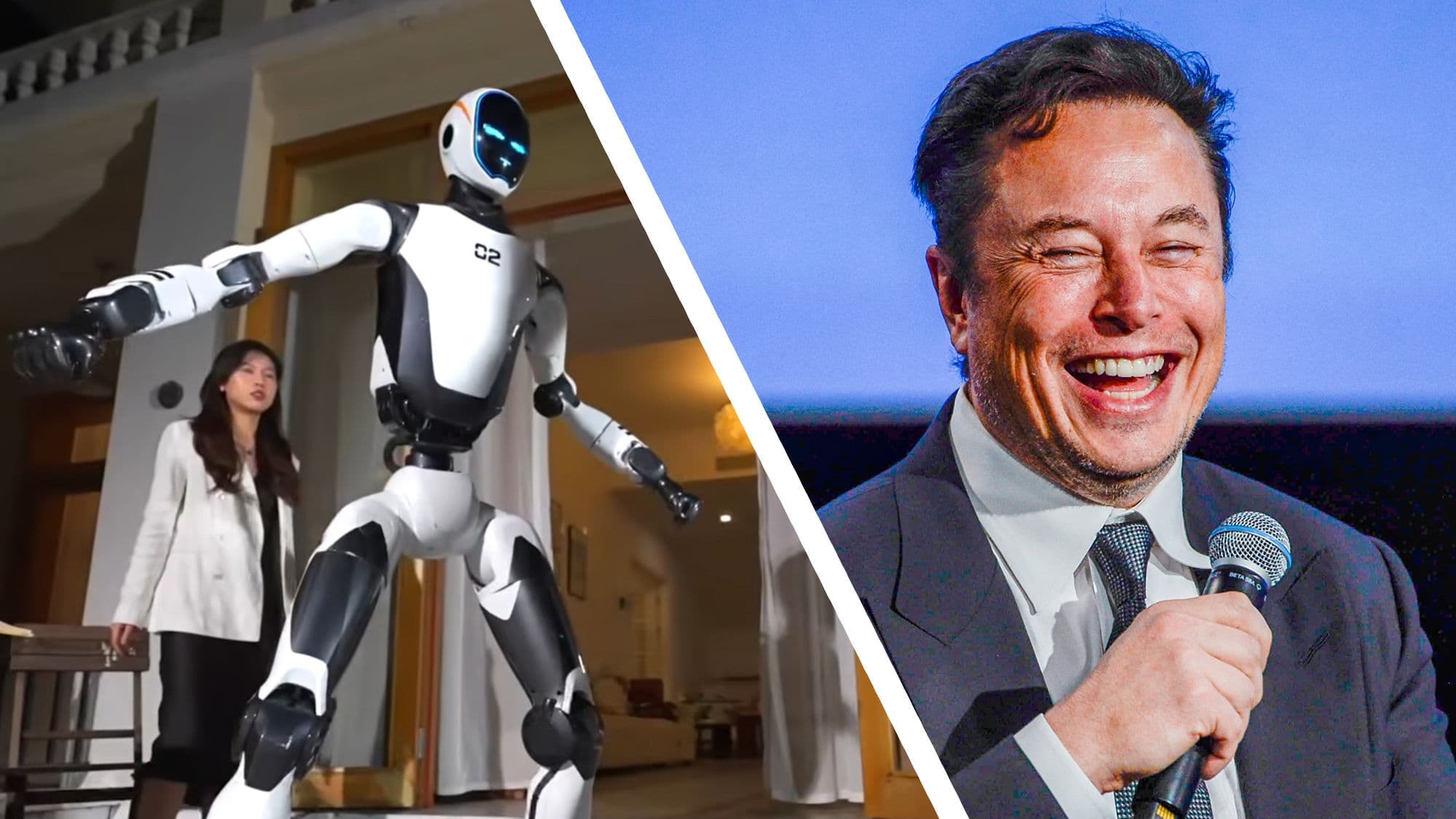
TABLE OF CONTENTS
Unitree’s self-evolving AI system
Unitree is developing a "self-evolving" AI system for its humanoid robots, dubbed Unitree Rehearsal. According to reporting by TechRadar, the system aims to enable robots to improve autonomously by generating their own code and simulations, reducing reliance on human engineers.
Wang Xingxing, Unitree’s founder, stated that as AI models advance, they are expected to handle more planning and iteration, minimizing human intervention. However, humans will still play a role in providing feedback and assessing performance during the development phase.
The company’s goal is to automate the upgrade process as much as possible. Unitree has also suggested that its robots could begin performing tasks like cleaning rooms within the next year.
Tesla ramps up Optimus production
Tesla has begun production of its Optimus humanoid robot at its Fremont, California, facility, repurposing part of an electric vehicle factory for this initiative. TechRadar reports that Tesla could scale production to 20,000 robots per week by 2027, though this target remains unverified.
Elon Musk acknowledged that Optimus robots currently struggle to complete varied tasks independently. Engineers are actively refining the robot’s design to improve safety and reliability, though specific challenges were not detailed.
Figure advances fourth-generation humanoid robot
Figure is progressing toward its fourth-generation humanoid robot, Figure 03, with a production run now reportedly in the four-figure range. Key improvements include millimeter-level fingertip precision and enhanced durability, demonstrated by a nine-day treadmill test at Figure’s headquarters.
The company is also collecting data to train its robots using an app called Index, which has amassed 37.5 million videos of human activities. Brett Adcock, Figure’s CEO, indicated that the company’s roadmap has undergone significant changes over the past year.
Industry reactions and implications
Discussions on platforms like Reddit have framed Unitree’s self-evolving robots as a potential inflection point in AI-driven robotics, with some commenters drawing comparisons to dystopian sci-fi scenarios. While such reactions are speculative, they reflect growing public fascination with autonomous systems.
These advancements underscore the accelerating competition in humanoid robotics, with companies balancing technical breakthroughs against practical challenges like scalability, reliability, and real-world applicability.
What this means
Lazyfounder analysis — our interpretation, not reported fact.
For founders and operators in robotics, AI, and automation, these developments highlight three critical trends. First, AI-driven autonomy—exemplified by Unitree’s self-evolving system—suggests a shift toward robots that can iteratively improve without constant human oversight. This could lower long-term development costs but raises questions about control, safety, and the role of human oversight in critical applications.
Second, production scaling—as Tesla aims for 20,000 Optimus robots weekly by 2027—signals that the industry is moving beyond prototypes. For startups, this underscores the importance of designing for manufacturability early, as hardware and AI models will need to coexist at scale. It also hints at potential supply chain bottlenecks or opportunities for component suppliers and contract manufacturers.
Third, precision and durability milestones—like Figure’s millimeter-level fingertip tracking and nine-day treadmill test—show that hardware reliability is becoming as critical as AI capabilities. Startups entering this space must prioritize engineering robustness alongside algorithmic innovation, particularly for applications in logistics, manufacturing, or assistive robotics.
The competition among Unitree, Tesla, and Figure also reflects broader market dynamics. While the U.S. and China are emerging as key hubs for humanoid robotics, the lack of a clear dominant player suggests room for niche innovators—whether in specific industries (e.g., healthcare or agriculture) or subsystems (e.g., actuators or AI training pipelines).
Related on Lazyfounder
Sources
- TechRadar · 2026-10-24
Unitree says its 'self-evolving robots' are the next big leap for humanoids — as Tesla Optimus production ramps up to hit 20,000 robots a week
This story is an original summary drafted with AI by Lazyfounder from the reporting listed above and checked by automated validation. Facts are attributed to their original publishers; sections marked as analysis are Lazyfounder's. Where a source is in another language, facts were machine-translated and quotations are reported, not reproduced. Read the original coverage via the links, and see our AI policy and corrections policy.

About the author
Editor, Lazyfounder
Tarun Mottlia edits LazyFounders, covering Indian startups, funding rounds, AI and product launches. Every story on the site is AI-assisted and checked against its cited sources before publication.
More stories by Tarun MottliaGet the LazyFounder Brief
Startup, funding and AI news in a five-minute read. Join the early-access list.
