
Tesla’s robotaxi nighttime detection issues put camera-only autonomy under EU scrutiny
Tesla’s robotaxis continue to face challenges detecting pets on dark roads, a problem Elon Musk has publicly acknowledged. As the EU prepares to vote on bloc-wide approval of Tesla’s Full Self-Driving (FSD) Supervised system, the limitations of its camera-only approach—and the regulatory risks they pose—are coming into sharper focus.

Editor, Lazyfounder
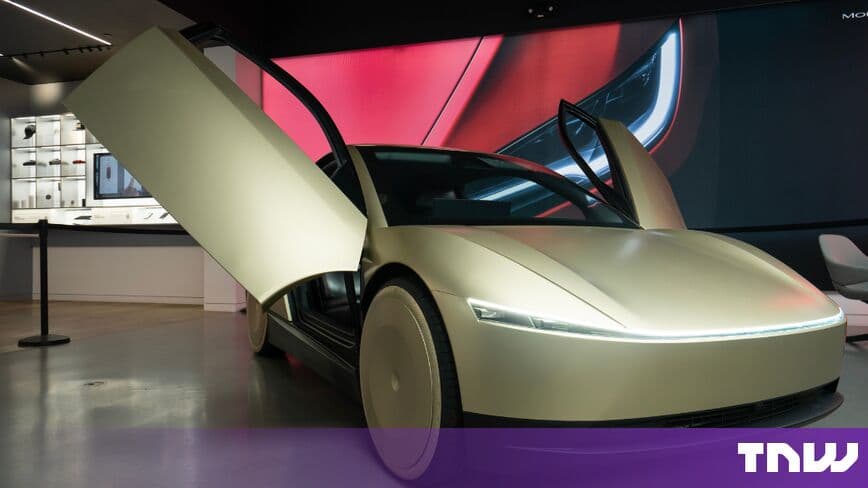
Tesla’s robotaxis continue to face challenges detecting pets on dark roads, a problem Elon Musk has publicly acknowledged. As the EU prepares to vote on bloc-wide approval of Tesla’s Full Self-Driving (FSD) Supervised system, the limitations of its camera-only approach—and the regulatory risks they pose—are coming into sharper focus.
30 SEC SUMMARY
- Elon Musk acknowledged challenges with Tesla’s robotaxis detecting pets at night, describing it as "grey kittens on grey tarmac."
- Tesla’s camera-only sensor suite faces scrutiny as the EU prepares to vote on bloc-wide approval of its Full Self-Driving (FSD) Supervised system on 6 October.
- Austin’s robotaxi service hours were reduced from 10pm to 11pm, shortening its operational window.
- Tesla’s reliance on cameras alone contrasts with competitors like Waymo, which use lidar and radar for object detection.
- Six EU countries have already approved Tesla’s FSD Supervised through mutual recognition of Dutch approval.
TABLE OF CONTENTS
- Nighttime detection challenges persist
- Operational adjustments in Austin
- EU vote looms for FSD Supervised approval
- Safety concerns in low-light conditions
- Competitors embrace sensor diversity
- What this means
- Key takeaways
- FAQ
- Sources
KEY HIGHLIGHTS
- Elon Musk described Tesla’s nighttime pet detection challenge as "grey kittens on grey tarmac."
- The EU will vote on bloc-wide approval of Tesla’s FSD Supervised on 6 October, requiring majority support from member states.
- Austin’s robotaxi service hours were reduced from 10pm to 11pm, narrowing its operational window.
- Tesla’s camera-only sensor suite contrasts with competitors like Waymo, which use lidar and radar for redundancy.
- Two fatal Tesla crashes in the dark in October 2025 raised concerns about the system’s safety in low-light conditions.
Nighttime detection challenges persist
According to The Next Web, Tesla’s robotaxis continue to struggle with detecting pets on dark roads, a problem Elon Musk described as "grey kittens on grey tarmac." The issue stems from the limitations of camera-only sensor suites, which rely on light and contrast to distinguish objects from their surroundings. Unlike lidar or radar, cameras lack the ability to detect objects independently of ambient lighting, making low-visibility scenarios a persistent challenge.
Operational adjustments in Austin
Tesla has scaled back its robotaxi service hours in Austin, Texas, according to reports. The service, which originally operated from 6am to midnight following its June 2025 launch, now closes at 11pm. The change follows earlier cuts to the fleet size, which reportedly shrank to around 17 vehicles by August. Neither Tesla nor local authorities have publicly explained the adjustments.
EU vote looms for FSD Supervised approval
The European Union is set to vote on 6 October on bloc-wide approval of Tesla’s Full Self-Driving (FSD) Supervised system. The vote requires the support of 55% of member states, representing at least 65% of the EU population. Six countries—including Sweden and the Netherlands—have already approved the system through mutual recognition of the Dutch regulator’s decision, which followed an 18-month review of Tesla’s road data.
Critics, however, have questioned Tesla’s safety data. Researchers cited by The Next Web alleged that the figures submitted to Swedish and Dutch regulators were misleading, though Tesla has not publicly responded to these claims.
Safety concerns in low-light conditions
Two fatal crashes in the U.S. in October 2025 involved Tesla Model 3s that allegedly stopped abruptly in traffic lanes during nighttime hours. One occurred at approximately 9:25pm, and the other just after 3am, according to reports. Details about the software versions involved have been redacted, and investigations into the incidents remain ongoing. The crashes have fueled debates about the reliability of camera-only systems in low-light conditions.
Competitors embrace sensor diversity
Tesla’s approach to autonomous driving differs markedly from competitors like Waymo, which rely on a combination of sensors. Waymo’s sixth-generation vehicles, for instance, integrate 13 cameras, four lidars, and six radars, enabling redundancy in object detection across varying conditions. Tesla, by contrast, eliminated radar from its vehicles in 2021 and ultrasonic sensors in 2022, opting for a camera-only suite. This strategy aims to reduce hardware complexity and cost but may introduce vulnerabilities in scenarios where visual contrast is lacking.
What this means
Lazyfounder analysis — our interpretation, not reported fact.
Tesla’s struggles with nighttime object detection highlight a critical limitation of camera-only autonomous systems. While lidar and radar offer redundancy in low-light conditions, Tesla’s approach relies entirely on visual contrast, which falters in scenarios like dark roads or low-visibility objects. This isn’t just a technical hurdle—it’s a regulatory risk. The upcoming EU vote could set a precedent for how lenient or strict governments are with camera-only autonomy, especially as safety concerns grow.
For founders in the autonomous vehicle space, Tesla’s challenges underscore the importance of sensor diversity. While camera-only systems reduce hardware costs, they may introduce edge-case vulnerabilities that could delay deployments or trigger regulatory pushback. The lesson? Balancing cost and safety isn’t just about engineering—it’s about navigating public trust and policy landscapes.
Key takeaways
- Tesla’s robotaxis face significant challenges in detecting pets at night due to low contrast and lighting conditions.
- The EU’s upcoming vote on Tesla’s FSD Supervised could shape regulatory standards for camera-only autonomous systems.
- Tesla’s reduced robotaxi service hours in Austin reflect operational adjustments, possibly due to safety or performance concerns.
- Competitors like Waymo use lidar and radar alongside cameras, offering redundancy in low-light scenarios.
- Six EU countries have approved Tesla’s FSD Supervised through mutual recognition, but bloc-wide approval remains uncertain.
FAQ
Why is Tesla’s camera-only system controversial?
Tesla’s camera-only approach relies solely on visual data, which can falter in low-light or low-contrast conditions. Competitors like Waymo use lidar and radar alongside cameras to provide redundancy, enabling object detection even when visibility is poor. Critics argue that Tesla’s system may be less reliable in scenarios like nighttime driving or detecting dark-colored objects.
What happens if the EU rejects Tesla’s FSD Supervised?
If the EU vote fails, Tesla would need to seek approval on a country-by-country basis, delaying its deployment timeline. Rejection could also prompt regulators elsewhere to scrutinize camera-only systems more closely, potentially leading to stricter requirements for autonomous vehicle approvals.
How have Tesla’s robotaxi operations changed in Austin?
Tesla has reduced its robotaxi service hours in Austin from 10pm to 11pm and reportedly decreased its fleet size. The company has not publicly explained these changes, but they follow broader scrutiny of its autonomous technology.
Related on Lazyfounder
Sources
- The Next Web · 2026-10-04
Musk says Tesla’s robotaxis still cannot reliably see pets at night
This story is an original summary drafted with AI by Lazyfounder from the reporting listed above and checked by automated validation. Facts are attributed to their original publishers; sections marked as analysis are Lazyfounder's. Where a source is in another language, facts were machine-translated and quotations are reported, not reproduced. Read the original coverage via the links, and see our AI policy and corrections policy.

About the author
Editor, Lazyfounder
Tarun Mottlia edits LazyFounders, covering Indian startups, funding rounds, AI and product launches. Every story on the site is AI-assisted and checked against its cited sources before publication.
More stories by Tarun MottliaGet the LazyFounder Brief
Startup, funding and AI news in a five-minute read. Join the early-access list.
