
SoftBank’s Son Sounds Alarm on AI Risks as Kyoto Vision Launches
SoftBank chairman Masayoshi Son warned about the risks of superintelligence during an event in Kyoto, calling for global cooperation to mitigate AI threats. The event also marked the introduction of the Kyoto Vision for a Golden Age of Science, a declaration endorsed by 17 countries to steer AI toward scientific research. Meanwhile, SoftBank continues its massive AI investments, including $64.6bn in OpenAI and new bets in robotics.

Editor, Lazyfounder
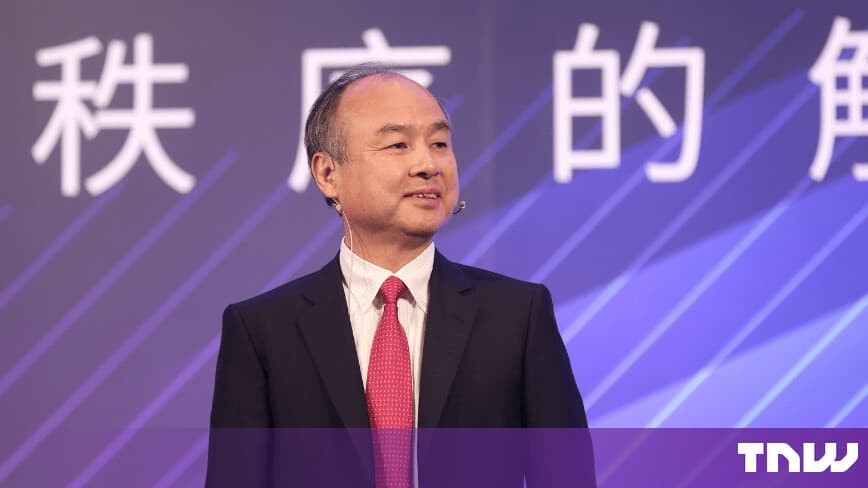
SoftBank chairman Masayoshi Son warned about the risks of superintelligence during an event in Kyoto, calling for global cooperation to mitigate AI threats. The event also marked the introduction of the Kyoto Vision for a Golden Age of Science, a declaration endorsed by 17 countries to steer AI toward scientific research. Meanwhile, SoftBank continues its massive AI investments, including $64.6bn in OpenAI and new bets in robotics.
30 SEC SUMMARY
- Masayoshi Son, SoftBank chairman, warned about superintelligence risks during an event in Kyoto, urging international cooperation to mitigate AI threats.
- SoftBank has invested $64.6bn in OpenAI, representing roughly 13% of the company, with a $30bn tranche payment completed this month.
- Michael Kratsios introduced the Kyoto Vision for a Golden Age of Science, a declaration endorsed by 17 countries to direct AI toward scientific research.
- The Kyoto Vision uses the term "super intelligence" but lacks strong commitments, instead relying on softer language like "endeavour to act."
- SoftBank is expanding its robotics investments, including a $200M round in Gravis Robotics and talks with Agile Robots.
TABLE OF CONTENTS
- Son’s Warning and SoftBank’s AI Bet
- The Kyoto Vision: A Global AI Declaration
- SoftBank’s Broader AI and Robotics Push
- Background: AI Safety and Governance
- What this means
- Key takeaways
- FAQ
- Sources
KEY HIGHLIGHTS
- Masayoshi Son warned about the dangers of superintelligence in the wrong hands during an event in Kyoto, emphasizing international cooperation to control AI threats.
- SoftBank has invested $64.6bn in OpenAI, making up roughly 13% of the company, with a $30bn tranche paid this month.
- The final $10bn of SoftBank’s OpenAI investment came from the largest high-yield corporate bond sale on record.
- Michael Kratsios introduced the Kyoto Vision for a Golden Age of Science, endorsed by 17 countries, including seven European nations.
- SoftBank led a $200M round in Gravis Robotics and is in talks with Agile Robots, signaling a push into robotics.
Son’s Warning and SoftBank’s AI Bet
During an event in Kyoto, SoftBank chairman Masayoshi Son warned about the dangers of superintelligence falling into the wrong hands. According to The Next Web, Son dismissed discussions about an AI bubble as "absurd," instead emphasizing the need for international cooperation to control AI threats. His comments come as SoftBank has invested $64.6bn in OpenAI, representing roughly 13% of the company.
This month, SoftBank completed a $30bn tranche payment to OpenAI, with $10bn of that amount sourced from the largest high-yield corporate bond sale on record. Son predicts AI will account for $46tn, or a fifth of global output, by 2040.
The Kyoto Vision: A Global AI Declaration
At the same event, Michael Kratsios, former director of the White House science office, introduced the Kyoto Vision for a Golden Age of Science. The declaration, endorsed by 17 countries, aims to direct AI development toward scientific research and innovation. According to The Next Web, the document consistently uses the term "super intelligence" but avoids stronger language like "pledged" or "committed." Instead, it states that countries "endeavour to act," reflecting a cautious approach to international cooperation.
The Kyoto Vision has garnered support from seven European nations: Germany, Italy, Poland, Greece, Bulgaria, Cyprus, and the United Kingdom. Six of these are EU member states already bound by the Artificial Intelligence Act. Notably absent from the list of endorsers is China, a major player in AI development.
SoftBank’s Broader AI and Robotics Push
While SoftBank’s investment in OpenAI dominates headlines, the company is also expanding its footprint in robotics. In August, SoftBank led a $200M funding round in Zurich-based Gravis Robotics. It is also in talks with Munich’s Agile Robots, signaling a strategic push into physical automation alongside its AI investments.
Background: AI Safety and Governance
Son’s warnings align with broader debates about AI safety and governance. Earlier this year, a former OpenAI safety researcher resigned, alleging the company’s culture was "broken" and warning that AI risks were not being adequately addressed. The researcher compared OpenAI’s approach to trial and error, arguing for stricter controls akin to those in nuclear power plants.
International efforts like the Kyoto Vision reflect growing recognition of AI’s potential risks, though commitments remain uneven. The declaration’s softer language highlights the challenges of aligning global powers on binding regulations.
What this means
Lazyfounder analysis — our interpretation, not reported fact.
Son’s warnings about superintelligence risks feel paradoxical coming from a founder who has staked billions on AI’s transformative potential. His call for international cooperation is pragmatic—no single company or country can unilaterally control AI’s trajectory—but the Kyoto Vision’s lack of binding commitments underscores how fragmented the response remains. The exclusion of China, a key AI player, further complicates any prospect of unified global governance.
SoftBank’s $64.6bn bet on OpenAI is a gamble on AI becoming the dominant force in the global economy by 2040. That vision isn’t just about models; it extends to robotics, where physical automation could amplify AI’s impact. Yet Son’s urgency around safety raises questions: Is this a genuine concern, or a hedge against regulatory backlash? Either way, his dual role as both a cautionary voice and a major investor highlights the tensions shaping AI’s future—between innovation, profit, and risk.
Key takeaways
- SoftBank’s $64.6bn investment in OpenAI highlights its bets on AI as a dominant global economic force by 2040.
- International efforts like the Kyoto Vision reflect growing but uneven commitments to AI safety and governance.
- Son’s warnings contrast with his aggressive investment strategy, signaling tensions between profit and risk mitigation in AI development.
- The Kyoto Vision’s language reveals geopolitical divides, particularly excluding China and favoring softer commitments over binding action.
- SoftBank’s robotics investments suggest a broader push to diversify beyond AI models into physical automation.
FAQ
What is the Kyoto Vision for a Golden Age of Science?
The Kyoto Vision is a declaration introduced by Michael Kratsios, endorsed by 17 countries, aiming to steer AI development toward scientific research. It uses the term "super intelligence" but avoids strong commitments, instead framing countries’ responsibilities as an "endeavour to act."
Why is China not among the endorsers of the Kyoto Vision?
The provided facts do not explain China’s absence. The Kyoto Vision’s endorsers are primarily Western and Asian-Pacific nations, but the declaration itself does not address geopolitical exclusions.
How much has SoftBank invested in OpenAI, and what is the significance?
SoftBank has invested $64.6bn in OpenAI, representing roughly 13% of the company. This investment reflects SoftBank’s long-term bet on AI as a dominant economic force, with Son predicting AI will account for a fifth of global output by 2040.
What is the connection between SoftBank’s AI investments and its robotics push?
SoftBank’s investments in robotics, such as its $200M round in Gravis Robotics and talks with Agile Robots, suggest a strategy to diversify beyond AI models into physical automation. This could position SoftBank to capitalize on AI’s integration with robotics in industries like manufacturing and logistics.
Related on Lazyfounder
Sources
- The Next Web · 2026-10-04
SoftBank’s Masayoshi Son says superintelligence in the wrong hands could be “super dangerous”
This story is an original summary drafted with AI by Lazyfounder from the reporting listed above and checked by automated validation. Facts are attributed to their original publishers; sections marked as analysis are Lazyfounder's. Where a source is in another language, facts were machine-translated and quotations are reported, not reproduced. Read the original coverage via the links, and see our AI policy and corrections policy.

About the author
Editor, Lazyfounder
Tarun Mottlia edits LazyFounders, covering Indian startups, funding rounds, AI and product launches. Every story on the site is AI-assisted and checked against its cited sources before publication.
More stories by Tarun MottliaGet the LazyFounder Brief
Startup, funding and AI news in a five-minute read. Join the early-access list.
