
Startups cut drone noise by two-thirds as delivery services face backlash
Startups and companies like Amazon are racing to solve a growing problem for drone delivery services: noise. As drones become a common sight in residential areas, communities are pushing back against the irritating buzz they generate. In response, firms like Greenjets and Sharrow Engineering have developed technologies to cut drone noise by up to two-thirds, while regulators like the FAA place the onus on operators to address the issue.

Editor, Lazyfounder
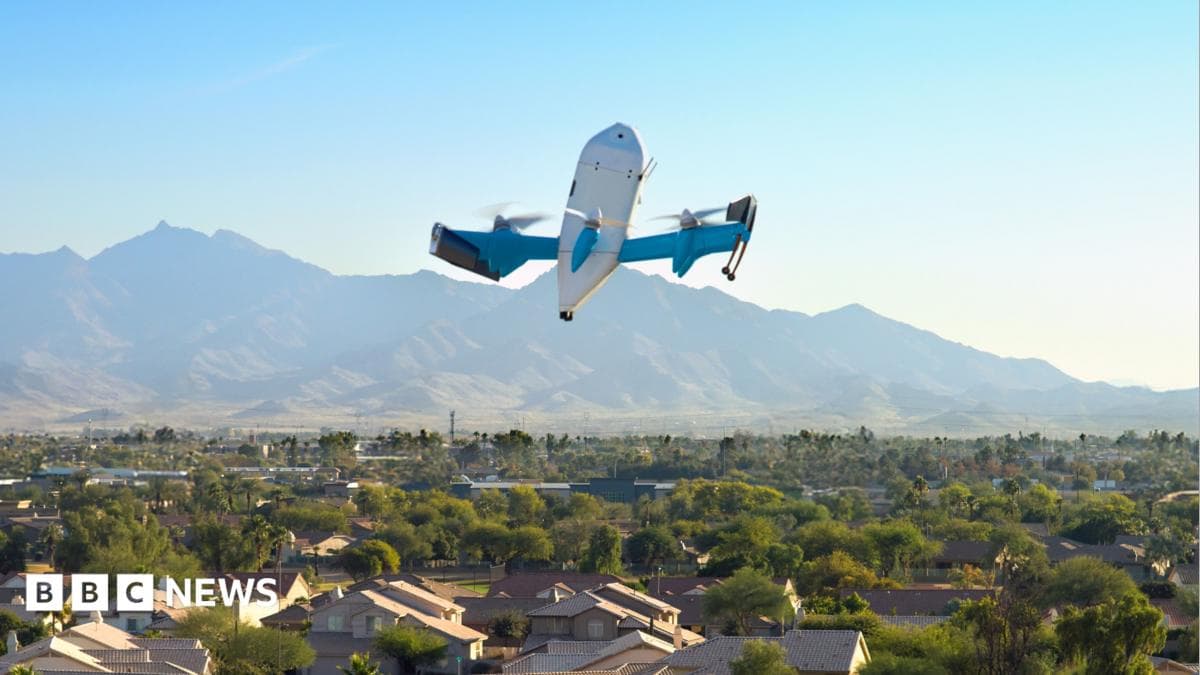
TABLE OF CONTENTS
Why drone noise matters for delivery services
Delivery drone services are expanding rapidly in the US and UK. Amazon Prime Air now serves nearly 500 cities and towns, while smaller services are emerging in urban areas, allowing customers to order items like food via drones. However, the noise generated by these drones has become a significant concern, particularly in residential neighborhoods that have not previously experienced low-altitude aircraft noise.
According to Professor Antonio Torija Martinez of the University of Salford, people react strongly to noise when they perceive the source as novel, intrusive, or frequent. Drones operate at low altitudes and often fly directly over homes, exposing communities to unfamiliar sounds that stand out even in relatively quiet environments.
How startups are reducing drone noise
Startups like Greenjets and Sharrow Engineering are developing technologies to address drone noise. Greenjets, a UK-based company, has designed a propulsion system that reduces drone noise by at least two-thirds. The system works by enclosing spinning blades inside a pod to muffle sound and direct noise away from the ground. It also uses slower rotor speeds and materials that minimize vibration noise.
Greenjets’ technology has already found applications beyond delivery services. It has been used by police and harbor security teams in Germany, conservationists in Africa to track poachers, and even in defense sectors where stealth is critical. Meanwhile, US-based Sharrow Engineering has developed a propeller with twisted loop-shaped blades that eliminate noise-generating tips, offering another solution to the problem.
Amazon has also made progress in this area, with custom-designed propellers that produce almost half the perceived sound of its previous generation of drones.
Regulatory and operational challenges
The Federal Aviation Administration (FAA) regulates commercial drones in the US but has faced criticism for allowing noisy drone operations in residential areas. The FAA places the responsibility for addressing community concerns about drone noise on operators and local leaders, rather than enforcing strict noise standards itself.
Robert Tollast of the Royal United Services Institute (RUSI) notes that battlefield drone operators also prioritize noise reduction to avoid detection. This dual-use potential—silent drones for both commercial and defense applications—could accelerate innovation in the sector.
What this means for logistics and technology companies
Earlier reporting by Lazyfounder highlighted how Amazon and Walmart are expanding their logistics capabilities, including drone deliveries, to meet growing consumer demand for faster and more efficient services. The noise complaints now emerging show that technical innovation must extend beyond speed and reliability to include quality-of-life considerations for communities.
As drone delivery services scale, companies that proactively address noise pollution—whether through in-house R&D or partnerships with startups like Greenjets—may gain a competitive edge in securing regulatory approvals and community acceptance.
What this means
Lazyfounder analysis — our interpretation, not reported fact.
For founders and operators in logistics, aerospace, and delivery technology, the push to reduce drone noise is more than a technical challenge—it’s a regulatory and social license to operate. Companies that fail to address noise concerns risk delays, restrictions, or outright bans in key markets. The success of startups like Greenjets and Sharrow Engineering demonstrates that noise reduction isn’t just a compliance issue but an opportunity to differentiate. Quieter drones could unlock access to urban markets where noise restrictions might otherwise limit operations, while also expanding use cases in defense, conservation, and security. The FAA’s hands-off approach to noise regulation means the burden falls on operators to self-regulate, making partnerships with acoustic engineering firms a smart investment.
Related on Lazyfounder
Sources
- BBC News (Tech & Business) · 2026-10-28
Drone technology: Start-ups look for ways to make quieter drones
This story is an original summary drafted with AI by Lazyfounder from the reporting listed above and checked by automated validation. Facts are attributed to their original publishers; sections marked as analysis are Lazyfounder's. Where a source is in another language, facts were machine-translated and quotations are reported, not reproduced. Read the original coverage via the links, and see our AI policy and corrections policy.

About the author
Editor, Lazyfounder
Tarun Mottlia edits LazyFounders, covering Indian startups, funding rounds, AI and product launches. Every story on the site is AI-assisted and checked against its cited sources before publication.
More stories by Tarun MottliaGet the LazyFounder Brief
Startup, funding and AI news in a five-minute read. Join the early-access list.
