
SpaceX’s Starship Set for First Orbital Flight: What’s at Stake
SpaceX is poised to attempt the first **orbital flight** of its Starship megarocket on September 28, 2026, a critical test of its reusability and commercial potential. The mission will also deploy **26 next-generation Starlink satellites**, adding significant capacity to the company’s internet constellation, and includes a planned test of **orbital refueling**, a capability NASA is counting on for future lunar missions.

Editor, Lazyfounder
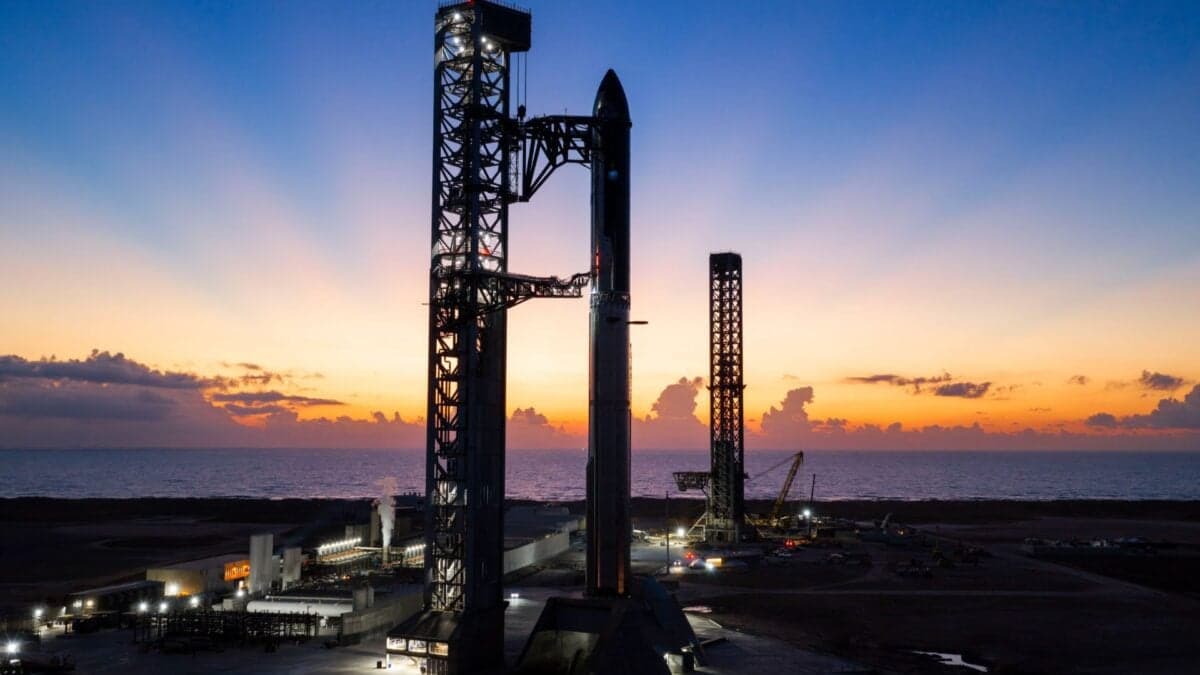
SpaceX is poised to attempt the first orbital flight of its Starship megarocket on September 28, 2026, a critical test of its reusability and commercial potential. The mission will also deploy 26 next-generation Starlink satellites, adding significant capacity to the company’s internet constellation, and includes a planned test of orbital refueling, a capability NASA is counting on for future lunar missions.
30 SEC SUMMARY
- SpaceX’s Starship is set to attempt its first orbital flight on September 28 from Starbase, Texas, pending regulatory approval.
- The mission aims to demonstrate full reusability and deploy 26 next-gen Starlink V3 satellites, adding 26 terabits per second of capacity.
- Improvements to the heat shield and engine reliability have been made based on data from prior test flights.
- The launch window opens at 8:15 a.m. ET, with live coverage available on X.
- This flight includes testing orbital refueling, a critical step for future lunar missions under NASA contracts.
TABLE OF CONTENTS
- A Milestone for Reusability and Satellite Deployment
- Upgrades and Payload
- Orbital Refueling and Broader Implications
- Background: Starship’s Development Journey
- What this means
- Key takeaways
- FAQ
- Sources
KEY HIGHLIGHTS
- Starship’s first orbital flight is scheduled for September 28, 2026, from Starbase in Texas.
- The mission will deploy 26 Starlink V3 satellites, adding 26 terabits per second of capacity to the network.
- Improvements to the heat shield and engine reliability have been made based on prior test flight data.
- The flight will test orbital refueling, a critical capability for future lunar missions under NASA contracts.
- SpaceX shares are trading at $148.75, down 34% from their all-time high, adding financial stakes to the launch.
A Milestone for Reusability and Satellite Deployment
SpaceX is preparing to launch its Starship megarocket on September 28, 2026, from Starbase in Boca Chica, Texas. The mission marks the vehicle’s first attempt at an orbital flight, a milestone in demonstrating its full reusability and commercial viability. The launch window opens at 8:15 a.m. ET and will remain open for 75 minutes, according to Gizmodo and Engadget. Pending regulatory approval, the event will be livestreamed on X.
Starship aims to reach an altitude of 171 miles (275 kilometers) and remain in orbit for 10 hours, completing six full orbits around Earth. The Super Heavy booster, which provides initial thrust, will attempt a controlled splashdown in the Gulf of Mexico after stage separation. This maneuver is critical for proving the booster’s reusability, a cornerstone of SpaceX’s cost-reduction strategy for spaceflight.
Upgrades and Payload
The mission carries 26 Starlink V3 satellites, the next generation of SpaceX’s satellite internet constellation. If successful, the deployment will add 26 terabits per second of capacity to the Starlink network, according to Gizmodo. This marks the first time Starlink V3 satellites—designed to enhance bandwidth and coverage—will be launched into orbit.
SpaceX has made several technical improvements to Starship based on data from its 13 prior suborbital test flights. These include upgrades to the heat shield, such as additional retention mechanisms for tiles and adjustments to manage plasma flow during re-entry. The company has also reused two heat shield tiles from a previous test flight, a first for the program. Engine reliability has been enhanced with hardware modifications to improve fuel filtering and software updates to optimize engine relight performance.
Orbital Refueling and Broader Implications
A key objective of this flight is to test orbital refueling, a capability critical for SpaceX’s long-term ambitions, including NASA’s Artemis program, which aims to return humans to the Moon. The U.S. space agency has awarded SpaceX billions in contracts to develop Starship as a lunar lander. Successful orbital refueling would enable longer missions, including those to Mars, by allowing Starship to refuel in space rather than carrying all its propellant from Earth.
SpaceX’s broader launch schedule remains aggressive. The company has three additional launches planned this week, including a crewed mission to the International Space Station. This cadence underscores SpaceX’s role as a dominant player in both commercial and government spaceflight, with financial pressures mounting as its shares trade at $148.75, down 34% from their peak.
Background: Starship’s Development Journey
Starship’s development has been characterized by rapid iteration and high-risk testing. Earlier suborbital flights provided data on structural integrity, engine performance, and re-entry dynamics, shaping the design of the current vehicle. The shift to orbital testing represents a significant escalation in complexity, with challenges including sustained engine burn, stage separation at high velocities, and precision splashdowns.
SpaceX’s approach contrasts with traditional aerospace programs, which often prioritize risk mitigation over speed. Starship’s development timeline—spanning just a few years—reflects Elon Musk’s emphasis on rapid prototyping and frequent testing, even at the expense of setbacks. This strategy has yielded breakthroughs in rocket reusability but has also drawn scrutiny from regulators and industry observers.
What this means
Lazyfounder analysis — our interpretation, not reported fact.
For founders and operators in aerospace, satellite communications, or adjacent industries, this launch is a bellwether for the commercial viability of fully reusable rockets. Starship’s success—or even partial progress—could accelerate timelines for lunar missions, orbital refueling, and large-scale satellite deployments.
The stakes are particularly high for SpaceX’s Starlink business. If Starship can reliably deploy next-gen satellites, it could cement Starlink’s dominance in global connectivity and edge out competitors relying on smaller, less efficient launch vehicles. For startups in satellite tech or space-based services, this launch is a reminder of the infrastructure race underway—and the importance of designing hardware compatible with Starship’s scale.
Failures or delays, however, would reignite questions about SpaceX’s aggressive timelines and the challenges of orbital refueling, a capability NASA is counting on for its Artemis program. Either way, the outcome will shape investor confidence in space infrastructure plays.
Key takeaways
- Starship’s first orbital flight is scheduled for September 28, with a 75-minute launch window starting at 8:15 a.m. ET.
- The mission will deploy 26 Starlink V3 satellites, adding significant capacity to the Starlink network.
- Improvements to the heat shield and engine reliability address lessons learned from prior test flights.
- Orbital refueling will be tested, a critical step for future lunar missions and NASA contracts.
- SpaceX’s public trading status adds financial pressure to demonstrate progress with each launch.
FAQ
What is the significance of Starship’s first orbital flight?
Starship’s first orbital flight is a critical test of its ability to reach orbit, deploy satellites, and return safely to Earth. Success would validate SpaceX’s approach to fully reusable rockets, reducing the cost of space access and enabling ambitious missions like lunar landings and Mars colonization. It also marks the first deployment of Starlink V3 satellites, which could significantly boost the network’s capacity.
Why is orbital refueling important?
Orbital refueling is essential for long-duration space missions, particularly those beyond Earth’s orbit. By refueling in space, Starship can avoid carrying all its propellant from Earth, enabling heavier payloads and longer missions. NASA’s Artemis program relies on this capability for lunar landings, and SpaceX plans to use it for eventual missions to Mars.
What happens if the launch fails?
Failure during this test flight would likely result in delays to SpaceX’s timeline for lunar missions and Starlink deployments. However, SpaceX has historically treated setbacks as learning opportunities, using data from failed tests to refine designs. Given the iterative nature of Starship’s development, a failure would not be unexpected but could impact investor confidence and regulatory approvals for future tests.
Related on Lazyfounder
Sources
- Gizmodo · 2026-09-24
Starship Is About to Attempt Something It’s Never Done in 13 Flights - Engadget · 2026-09-25
SpaceX Starship's First Orbital Flight Test On Track After Successful Launch Rehearsal - Mint (Technology) · 2026-09-28
SpaceX Starship Flight 14: Why today’s launch matters for SpaceX, Starlink and Elon Musk’s Moon ambitions
This story is an original summary drafted with AI by Lazyfounder from the reporting listed above and checked by automated validation. Facts are attributed to their original publishers; sections marked as analysis are Lazyfounder's. Where a source is in another language, facts were machine-translated and quotations are reported, not reproduced. Read the original coverage via the links, and see our AI policy and corrections policy.

About the author
Editor, Lazyfounder
Tarun Mottlia edits LazyFounders, covering Indian startups, funding rounds, AI and product launches. Every story on the site is AI-assisted and checked against its cited sources before publication.
More stories by Tarun MottliaGet the LazyFounder Brief
Startup, funding and AI news in a five-minute read. Join the early-access list.
