
Study: Drones Could Cut Defibrillator Delivery Times by 3.76 Minutes
A study conducted by French researchers suggests that drones could dramatically reduce the time it takes to deliver defibrillators to cardiac arrest patients. The research, led by emergency physician Hillary Minka, indicates that drones could cut delivery times by an average of 3.76 minutes and increase the proportion of patients reached within a critical five-minute window.

Editor, Lazyfounder
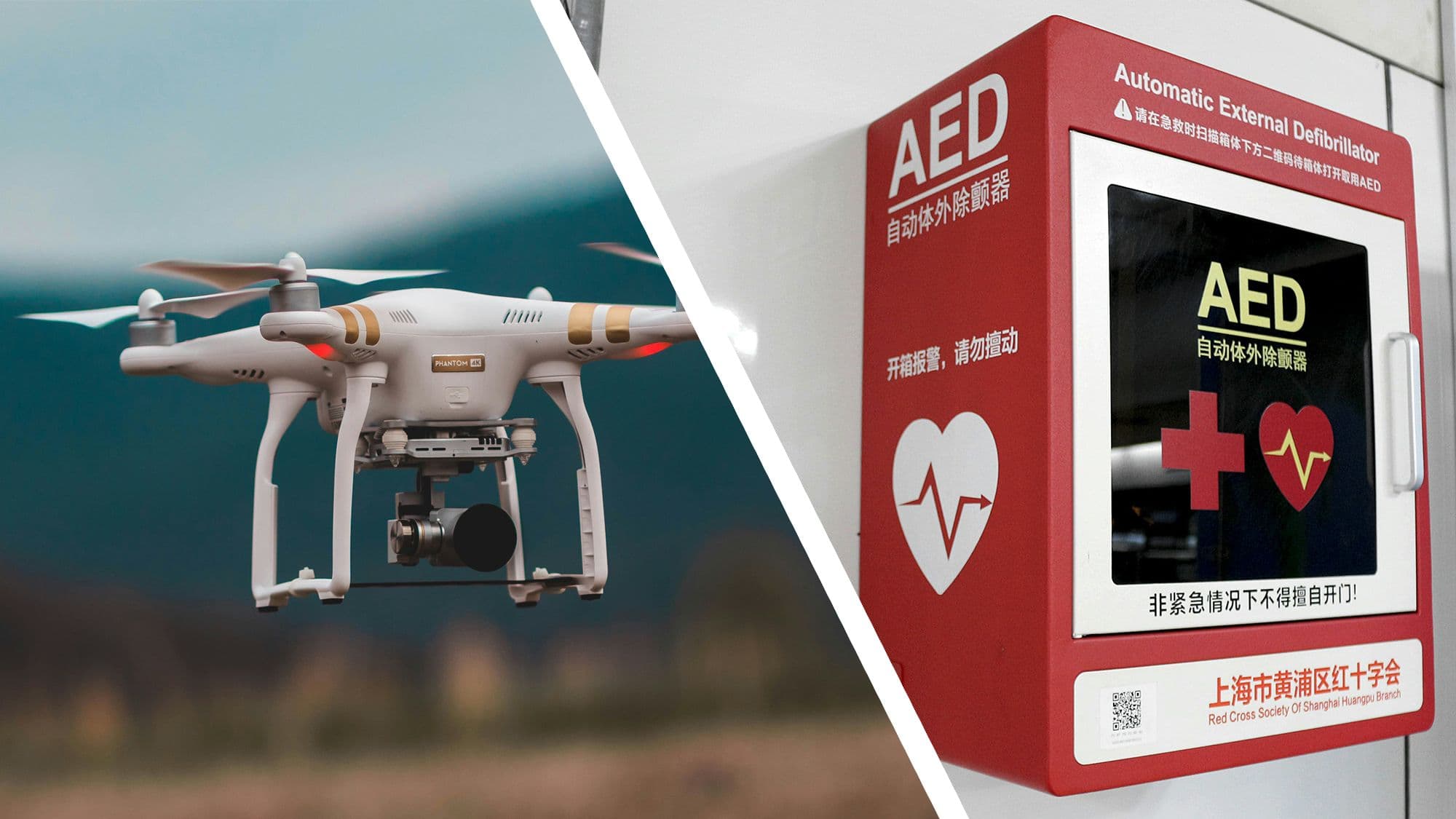
A study conducted by French researchers suggests that drones could dramatically reduce the time it takes to deliver defibrillators to cardiac arrest patients. The research, led by emergency physician Hillary Minka, indicates that drones could cut delivery times by an average of 3.76 minutes and increase the proportion of patients reached within a critical five-minute window.
30 SEC SUMMARY
- A French study suggests drones could reduce defibrillator delivery times by 3.76 minutes on average for cardiac arrest patients.
- Current survival rates for out-of-hospital cardiac arrests are below 10%, but drones could increase five-minute coverage to 95%.
- Combining drones with optimized AED placement could boost coverage to 99.4%, per the study’s simulations.
- The research is based on modeling and has not yet been peer-reviewed or tested in real-world conditions.
- Real-world trials are planned to address variables like weather and operational challenges.
TABLE OF CONTENTS
- Study Findings on Drone-Delivered Defibrillators
- Limitations and Next Steps
- Current Challenges in Cardiac Arrest Response
- What this means
- Key takeaways
- FAQ
- Sources
KEY HIGHLIGHTS
- A study by French researchers suggests drones could reduce defibrillator delivery times by an average of 3.76 minutes.
- Current survival rates for out-of-hospital cardiac arrests are below 10%, but drones could increase five-minute coverage to 95%.
- Combining drones with better-placed AEDs could boost coverage to 99.4%, per the study’s simulations.
- The research is based on modeling and has not yet been peer-reviewed or tested in real-world conditions.
Study Findings on Drone-Delivered Defibrillators
According to TechRadar, a study conducted by researchers in France, including emergency physician Hillary Minka from Lariboisière Hospital, suggests that drones could significantly reduce the time it takes to deliver automated external defibrillators (AEDs) to cardiac arrest patients. The study found that drones could cut delivery times by an average of 3.76 minutes compared to traditional methods.
The research also indicates that drones could increase the proportion of patients reached within five minutes from the current 30-40% to 95%. This improvement could rise to 99.4% if drones are combined with better placement of fixed AEDs. The study’s simulations assume a drone range of approximately 3,900 meters, which could reduce the need for additional AED units.
Limitations and Next Steps
The study’s findings are based on simulations and have not yet been peer-reviewed. According to TechRadar, the research was presented at the European Emergency Medicine Congress 2026 in Paris but has not undergone formal validation. The team plans to conduct real-world trials to account for variables such as weather conditions and operational challenges.
While the study relies on modeling, it builds on existing precedent: drones are already used to deliver defibrillators in parts of Sweden, demonstrating the technology’s potential in real-world scenarios.
Current Challenges in Cardiac Arrest Response
Out-of-hospital cardiac arrest remains a critical public health challenge, with survival rates currently below 10%. The speed of defibrillator delivery is a major factor in improving outcomes, as early intervention significantly increases the chances of survival. Traditional methods, such as ambulance dispatch or fixed AED locations, often fail to reach patients quickly enough, particularly in urban or densely populated areas.
What this means
Lazyfounder analysis — our interpretation, not reported fact.
This study underscores a critical opportunity for startups and operators at the intersection of drones and emergency medical services. The findings—while still in the simulation phase—highlight a glaring inefficiency in current response systems: the gap between life-saving technology and the patients who need it most.
For founders, the takeaway is twofold. First, the potential impact is massive. Reducing response times by even a few minutes could save thousands of lives annually. Second, the study provides a compelling proof point for investors and regulators, demonstrating that drone delivery isn’t just a futuristic idea but a viable solution to a pressing problem.
However, the road from simulation to real-world implementation is fraught with challenges. Weather, regulatory hurdles, and public adoption will all play a role in determining whether this technology can scale. For now, the study serves as a call to action for startups and innovators to explore how drones can be integrated into emergency response systems—not just for cardiac arrests, but for other time-sensitive medical scenarios as well.
Key takeaways
- Drones could reduce defibrillator delivery times by an average of 3.76 minutes, according to a study by French researchers.
- Current out-of-hospital cardiac arrest survival rates are below 10%, but drones could increase five-minute coverage to 95%.
- Combining drones with optimized placement of fixed AEDs could boost coverage to 99.4%, per the study’s simulations.
- The study is based on modeling and has not yet been peer-reviewed or tested in real-world conditions.
- Real-world trials are planned to address variables like weather and operational challenges.
FAQ
How much faster could drones deliver defibrillators compared to traditional methods?
The study suggests drones could reduce delivery times by an average of 3.76 minutes.
What percentage of cardiac arrest patients could be reached within five minutes using drones?
According to the study, drones could reach 95% of patients within five minutes, compared to the current 30-40% with traditional methods.
Has this technology been tested in the real world?
The study is based on simulations, but drones are already used to deliver defibrillators in parts of Sweden. Real-world trials are planned to validate the findings.
What are the current survival rates for out-of-hospital cardiac arrest?
Currently, fewer than 10% of out-of-hospital cardiac arrest patients survive.
Related on Lazyfounder
Sources
- TechRadar · 2026-09-28
Study shows using drones to deliver defibrillators could more than double the chances of reaching cardiac arrest patients quickly
This story is an original summary drafted with AI by Lazyfounder from the reporting listed above and checked by automated validation. Facts are attributed to their original publishers; sections marked as analysis are Lazyfounder's. Where a source is in another language, facts were machine-translated and quotations are reported, not reproduced. Read the original coverage via the links, and see our AI policy and corrections policy.

About the author
Editor, Lazyfounder
Tarun Mottlia edits LazyFounders, covering Indian startups, funding rounds, AI and product launches. Every story on the site is AI-assisted and checked against its cited sources before publication.
More stories by Tarun MottliaGet the LazyFounder Brief
Startup, funding and AI news in a five-minute read. Join the early-access list.
