
Jalandhar's Sports Goods Industry: A Tale of Craftsmanship and Competition in 2026
Discover the evolution of Jalandhar's sports goods industry in 2026, from its peak dominance to the challenges posed by Chinese competition. Learn how specialized craftsmanship sustains its legacy.
LazyFounders

30 SEC SUMMARY
In 2026, Jalandhar's sports goods industry showcases a journey from near-total dominance in India's export market to a resilient but diminished role, shaped by the influx of cheap Chinese imports and the shift towards automation. Despite the challenges, specialized craftsmanship in hand-stitched balls and traditional gear keeps Jalandhar relevant in the global market.
TABLE OF CONTENTS
KEY HIGHLIGHTS
- Jalandhar once dominated 90% of India's sports goods export market.
- Cheap Chinese imports and automation have shifted market dominance.
- Specialized craftsmanship in hand-stitched balls and traditional gear sustains Jalandhar's market presence.
- The industry supports over 500,000 livelihoods in India.
- Jalandhar's legacy continues to influence global sports gear manufacturing.
Introduction
In the world of sports, certain brands like Nike, Adidas, and Puma have long been associated with top-quality gear. Yet, the manufacturing of these products has historically been rooted in Jalandhar, a city in Punjab, India. This article explores Jalandhar's journey from a global manufacturing hub to a resilient player in the sports goods industry in 2026.
Historical Background
The roots of Jalandhar's sports goods industry trace back to Sialkot, now in Pakistan, where British colonial influence sparked demand for locally made cricket and hockey equipment. After Partition in 1947, skilled workers and entrepreneurs migrated to Jalandhar, rebuilding the industry from scratch. By the 1980s and 90s, Jalandhar had become a major industrial cluster, supplying products to over 130 countries.
The Rise of Jalandhar
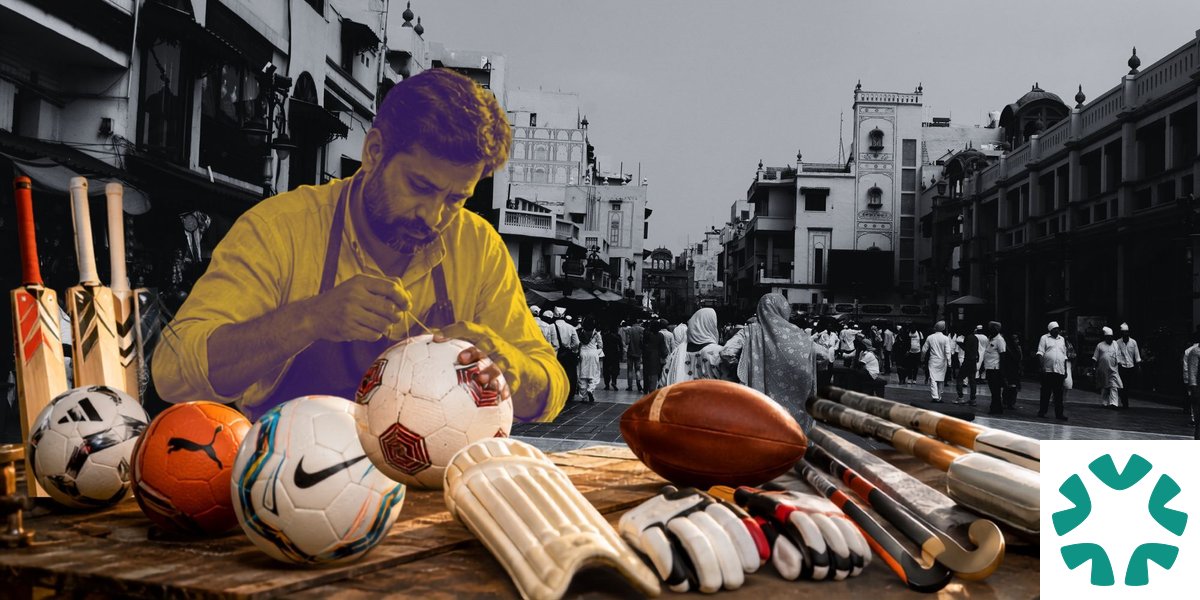
Jalandhar's success was built on labor-intensive craftsmanship rather than cheap, low-skill assembly. The city specialized in hand-stitched footballs, precision-carved cricket bats, and skilled woodworking for hockey sticks. Small and medium enterprises, along with home-based contracted labor, played a crucial role in this growth. Jalandhar became a leading sourcing destination for global brands like Mitre, Lotto, Umbro, and Wilson.
The Shift in Dominance
By the early 2020s, Jalandhar's share of India's sports goods exports had fallen to around 35%, with neighboring Meerut in Uttar Pradesh taking over as the largest cluster at around 45%. The primary reason for this shift was the influx of cheap Chinese imports, which gained a decisive edge through automation, lower production costs, and advanced technology.
Craftsmanship vs. Automation
Despite the challenges, Jalandhar's specialized craftsmanship in areas that don't easily automate has kept it competitive. Hand-stitched balls and traditional protective gear remain areas where Jalandhar holds a genuine edge. The city's manufacturers continue to serve buyers in Europe, North America, and other parts of the world, with the UK, the US, Germany, France, and Australia among the largest destinations.
The Future of Jalandhar's Sports Goods Industry
In 2026, Jalandhar's sports goods industry faces an uncertain future. While the city has lost much of its dominance, its specialized craftsmanship ensures it remains a key player in niche markets. Meerut, on the other hand, has leveraged its pre-independence-era buyer linkages and faster adoption of technology in quality testing and logistics.
Conclusion
Jalandhar's story from near-total dominance to a shrinking but still significant share is a cautionary tale and a success story. It highlights how lower-cost, more automated competitors can erode decades of accumulated market share within a generation. Despite the challenges, Jalandhar's legacy continues to influence global sports gear manufacturing.
Call-to-Action
For more insights into the global sports goods industry, visit blogy.in.
Sources
This story is an original summary and analysis written by LazyFounders from the reporting listed above. Facts are attributed to their original publishers; sections marked as analysis are LazyFounders's opinion. Where a source is in another language, facts were machine-translated and quotations are reported, not reproduced. Read the original coverage via the links.
