
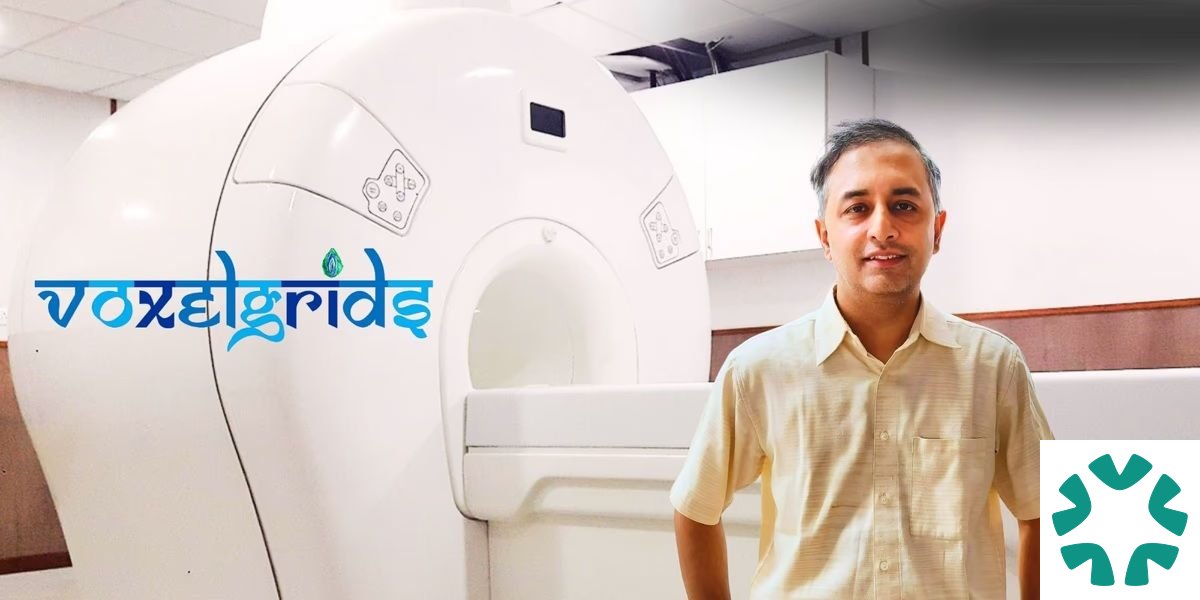
India's First Local MRI Scanner: Voxelgrids Innovations' Breakthrough
Discover Voxelgrids Innovations' breakthrough in MRI scanner technology, India's first local MRI scanner, and its impact on rural healthcare.
LazyFounders

30 SEC SUMMARY
Voxelgrids Innovations has developed India's first local MRI scanner, revolutionizing rural healthcare by reducing dependency on imported technology. This breakthrough offers a cost-effective, portable solution, significantly lowering the maintenance and installation costs.
TABLE OF CONTENTS
KEY HIGHLIGHTS
- India's first indigenous MRI scanner developed by Voxelgrids Innovations
- Utilizes non-liquid helium superconducting magnets, reducing costs by 40%
- Significantly lighter, making it portable for rural and small-town hospitals
- Supported by Tata Trusts and Jio Corporation
- Aims to enhance healthcare accessibility in underserved regions
INTRODUCTION
Despite India's local production of various medical equipment, MRI scanners have traditionally been imported, leading to high costs and logistical challenges. This article explores Voxelgrids Innovations' groundbreaking development of an indigenous MRI scanner, poised to transform rural healthcare in India.
THE GENESIS OF VOXELGRIDS INNOVATIONS
Arjun Arunachalam, an engineer from IIT Mumbai and a former professor at Wisconsin-Madison University, founded Voxelgrids Innovations in 2017. After initial funding setbacks, he leveraged support from the Tata Trusts to develop a prototype MRI scanner in collaboration with the Satya Sai Higher Medical Science Institute in Bangalore.
TECHNOLOGICAL BREAKTHROUGH
Voxelgrids Innovations has designed a compact MRI scanner that weighs only 2-3 tons, drastically less than the usual 6 tons. This reduction is achieved by using a superconducting magnet instead of liquid helium, cutting down production costs by 40%. The scanner is designed to be easily installed in small hospitals, remote areas, or even mobile units.
FUNDING AND SUPPORT
The venture received a $5 million Series A investment from Jio Corporation in 2021, alongside support from Tata Trusts and the National Biopharma Mission. This funding has enabled the company to ramp up commercial production and secure initial orders.
PRODUCTION AND FUTURE PLANS
Voxelgrids Innovations' production facility in Bangalore is currently capable of manufacturing 20-25 scanners annually. With 33 employees, the company is scaling up to meet growing demand and is preparing for further funding rounds to expand its reach.
IMPACT ON RURAL HEALTHCARE
This indigenous MRI scanner is set to revolutionize healthcare in rural India by providing affordable and accessible diagnostic tools. By reducing the reliance on imported equipment, it also supports India's goal of self-reliance in medical technology.
CONCLUSION
Voxelgrids Innovations' MRI scanner is a significant milestone for India's medical technology sector. By providing a cost-effective, portable solution, it promises to enhance healthcare accessibility in rural and underserved areas, marking a pivotal step towards India's self-reliance in medical equipment.
FAQs
What makes Voxelgrids Innovations' MRI scanner unique?
The scanner uses a non-liquid helium superconducting magnet, which is significantly lighter and reduces production costs by 40%.
How has funding supported Voxelgrids Innovations?
Jio Corporation's $5 million investment, along with support from Tata Trusts, has enabled the company to scale production and meet initial orders.
What is the impact of this scanner on rural healthcare?
It provides affordable and accessible diagnostic tools, reducing the need for imported equipment and supporting rural healthcare infrastructure.
CALL-TO-ACTION
Discover more about Voxelgrids Innovations and their revolutionary MRI scanner technology at blogy.in.
Sources
- yourstory.com
டாடா அறக்கட்டளை, ஸ்ரீதர் வேம்பு ஆதரவுடன் எம்ஆர்ஐ ஸ்கேனர் தயாரிப்பில் கலக்கும் இந்திய ஸ்டார்ட்-அப்!
This story is an original summary and analysis written by LazyFounders from the reporting listed above. Facts are attributed to their original publishers; sections marked as analysis are LazyFounders's opinion. Where a source is in another language, facts were machine-translated and quotations are reported, not reproduced. Read the original coverage via the links.
