
Nike’s Market Dominance Fades as Rivals Gain Ground
Nike, once the undisputed leader in sportswear, is grappling with a 75% stock price decline, the loss of high-profile athletes, and a weakened financial outlook. Strategic missteps and fierce competition have allowed rivals to challenge its dominance, while its turnaround plan seeks to cut costs and revive innovation.

Editor, Lazyfounder
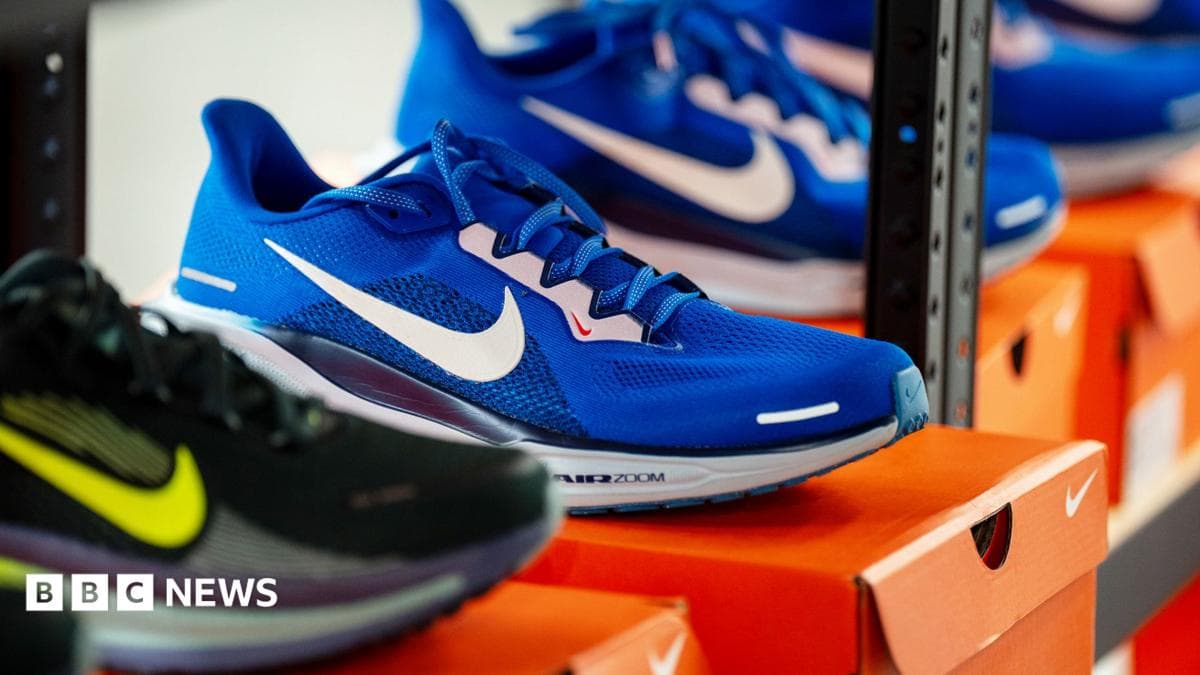
Nike, once the undisputed leader in sportswear, is grappling with a 75% stock price decline, the loss of high-profile athletes, and a weakened financial outlook. Strategic missteps and fierce competition have allowed rivals to challenge its dominance, while its turnaround plan seeks to cut costs and revive innovation.
30 SEC SUMMARY
- Nike’s stock has dropped 75% over five years, leading to its removal from the S&P 100 index.
- The company lost high-profile athletes like Kylian Mbappé and Lamine Yamal to rivals On and Adidas.
- Nike’s turnaround plan, "Sport Offense," aims to cut $2.5 billion in costs by 2031, including job reductions.
- Strategic missteps, such as shifting to direct-to-consumer sales and reducing innovation, have hurt Nike’s market position.
- Revenue in China fell 26%, and quarterly earnings missed expectations, signaling ongoing challenges.
TABLE OF CONTENTS
- Nike’s Market Dominance Eroding
- Strategic Missteps and Financial Pressures
- Turnaround Efforts and Cost-Cutting
- Background: Nike’s Legacy and Industry Shifts
- What this means
- Key takeaways
- FAQ
- Sources
KEY HIGHLIGHTS
- Nike’s stock price has fallen by 75% over the past five years, resulting in its removal from the S&P 100 index.
- The company lost two major football stars, Kylian Mbappé and Lamine Yamal, to competitors On and Adidas.
- Nike reported quarterly revenues of $11 billion, missing analyst expectations, and forecasted a "high-single digit" revenue decline for the next financial year.
- A turnaround plan, "Sport Offense," includes $2.5 billion in cost savings by 2031, partially achieved through job cuts.
- Strategic errors, such as prioritizing direct-to-consumer sales and reducing innovation, contributed to Nike’s struggles.
Nike’s Market Dominance Eroding
Nike, the world’s largest sportswear brand, is facing significant challenges in maintaining its market leadership after a series of strategic missteps. According to BBC News, the company’s stock price has plummeted by 75% over the past five years, leading to its removal from the S&P 100 index—a benchmark for major US blue-chip firms. These losses have wiped out hundreds of billions of dollars in market value, raising concerns about Nike’s ability to compete in an increasingly crowded industry.
The company’s struggles extend beyond financial performance. Nike recently lost two of its biggest football stars, Kylian Mbappé and Lamine Yamal, to rivals On and Adidas, respectively. According to reports, Yamal suggested that his move to Adidas offered greater visibility compared to Nike’s star-studded roster. These departures underscore growing competition for athlete endorsements and the erosion of Nike’s once-unassailable brand loyalty.
Strategic Missteps and Financial Pressures
Nike’s decline has been attributed to several strategic errors, including a pivot toward direct-to-consumer sales under former CEO John Donahoe, who previously led eBay. This shift alienated retail partners and disrupted long-standing distribution channels. Additionally, Nike reduced its focus on innovation, diverting resources from product development to digital operations. According to BBC News, these decisions coincided with the company’s share price plunge and allowed competitors like On and Hoka to close the gap.
Financial performance has also weakened, with Nike reporting quarterly revenues of $11 billion—falling short of analyst expectations. The company forecasts a "high-single digit" revenue decline for the upcoming financial year, citing "headwinds" in key markets like China, where sales dropped by 26%. Nike’s iconic Air Jordan brand has also suffered, with global sales declining due to oversupply.
Turnaround Efforts and Cost-Cutting
In response to these challenges, Nike’s CEO Elliott Hill, who came out of retirement two years ago, has launched a turnaround plan dubbed "Sport Offense." The strategy aims to revive growth and profitability, with early signs of progress expected next year. However, the road to recovery remains steep: Nike plans to achieve $2.5 billion in savings by 2031, partially through job cuts and cost reductions.
The company has also attempted to reconnect with younger consumers through a spin-off campaign of its iconic "Just Do It" slogan, rebranding it as "Why Do It?" Despite these efforts, analysts remain cautious about the pace of Nike’s recovery, given the scale of its strategic and financial challenges.
Background: Nike’s Legacy and Industry Shifts
Nike’s rise to dominance in the sportswear industry was built on high-profile athlete partnerships, including Michael Jordan, Tiger Woods, and Cristiano Ronaldo. The Air Jordan brand, launched in the 1980s, became a cultural phenomenon, defying NBA rules with its distinctive red and black colorway. These partnerships helped Nike outpace competitors and establish itself as a global leader in sports marketing.
However, the industry has evolved, with newer brands like On and Hoka gaining traction by emphasizing innovation and niche markets. Adidas has also capitalized on collaborations, such as its recent limited-edition sneaker collection with Pokémon, to appeal to younger consumers. Nike’s struggles highlight the difficulty of maintaining relevance amid shifting consumer preferences and intensified competition.
What this means
Lazyfounder analysis — our interpretation, not reported fact.
Nike’s struggles reflect broader challenges facing legacy brands in the sportswear industry. The company’s missteps—particularly its overemphasis on direct-to-consumer sales and underinvestment in product innovation—have allowed competitors to gain ground. While the "Sport Offense" turnaround plan signals a commitment to revitalizing the brand, the slow pace of recovery suggests that regaining its dominant position will require more than cost-cutting. For founders and operators, Nike’s story underscores the importance of balancing digital transformation with core product excellence and maintaining strong retail partnerships. The loss of high-profile athletes to rivals also highlights how brand loyalty, once a cornerstone of Nike’s success, can erode when competitors offer fresher narratives or better opportunities for visibility.
Key takeaways
- Nike’s financial performance and market dominance have weakened significantly over the past five years.
- High-profile athlete departures highlight eroding brand loyalty and competitive pressure from rivals like On and Adidas.
- Cost-cutting measures and a renewed focus on innovation are central to Nike’s turnaround strategy, but progress remains slow.
- Strategic missteps, including a shift away from retail partnerships and insufficient product innovation, have damaged Nike’s market position.
FAQ
What caused Nike’s stock price to drop by 75%?
The decline is attributed to strategic missteps, including a shift toward direct-to-consumer sales, reduced innovation in product development, and weakened demand in key markets like China. These factors, combined with strong competition, have eroded Nike’s market dominance.
Who are the high-profile athletes Nike recently lost?
Nike lost Kylian Mbappé to Swiss competitor On and Lamine Yamal to Adidas. Both athletes cited opportunities for greater visibility with their new partners.
What is Nike’s "Sport Offense" turnaround plan?
The "Sport Offense" plan aims to revive growth and profitability through cost-cutting, innovation, and reconnecting with consumers. Nike plans to achieve $2.5 billion in savings by 2031, partially through job reductions.
How has Nike’s financial performance been impacted?
Nike reported quarterly revenues of $11 billion, missing analyst expectations, and forecasts a "high-single digit" revenue decline for the next financial year. Sales in China fell by 26%, and the Air Jordan brand has seen global declines due to oversupply.
Related on Lazyfounder
Sources
- BBC News (Tech & Business) · 2026-10-01
What's gone wrong at Nike? How the world's sportswear giant lost its mojo - BBC News (Tech & Business) · 2026-10-01
What's gone wrong at Nike? How the world's sportswear giant lost its mojo
This story is an original summary drafted with AI by Lazyfounder from the reporting listed above and checked by automated validation. Facts are attributed to their original publishers; sections marked as analysis are Lazyfounder's. Where a source is in another language, facts were machine-translated and quotations are reported, not reproduced. Read the original coverage via the links, and see our AI policy and corrections policy.

About the author
Editor, Lazyfounder
Tarun Mottlia edits LazyFounders, covering Indian startups, funding rounds, AI and product launches. Every story on the site is AI-assisted and checked against its cited sources before publication.
More stories by Tarun MottliaGet the LazyFounder Brief
Startup, funding and AI news in a five-minute read. Join the early-access list.
