
US approves first small modular reactor for data centers
The US Nuclear Regulatory Commission has approved the construction of the first small modular reactor (SMR) designed specifically to power data centers. Developed by GE Vernova Hitachi, the BWRX-300 reactor will be built at the Tennessee Valley Authority’s Clinch River site. The project could pave the way for scalable nuclear solutions amid rising electricity demand from AI infrastructure.

Editor, Lazyfounder
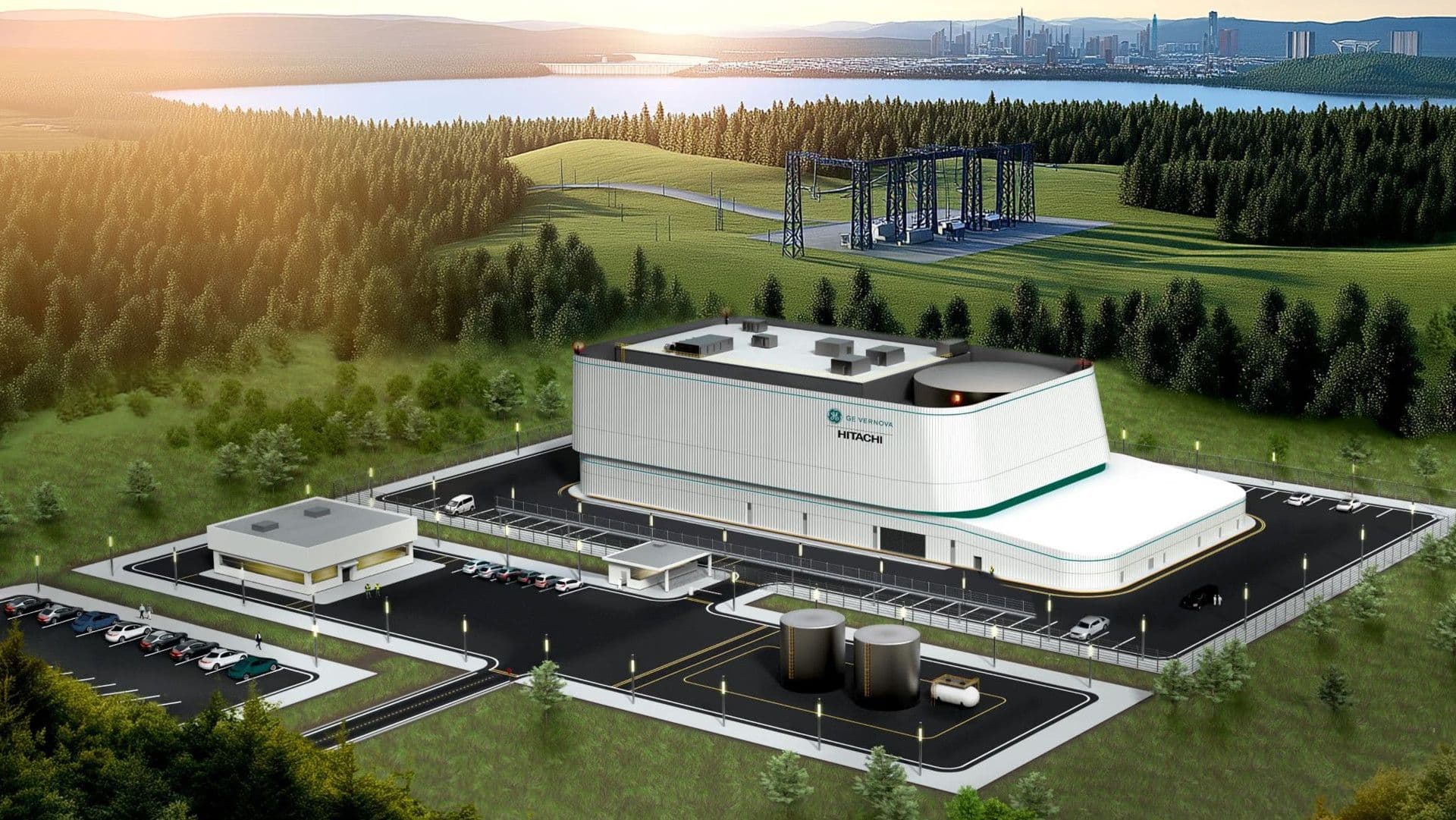
The US Nuclear Regulatory Commission has approved the construction of the first small modular reactor (SMR) designed specifically to power data centers. Developed by GE Vernova Hitachi, the BWRX-300 reactor will be built at the Tennessee Valley Authority’s Clinch River site. The project could pave the way for scalable nuclear solutions amid rising electricity demand from AI infrastructure.
30 SEC SUMMARY
- The US Nuclear Regulatory Commission approved the construction of the first small modular reactor (SMR) designed for data centers, the BWRX-300, at TVA’s Clinch River site.
- The BWRX-300 reactor, developed by GE Vernova Hitachi, still requires an additional license before commercial operation.
- TVA may build up to four BWRX-300 reactors at Clinch River, with construction timing yet to be decided.
- The UK and Canada are also exploring the BWRX-300 for large-scale deployments, with SGE proposing 14 reactors across three UK sites.
- The reactor aims to address nuclear construction challenges through simpler architecture and standardized manufacturing.
TABLE OF CONTENTS
- Approval and next steps
- Design and safety features
- Global interest in the BWRX-300
- Challenges and expectations
- What this means
- Key takeaways
- FAQ
- Sources
KEY HIGHLIGHTS
- The US Nuclear Regulatory Commission approved the construction of the BWRX-300 small modular reactor at TVA’s Clinch River site after a 14-month review.
- The BWRX-300 is designed to power data centers and requires an additional license before commercial operation.
- TVA may build up to four BWRX-300 reactors at Clinch River, with construction details yet to be finalized.
- SGE plans to deploy up to 14 BWRX-300 reactors across three UK sites, with a potential £35 billion investment.
- Canada and Texas are also pursuing the BWRX-300 for data center and general electricity supply.
Approval and next steps
The US Nuclear Regulatory Commission (NRC) has approved the construction of the BWRX-300 small modular reactor (SMR) at the Tennessee Valley Authority’s (TVA) Clinch River site. According to TechRadar, this marks the first approval of a reactor specifically intended to power data centers, a sector facing rapidly rising electricity demand due to the expansion of AI infrastructure.
The approval follows a 14-month review process, but the BWRX-300 still requires an additional license before it can begin commercial electricity generation. TVA has not yet confirmed a timeline for construction or operation.
TVA is considering the construction of up to four BWRX-300 reactors at the Clinch River site, though no final decision has been made.
Design and safety features
The BWRX-300, developed by GE Vernova Hitachi, is a 300MW boiling-water reactor designed to simplify construction and improve safety. It uses natural circulation to move coolant, reducing reliance on powered pumping equipment. According to TechRadar, its safety systems rely on gravity, pressure, and stored water to maintain safe operating conditions even without external power.
The reactor’s architecture aims to address traditional nuclear construction challenges by using fewer components and more manufactured equipment. At 300MW, it would generate roughly one-quarter of the capacity of newer reactors at Georgia’s Vogtle facility.
Global interest in the BWRX-300
The BWRX-300 is gaining traction beyond the US. In Britain, SGE has proposed deploying up to 14 of the reactors across three sites under the UK’s Advanced Nuclear Framework, a policy introduced earlier this year to support privately financed nuclear projects. If fully realized, the program could cost approximately £35 billion (~$46.5 billion).
Canada is also advancing plans for the BWRX-300. Ontario Power Generation is developing its first unit, with preparations underway for its construction program.
In the US, Blue Energy has applied for permission to develop BWRX-300 reactors in Texas, with a focus on supplying electricity directly to data centers. Developers expect that using a standardized design across multiple projects will improve procurement, manufacturing, and construction efficiency.
Challenges and expectations
The approval comes as utilities seek reliable, continuous power sources to meet growing demand from AI infrastructure and data centers. Nuclear energy offers steady output without dependence on weather conditions, but it has historically faced significant construction delays and cost overruns.
Recent large-scale nuclear projects in the US, such as those in Georgia, have exceeded initial cost and timeline estimates. The BWRX-300’s proponents argue that its simpler design and modular approach could mitigate these issues, though its success remains unproven. TVA’s Clinch River project will serve as a critical test of whether smaller, standardized reactors can deliver on these promises.
What this means
Lazyfounder analysis — our interpretation, not reported fact.
This approval marks a pivotal moment for the nuclear energy sector, particularly as demand for reliable, clean power surges—driven largely by the expansion of AI infrastructure and data centers. For founders and operators in energy, tech, and infrastructure, the BWRX-300’s modular design could signal a shift toward more scalable and cost-effective nuclear solutions.
However, challenges remain. Nuclear projects have historically faced delays and cost overruns, and the BWRX-300’s success will depend on whether its standardized approach can overcome these hurdles. If it does, it could pave the way for broader adoption of SMRs, not just in the US but globally. For now, the focus will be on TVA’s Clinch River project as a test case for whether smaller, modular reactors can deliver on their promise of efficiency and reliability.
Key takeaways
- The US Nuclear Regulatory Commission approved the construction of the BWRX-300 small modular reactor at TVA’s Clinch River site, the first SMR aimed at powering data centers.
- The reactor still requires a second license before it can generate electricity commercially.
- TVA is considering up to four BWRX-300 reactors at the site, though construction timelines remain undecided.
- The UK, Canada, and Texas are also exploring the BWRX-300 for large-scale deployments, with SGE proposing a £35 billion program in Britain.
- The BWRX-300’s design focuses on simpler architecture and standardized manufacturing to address traditional nuclear construction challenges.
FAQ
What is the BWRX-300?
The BWRX-300 is a 300MW small modular reactor developed by GE Vernova Hitachi. It is designed to simplify nuclear construction and improve safety through a boiling-water design, natural circulation, and standardized manufacturing.
Why is this approval significant?
This is the first approval of a small modular reactor specifically intended to power data centers, a sector with rapidly increasing electricity demands. It signals a potential shift toward scalable, modular nuclear solutions for clean energy.
What are the next steps for the BWRX-300 at Clinch River?
The reactor still requires an additional license before it can generate electricity commercially. TVA is also considering building up to four BWRX-300 reactors at the site, though construction timelines have not been finalized.
Which other countries are exploring the BWRX-300?
The UK and Canada are actively pursuing the BWRX-300 for large-scale deployments. SGE plans to build up to 14 reactors across three UK sites, while Ontario Power Generation is developing its first unit in Canada.
Sources
- TechRadar · 2026-10-06
US approves first data center-specific small nuclear reactor — the BWRX-300 may be covering not just the UK, but America too
This story is an original summary drafted with AI by Lazyfounder from the reporting listed above and checked by automated validation. Facts are attributed to their original publishers; sections marked as analysis are Lazyfounder's. Where a source is in another language, facts were machine-translated and quotations are reported, not reproduced. Read the original coverage via the links, and see our AI policy and corrections policy.

About the author
Editor, Lazyfounder
Tarun Mottlia edits LazyFounders, covering Indian startups, funding rounds, AI and product launches. Every story on the site is AI-assisted and checked against its cited sources before publication.
More stories by Tarun MottliaGet the LazyFounder Brief
Startup, funding and AI news in a five-minute read. Join the early-access list.
