
BBC’s Tech Life explores the UK’s national supercomputer and its role in science
A special episode of BBC World Service’s Tech Life programme takes listeners inside one of the UK’s most powerful supercomputers. The segment explores how this advanced infrastructure supports scientific research and why it remains a critical resource for computational science.

Editor, Lazyfounder
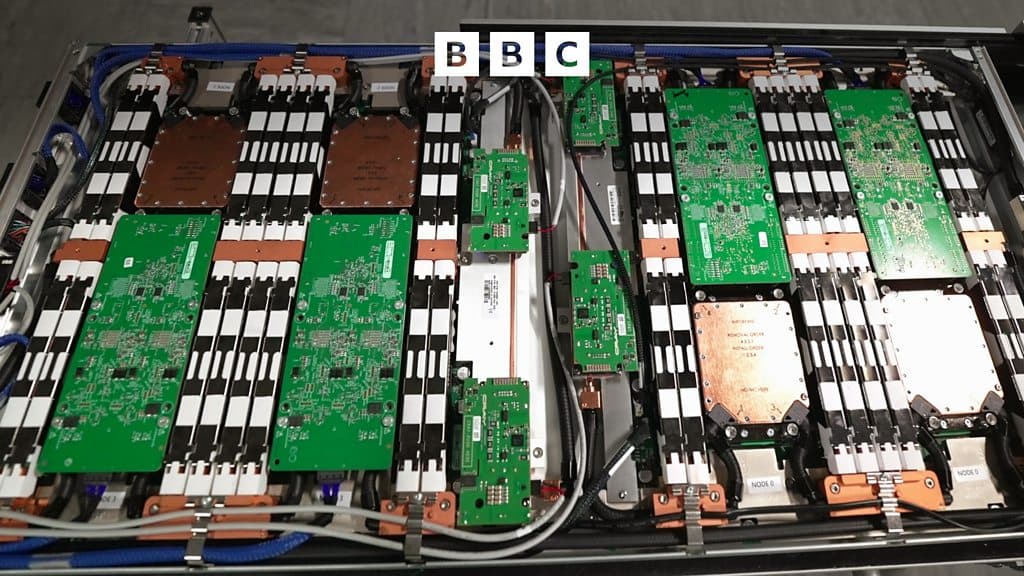
A special episode of BBC World Service’s Tech Life programme takes listeners inside one of the UK’s most powerful supercomputers. The segment explores how this advanced infrastructure supports scientific research and why it remains a critical resource for computational science.
30 SEC SUMMARY
- BBC Tech Life explores the role of the UK’s national supercomputer in scientific research.
- The programme includes a rare tour of one of the UK’s most powerful supercomputers.
- Scientists discuss how the supercomputer supports their work in fields like computational science.
- The episode is produced and presented by BBC’s Imran Rahman-Jones.
- The story highlights the importance of supercomputing infrastructure for advanced research.
TABLE OF CONTENTS
- A rare look inside the UK’s supercomputing infrastructure
- How supercomputers enable scientific breakthroughs
- What this means
- Key takeaways
- FAQ
- Sources
KEY HIGHLIGHTS
- BBC’s Tech Life programme features a special episode on the UK’s national supercomputer.
- The episode includes a tour of one of the country’s most powerful computers.
- Scientists explain how the supercomputer supports their research in fields like computational science.
- Access to supercomputing infrastructure is critical for advanced scientific breakthroughs.
- The programme is produced and presented by Imran Rahman-Jones.
A rare look inside the UK’s supercomputing infrastructure
According to BBC News, the Tech Life programme on the BBC World Service has dedicated an episode to exploring the UK’s national supercomputer. The segment aims to demystify the purpose, functionality, and accessibility of one of the country’s most powerful computing systems.
As part of the episode, the programme features a rare tour of the supercomputer, offering a behind-the-scenes look at its operations. Imran Rahman-Jones, the producer and presenter, guides the audience through the infrastructure that powers advanced scientific research in the UK.
How supercomputers enable scientific breakthroughs
The episode highlights the critical role of the supercomputer in supporting research across various scientific disciplines. Scientists who have access to the system discuss how its processing power enables them to tackle complex problems, from climate modeling to biomedical research.
While supercomputers are not widely accessible, the programme underscores their importance in accelerating computational science. For researchers, such infrastructure can mean the difference between months and hours when running large-scale simulations or analyzing vast datasets.
What this means
Lazyfounder analysis — our interpretation, not reported fact.
For founders and operators in the technology and research sectors, this story underscores the critical role of high-performance computing (HPC) infrastructure in enabling cutting-edge scientific breakthroughs. While access to such resources is often limited to large institutions or well-funded research projects, the episode highlights how supercomputers can accelerate simulations, data analysis, and complex modeling—capabilities that could inspire startups to explore partnerships with academic or government HPC centers.
For those building businesses in AI, biotech, or climate science, understanding the potential of supercomputing could open doors to collaborations or grant-funded initiatives. It also serves as a reminder of the infrastructure gap that still exists for smaller players, reinforcing the need for more accessible cloud-based or hybrid solutions in the future.
Key takeaways
- The BBC’s Tech Life programme provides a rare look inside the UK’s national supercomputer.
- Supercomputers play a vital role in advancing research across scientific disciplines.
- Access to such infrastructure is typically limited to large institutions or research projects.
- The episode features insights from scientists who rely on the supercomputer for their work.
- High-performance computing remains a critical but often under-discussed resource for innovation.
FAQ
What is the purpose of the UK’s national supercomputer?
The UK’s national supercomputer is designed to support advanced scientific research by providing the computational power needed for complex simulations, data analysis, and modeling. It enables researchers to tackle problems that would be impossible or impractical with standard computing infrastructure.
Who has access to the UK’s supercomputer?
Access to the UK’s national supercomputer is typically granted to researchers and institutions working on high-impact scientific projects. Priority is often given to initiatives in fields like climate science, biomedical research, and computational physics, though specific access criteria may vary.
Why is supercomputing important for scientific research?
Supercomputers allow researchers to process vast amounts of data and run complex simulations at speeds unattainable by conventional computers. This capability is essential for breakthroughs in fields such as genomics, materials science, and climate modeling, where accuracy and scale are critical.
Related on Lazyfounder
Sources
- BBC News (Tech & Business) · 2026-10-06
Tech Life - Inside a supercomputer: A Tech Life special - BBC Sounds
This story is an original summary drafted with AI by Lazyfounder from the reporting listed above and checked by automated validation. Facts are attributed to their original publishers; sections marked as analysis are Lazyfounder's. Where a source is in another language, facts were machine-translated and quotations are reported, not reproduced. Read the original coverage via the links, and see our AI policy and corrections policy.

About the author
Editor, Lazyfounder
Tarun Mottlia edits LazyFounders, covering Indian startups, funding rounds, AI and product launches. Every story on the site is AI-assisted and checked against its cited sources before publication.
More stories by Tarun MottliaGet the LazyFounder Brief
Startup, funding and AI news in a five-minute read. Join the early-access list.
