
UK and EU agree draft deal to remove post-Brexit food and agriculture export checks
The UK and EU have finalised a draft agreement to eliminate post-Brexit checks and paperwork on food and agriculture exports, aiming to reduce costs and delays for businesses. The deal, part of a broader effort to reset UK-EU relations, includes commitments to align UK regulations with EU standards and resume exports of previously restricted products.

Editor, Lazyfounder
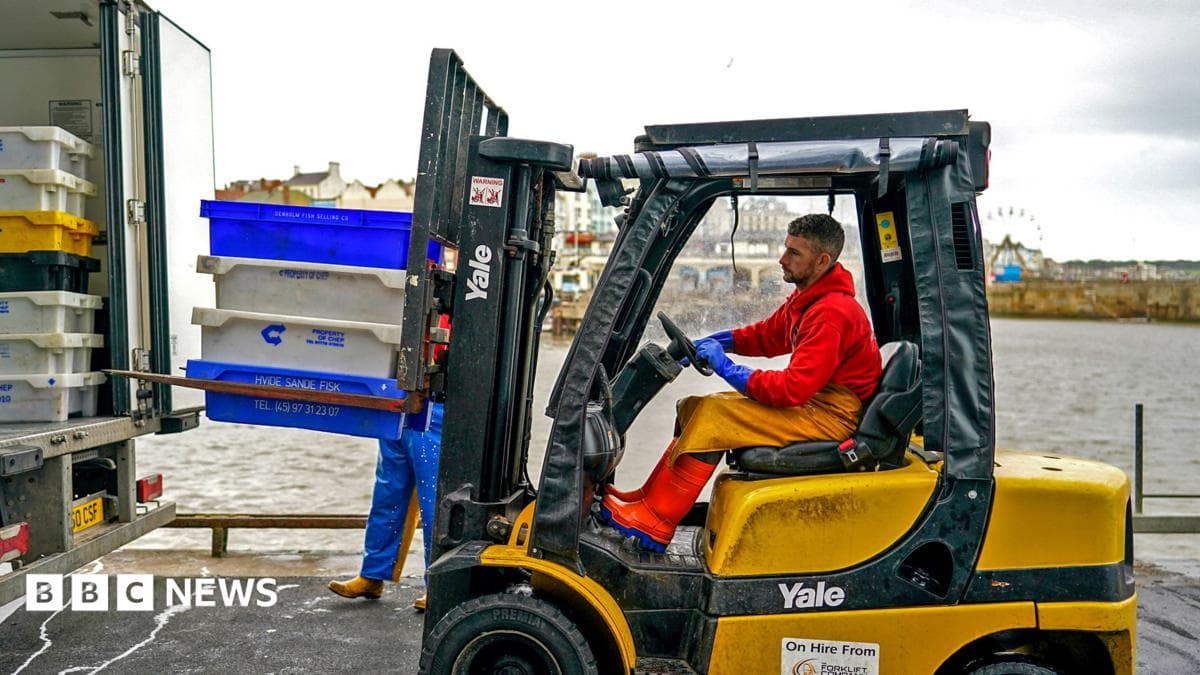
Details of the draft agreement
The UK and EU have agreed on a 200-page draft deal to remove post-Brexit sanitary and phytosanitary (SPS) checks on food and agriculture exports. The agreement aims to eliminate costly certifications, including £200 Export Health Certificates and £25 Phytosanitary certificates, as well as inspector fees, organic certificates, and other port-related charges for exports and imports.
Under the deal, UK exports of fresh sausages, burgers, shellfish, and seed potatoes to the EU will resume. The agreement also includes provisions for British pet passports to be reintroduced for travel to the EU.
The UK has committed to "dynamic alignment" with EU regulations on plant, animal, and food trade standards. This means the UK will observe and adapt to existing and future EU rules in these areas. To facilitate this, the UK government has announced a European Partnerships Bill, which will provide a legal mechanism for applying new EU regulations.
Economic and operational impact
The UK government estimates the deal will deliver £5.1 billion in annual economic benefits. Business groups, including the British Chamber of Commerce (BCC), have welcomed the agreement, citing reduced costs and delays as key advantages for exporters.
The deal is expected to simplify trade for Northern Ireland by significantly reducing checks at the Irish Sea border. Northern Ireland’s post-Brexit arrangement had required extensive paperwork and checks for food products moving from the UK, creating supply chain disruptions.
For businesses like Bio&Me, a UK-based food company, the current red tape has led to financial losses and halted shipments. For example, shipments of granola and overnight oats have been returned due to export costs and certification requirements, highlighting the challenges faced by exporters.
Broader UK-EU relationship implications
The agreement is part of a broader effort to reset UK-EU relations ahead of a summit later this month. Additional draft agreements include plans for emissions trading, youth mobility schemes, defence cooperation, and access to law enforcement databases.
The BCC has urged the UK government to explore options for a closer relationship with the EU, proposing models such as a customs union, a "Swiss-style" Single Market relationship, or associate membership under a "Canada model." In a survey, 56% of exporting businesses and 58% of manufacturers cited EU customs paperwork and delays as barriers to growth.
Prime Minister Sir Keir Starmer has indicated plans to launch a conversation on the UK’s long-term relationship with the EU, including the possibility of rejoining the bloc. However, opposition leaders, including Kemi Badenoch of the Conservative Party and Richard Tice of Reform UK, have criticised the alignment with EU regulations, warning against returning to EU rule-making.
What this means
Lazyfounder analysis — our interpretation, not reported fact.
This draft deal marks a significant shift in the UK’s post-Brexit trade policy, prioritising regulatory alignment with the EU to reduce barriers for businesses. For founders and operators in the food and agriculture sectors, the removal of Export Health Certificates and other certifications could lower operational costs and simplify supply chains, particularly for perishable goods. However, the commitment to "dynamic alignment" means UK businesses will need to stay abreast of EU regulatory changes, which could add compliance complexity for some.
The broader discussions on UK-EU relations signal potential opportunities for sectors like emissions trading, defence, and education, but also underscore the political sensitivities around rejoining EU structures. Businesses reliant on frictionless trade should monitor developments closely, as further agreements could reshape market access and competitive dynamics.
Related on Lazyfounder
Sources
- BBC News (Tech & Business) · 2026-11-03
UK and EU agree draft deal to scrap Brexit red tape over food exports - BBC News (Tech & Business) · 2026-11-03
UK and EU agree draft deal to scrap Brexit red tape over food exports - BBC News (Tech & Business) · 2026-11-03
UK and EU agree draft deal to scrap Brexit red tape over food exports
This story is an original summary drafted with AI by Lazyfounder from the reporting listed above and checked by automated validation. Facts are attributed to their original publishers; sections marked as analysis are Lazyfounder's. Where a source is in another language, facts were machine-translated and quotations are reported, not reproduced. Read the original coverage via the links, and see our AI policy and corrections policy.

About the author
Editor, Lazyfounder
Tarun Mottlia edits LazyFounders, covering Indian startups, funding rounds, AI and product launches. Every story on the site is AI-assisted and checked against its cited sources before publication.
More stories by Tarun MottliaGet the LazyFounder Brief
Startup, funding and AI news in a five-minute read. Join the early-access list.
