
TSMC Weighs Multibillion-Dollar Texas Campus for AI Chips as Europe Focuses on Older Nodes
TSMC is evaluating a potential multibillion-dollar campus in Texas to manufacture AI chips, with each fabrication plant carrying a price tag of at least $20 billion. Meanwhile, its European joint venture in Dresden, backed by EUR 5 billion in state aid, will target older semiconductor nodes starting in 2027. The company’s U.S. expansion plans depend on the extension of a critical 35% manufacturing tax credit.

Editor, Lazyfounder
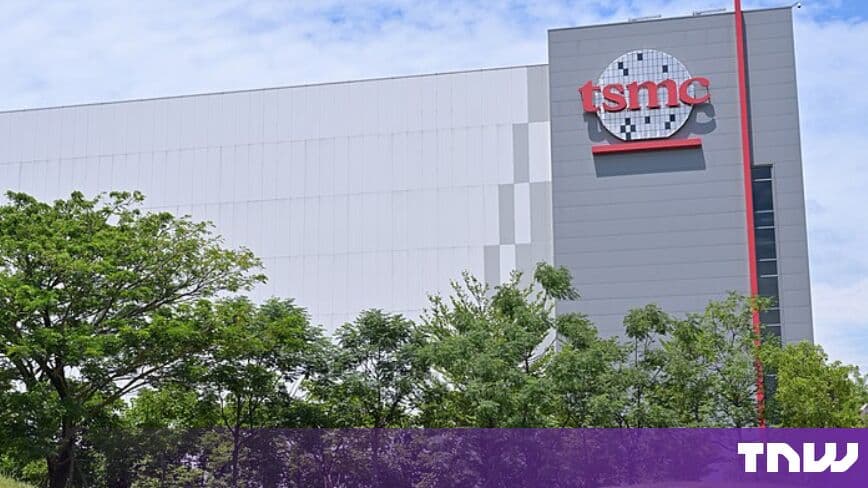
TSMC is evaluating a potential multibillion-dollar campus in Texas to manufacture AI chips, with each fabrication plant carrying a price tag of at least $20 billion. Meanwhile, its European joint venture in Dresden, backed by EUR 5 billion in state aid, will target older semiconductor nodes starting in 2027. The company’s U.S. expansion plans depend on the extension of a critical 35% manufacturing tax credit.
30 SEC SUMMARY
- TSMC is exploring a multibillion-dollar Texas campus to produce AI chips, with each fab costing at least $20 billion.
- The company’s European joint venture in Dresden, budgeted above EUR 10 billion, will focus on older semiconductor nodes like 22nm CMOS and 12nm FinFET.
- TSMC’s Texas expansion depends on the extension of a 35% U.S. manufacturing tax credit, which requires construction to begin by December.
- North America accounted for over 75% of TSMC’s wafer revenue this year, driving its U.S. expansion efforts.
- The EU’s goal of capturing 20% of the global semiconductor market by 2030 is viewed as unlikely, with current projections at 11.7%.
TABLE OF CONTENTS
- TSMC Explores Texas Campus for AI Chips
- Europe’s Dresden Plant Targets Older Semiconductor Nodes
- EU’s Semiconductor Ambitions Face Challenges
- What this means
- Key takeaways
- FAQ
- Sources
KEY HIGHLIGHTS
- TSMC is considering a Texas campus with multiple fabs, each costing at least $20 billion, to produce AI chips.
- The company’s European plant in Dresden, budgeted above EUR 10 billion, will produce older-generation chips starting in 2027.
- TSMC’s Texas plans hinge on the extension of a 35% U.S. manufacturing tax credit, with senators expressing commitment to its renewal.
- North America contributed over 75% of TSMC’s wafer revenue this year, reinforcing its focus on U.S. expansion.
- The EU’s semiconductor market share is projected to reach only 11.7% by 2030, falling short of its 20% target.
TSMC Explores Texas Campus for AI Chips
According to The Next Web, TSMC is in the early stages of considering a multibillion-dollar campus in Texas to produce AI chips. The project could include multiple fabrication plants, or fabs, each with an estimated cost of at least $20 billion.
The company has not commented on market speculation about the Texas campus, but its plans appear contingent on U.S. policy. TSMC’s decision hinges on the extension of a 35% manufacturing tax credit, which requires construction to begin by the end of December. Senators Mike Crapo and Ron Wyden have expressed commitment to extending the credit.
TSMC’s interest in Texas reflects its strategic focus on North America, which accounted for over 75% of its wafer revenue this year. The company is already investing $265 billion in Arizona to build ten fabs, two packaging plants, and a research center.
Europe’s Dresden Plant Targets Older Semiconductor Nodes
TSMC’s joint venture in Dresden, budgeted above EUR 10 billion, represents a significant expansion in Europe but will focus on older-generation semiconductor nodes. The plant, supported by EUR 5 billion in state aid approved by Brussels in August 2024, is expected to begin production in 2027 and reach full capacity by 2029.
The Dresden facility will produce chips using 28nm, 22nm CMOS, 16nm, and 12nm FinFET nodes—processes several generations behind those used by Nvidia and Apple. It will manufacture 40,000 wafers monthly but will not produce AI chips.
The project underscores Europe’s challenge in closing the gap with leading semiconductor markets. Infineon recently opened a EUR 5 billion power chip fab in Dresden, backed by EUR 1 billion in EU support.
EU’s Semiconductor Ambitions Face Challenges
The European Union’s goal of capturing 20% of the global semiconductor market by 2030 is viewed as increasingly unlikely. The European Court of Auditors has labeled the target "very unlikely," with current projections estimating the EU’s share at 11.7% by 2030, up from 9.8% in 2022.
The EU Chips Act, designed to mobilize EUR 86 billion in investments, has faced criticism for its limited impact. The European Commission funds only 5% of the total envisioned amount, raising questions about the bloc’s ability to compete with the U.S. and Asia in advanced semiconductor manufacturing.
What this means
Lazyfounder analysis — our interpretation, not reported fact.
TSMC’s potential Texas campus signals a clear bet on the U.S. as the primary hub for cutting-edge AI chip production, driven by strong demand from North American customers and the allure of tax incentives. However, the company’s caution—tying its plans to policy outcomes—highlights the risks still perceived in aggressive U.S. expansion, even after its Arizona commitments.
Europe’s strategy, meanwhile, appears resigned to a supporting role. By focusing on older nodes, TSMC and its partners are addressing critical but less glamorous segments of the semiconductor supply chain, like automotive and industrial chips. This aligns with Europe’s strengths but underscores its struggles to compete in the high-stakes race for AI chip dominance.
For founders and operators, the bifurcation is instructive. The U.S. remains the default choice for advanced manufacturing, but only if policy stability and incentives align. Europe, in contrast, offers opportunities in legacy nodes and specialized markets—but ambitious startups may still need to look elsewhere for the most advanced chips and processes.
Key takeaways
- TSMC’s Texas campus could redefine U.S. semiconductor manufacturing but depends on the renewal of a 35% manufacturing tax credit.
- Europe’s Dresden plant focuses on older nodes, reflecting the continent’s challenges in competing for advanced chip production.
- North America’s dominance in TSMC’s revenue stream explains its prioritization of U.S. expansion.
- The EU’s semiconductor market share is projected to fall short of its 20% target, raising questions about its long-term competitiveness.
- TSMC’s cautious approach to U.S. expansion underscores the influence of policy on large-scale manufacturing decisions.
FAQ
Why is TSMC considering a Texas campus for AI chips?
TSMC’s potential Texas campus is driven by strong demand from North American customers, which accounted for over 75% of its wafer revenue this year. The project also depends on the extension of a 35% U.S. manufacturing tax credit, which could offset costs.
What semiconductor nodes will TSMC’s Dresden plant produce?
The Dresden plant will focus on older-generation nodes, including 28nm, 22nm CMOS, 16nm, and 12nm FinFET processes. These are several generations behind the advanced nodes used for AI chips.
Will TSMC’s Dresden plant produce AI chips?
No, the Dresden plant will not produce AI chips. It will manufacture 40,000 wafers monthly for applications like automotive and industrial chips.
How much state aid did TSMC receive for its Dresden plant?
The European Union approved EUR 5 billion in state aid for TSMC’s Dresden joint venture in August 2024. The total budget for the project exceeds EUR 10 billion.
What is the EU’s target for semiconductor market share by 2030?
The EU aims to hold 20% of the global semiconductor market by 2030. However, projections estimate its share will reach only 11.7%, up from 9.8% in 2022.
Related on Lazyfounder
Sources
- The Next Web · 2026-10-01
TSMC eyes a multibillion-dollar Texas campus for more AI chips
This story is an original summary drafted with AI by Lazyfounder from the reporting listed above and checked by automated validation. Facts are attributed to their original publishers; sections marked as analysis are Lazyfounder's. Where a source is in another language, facts were machine-translated and quotations are reported, not reproduced. Read the original coverage via the links, and see our AI policy and corrections policy.

About the author
Editor, Lazyfounder
Tarun Mottlia edits LazyFounders, covering Indian startups, funding rounds, AI and product launches. Every story on the site is AI-assisted and checked against its cited sources before publication.
More stories by Tarun MottliaGet the LazyFounder Brief
Startup, funding and AI news in a five-minute read. Join the early-access list.
