

India’s faith commerce sector now part of $60-70B spiritual economy
Inc42 reports that India’s faith commerce sector, driven by over 900 new-age direct-to-consumer (D2C) brands, has become a significant part of the country’s $60-70 billion spiritual economy. The sector, once fragmented and cash-based, is now attracting venture capital as digitization expands its reach.

Editor, Lazyfounder
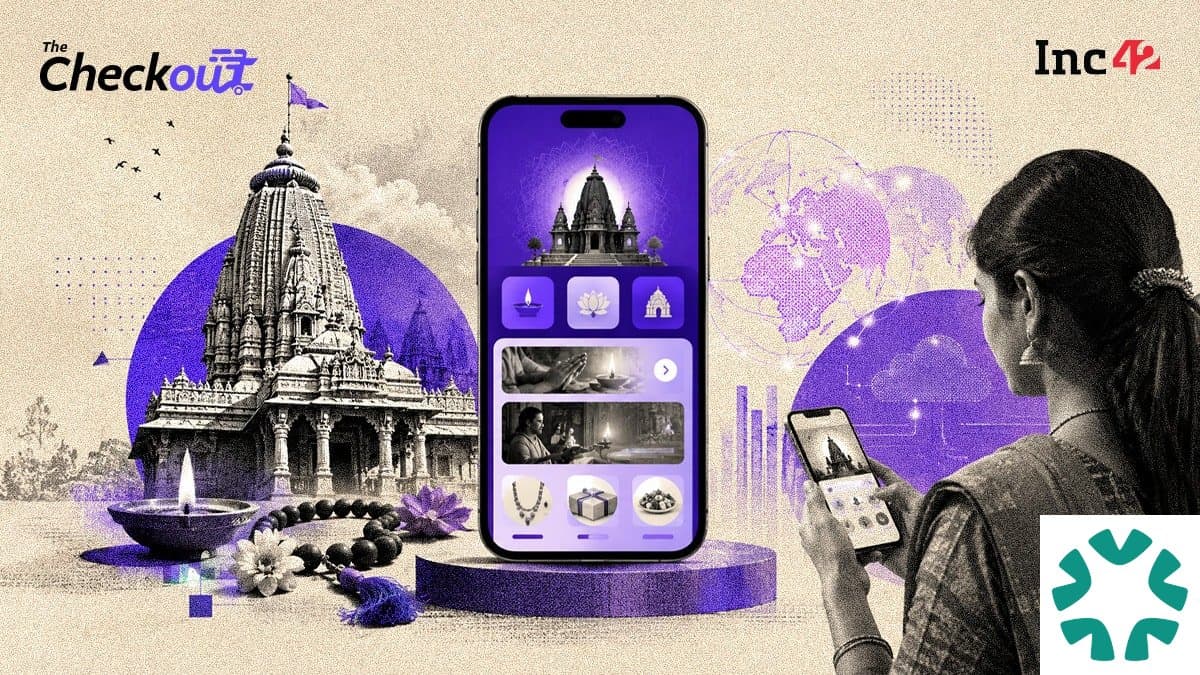
What faith commerce includes
According to Inc42, faith commerce in India encompasses a range of products and services catering to spiritual and religious needs. These include ritual items like pooja samagri (camphor, flowers, diyas), gemstones recommended during astrology consultations, prasad (blessed offerings), and other temple-sourced products. The sector has evolved to include doorstep delivery of these items, often within minutes, as well as cross-city or international shipping for devotees.
Growth of D2C brands in faith commerce
Inc42 reports that over 900 new-age direct-to-consumer (D2C) brands have emerged in the faith commerce space over the past decade. These brands, such as Phool, Astroyogi, Japam, Sri Mandir, and Vama, have contributed to the sector’s expansion by digitizing and simplifying access to spiritual products and services.
The shift has been driven by consumer demand for convenience, such as ordering ritual items or purchasing astrology-recommended products instantly during consultations. According to Inc42, this growth reflects broader trends in India’s D2C market, where spiritual and religious needs are increasingly met through online platforms.
Market size and investment trends
Inc42 estimates India’s spiritual economy to be worth approximately $60-70 billion. Historically, venture capital investment in this sector was limited due to challenges like cash-based transactions, fragmentation, and cultural sensitivities. However, funding into spiritual tech companies has accelerated in recent years, signaling growing investor interest.
The report highlights that the rise of D2C brands has made the sector more structured and investable, attracting capital and enabling scalability.
What this means
Lazyfounder analysis — our interpretation, not reported fact.
The growth of faith commerce as a $60-70B sector with 900+ D2C brands is a signal for founders and operators. It shows that spiritual and religious needs—long considered niche or difficult to monetize—can now be addressed at scale through digital platforms. For investors, the shift from cash-based, fragmented markets to structured, tech-enabled commerce opens new opportunities. Founders in adjacent sectors like e-commerce, logistics, or fintech may find partnerships or expansions into faith commerce viable, given the sector’s size and growth trajectory.
Sources
- inc42.com · 2026-08-04
The Next Frontier For Faith Commerce
This story is an original summary drafted with AI by Lazyfounder from the reporting listed above and checked by automated validation. Facts are attributed to their original publishers; sections marked as analysis are Lazyfounder's. Where a source is in another language, facts were machine-translated and quotations are reported, not reproduced. Read the original coverage via the links, and see our AI policy and corrections policy.

About the author
Editor, Lazyfounder
Tarun Mottlia edits LazyFounders, covering Indian startups, funding rounds, AI and product launches. Every story on the site is AI-assisted and checked against its cited sources before publication.
More stories by Tarun MottliaGet the LazyFounder Brief
Startup, funding and AI news in a five-minute read. Join the early-access list.
