
Rosebank Oil Field Approval Could Breach UK Sanctions, Campaigners Warn
UK Prime Minister Andy Burnham is under pressure from campaigners and politicians over the potential approval of the Rosebank oil field, which is partly owned by Israeli company Delek Group. Environmental groups warn that proceeding with the project could breach recently announced UK sanctions targeting companies linked to illegal Israeli settlements in the West Bank. The decision, which rests with Energy Secretary Miatta Fahnbulleh, carries significant political, legal, and environmental implications.

Editor, Lazyfounder
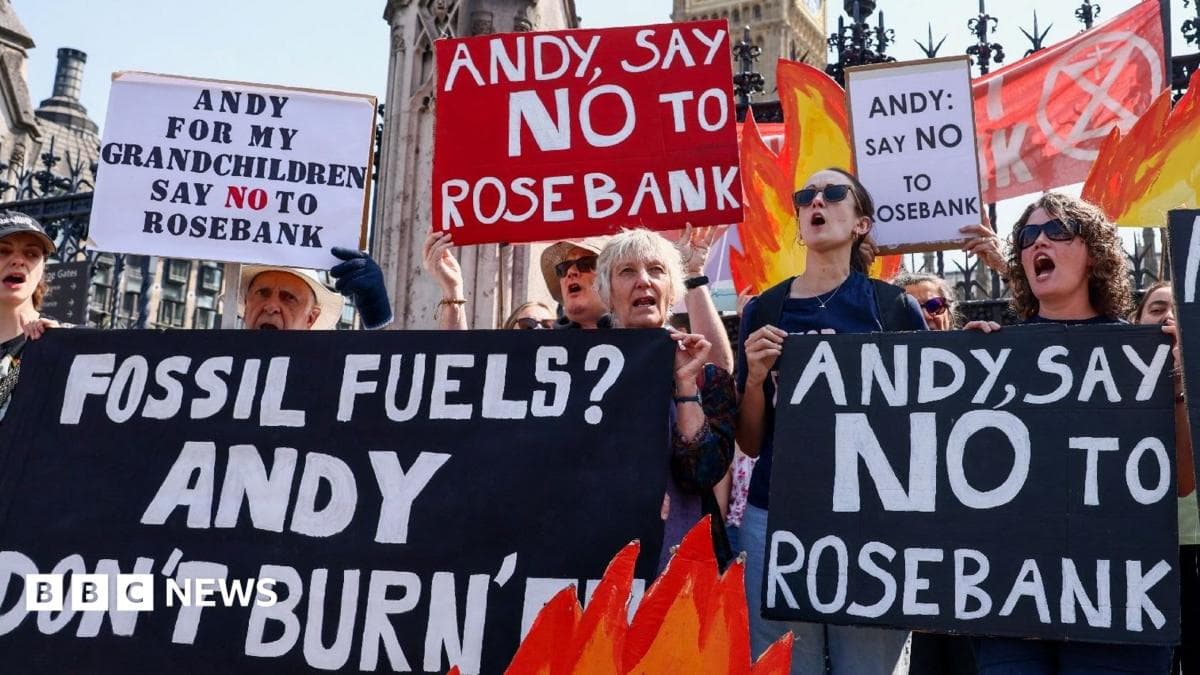
UK Prime Minister Andy Burnham is under pressure from campaigners and politicians over the potential approval of the Rosebank oil field, which is partly owned by Israeli company Delek Group. Environmental groups warn that proceeding with the project could breach recently announced UK sanctions targeting companies linked to illegal Israeli settlements in the West Bank. The decision, which rests with Energy Secretary Miatta Fahnbulleh, carries significant political, legal, and environmental implications.
30 SEC SUMMARY
- UK Prime Minister Andy Burnham faces warnings over potential sanctions violations if the Rosebank oil field, linked to Israeli firm Delek Group, is approved.
- Delek Group holds a 20% stake in Rosebank via Ithaca Energy and was included in a UN database for allegedly supporting illegal West Bank settlements.
- The UK recently announced sanctions targeting companies facilitating illegal settlements, raising legal and political concerns for the Rosebank decision.
- Energy Secretary Miatta Fahnbulleh will decide on Rosebank, but the outcome reflects broader political and environmental debates in the UK.
- Campaigners argue approving Rosebank could breach sanctions, while industry stakeholders emphasize its role in North Sea investment.
TABLE OF CONTENTS
- Sanctions and Legal Risks
- Corporate and Political Stakes
- Environmental and Diplomatic Implications
- Background on Rosebank and Ithaca Energy
- What this means
- Key takeaways
- FAQ
- Sources
KEY HIGHLIGHTS
- Rosebank, located off Shetland, is the UK’s largest untapped oil field, with Delek Group holding a 20% stake via Ithaca Energy.
- Delek Group was listed in a UN database for allegedly supporting illegal Israeli settlements in the West Bank, a claim the company denies.
- The UK government introduced sanctions last month banning imports from illegal settlements and targeting facilitating entities.
- Campaigners warn that approving Rosebank could breach these sanctions, citing Delek Group’s involvement in the project.
- The decision rests with Energy Secretary Miatta Fahnbulleh but is seen as a test of the government’s stance on oil and gas expansion.
Sanctions and Legal Risks
Prime Minister Andy Burnham is facing pressure from environmental campaigners and Green Party leader Zack Polanski over the potential approval of the Rosebank oil field. The project, located off the coast of Shetland, is the UK’s largest untapped oil field. Campaigners warn that approving Rosebank could violate recently announced UK sanctions targeting companies linked to illegal Israeli settlements in the West Bank.
The controversy stems from the involvement of Delek Group, an Israeli company that holds a 20% stake in Rosebank through its subsidiary, Ithaca Energy. Delek Group was included in a UN database of firms allegedly providing services or utilities to support settlements in occupied Palestinian territories. The UK government’s sanctions, announced last month, prohibit imports from illegal settlements and restrict dealings with entities facilitating such activities.
Corporate and Political Stakes
Delek Group has dismissed its inclusion in the UN database, stating it no longer has any involvement in Israeli settlements and was wrongly listed. However, campaigners, including Tessa Khan of the environmental group Uplift, argue that financing Rosebank could still breach the sanctions. Khan stated that companies blacklisted by the UN for operating in illegal settlements should not benefit from oil and gas revenues generated in the North Sea.
The decision on Rosebank lies with Energy Secretary Miatta Fahnbulleh, but it is widely viewed as a reflection of Burnham’s broader stance on oil and gas exploration. Burnham is reportedly in favor of drilling in existing North Sea licenses, aligning with pressure from industry groups and international allies, including former US President Donald Trump, who has urged successive UK leaders to expand North Sea production.
Environmental and Diplomatic Implications
Rosebank’s approval has been contentious since the previous Conservative government granted it the green light in 2023. Environmental groups, including Uplift and Greenpeace, successfully challenged the decision in court, leading to its reversal. The project’s revival under the current government has reignited debates about the UK’s energy policy, climate commitments, and corporate accountability.
The UK’s sanctions on illegal settlements have already drawn criticism from Israel, which has accused the government of pursuing "anti-Israel policies." The US, by contrast, has indicated it will not adopt similar measures, adding another layer of diplomatic complexity to the Rosebank decision.
Background on Rosebank and Ithaca Energy
Rosebank is a major oil field in the North Sea, with Ithaca Energy—a FTSE 100 company—as its primary operator. Ithaca Energy is a significant investor in the North Sea, and its links to Delek Group have brought the project under scrutiny. The field was previously approved in 2023 but faced legal challenges from environmental campaigners, who argued that it conflicted with the UK’s climate goals and legal obligations.
What this means
Lazyfounder analysis — our interpretation, not reported fact.
The Rosebank decision is a tightrope walk for the UK government, balancing energy security, diplomatic relations, and legal obligations. For founders and operators, this case underscores the growing risks of geopolitical entanglements in corporate projects. Even indirect ties to contentious regions or policies can trigger legal challenges, reputational damage, or compliance hurdles. The situation also highlights how environmental and human rights campaigns are increasingly shaping regulatory landscapes, making due diligence on investors and partners more critical than ever. If the UK approves Rosebank despite sanctions risks, it could set a precedent for how governments navigate conflicting priorities—energy, climate, and international law—in an era of heightened scrutiny.
Key takeaways
- Rosebank, the UK’s largest untapped oil field, is tied to Israeli company Delek Group, which has faced scrutiny for its alleged links to illegal West Bank settlements.
- The UK government’s recent sanctions on companies supporting settlements could complicate the approval of Rosebank due to Delek Group’s involvement.
- Energy Secretary Miatta Fahnbulleh holds the decision on Rosebank, but Prime Minister Andy Burnham’s stance on North Sea drilling will influence the outcome.
- Environmental campaigners, including Uplift’s Tessa Khan, argue that financing Rosebank could violate sanctions and undermine legal commitments.
- The decision carries implications for UK-Israel relations, corporate governance, and the future of oil and gas exploration in the North Sea.
FAQ
Why is Rosebank controversial?
Rosebank is controversial due to its environmental impact, potential violation of UK sanctions on illegal settlements, and links to Delek Group, which has been accused of supporting such settlements. Campaigners argue the project conflicts with climate goals and legal commitments.
What are the UK’s sanctions on illegal settlements?
The UK’s sanctions ban imports of goods from illegal Israeli settlements in the West Bank and restrict dealings with companies or individuals facilitating settlement activities. The measures aim to address concerns over human rights violations and international law.
Who decides whether Rosebank proceeds?
Energy Secretary Miatta Fahnbulleh is responsible for the decision, though it is expected to reflect Prime Minister Andy Burnham’s broader stance on oil and gas exploration in the North Sea.
What is Delek Group’s response to the allegations?
Delek Group has denied any ongoing involvement in Israeli settlements and claims it was wrongly included in the UN database of firms supporting such activities.
Related on Lazyfounder
Sources
- BBC News (Tech & Business) · 2026-10-01
Burnham warned Rosebank oil field could breach West Bank sanctions
This story is an original summary drafted with AI by Lazyfounder from the reporting listed above and checked by automated validation. Facts are attributed to their original publishers; sections marked as analysis are Lazyfounder's. Where a source is in another language, facts were machine-translated and quotations are reported, not reproduced. Read the original coverage via the links, and see our AI policy and corrections policy.

About the author
Editor, Lazyfounder
Tarun Mottlia edits LazyFounders, covering Indian startups, funding rounds, AI and product launches. Every story on the site is AI-assisted and checked against its cited sources before publication.
More stories by Tarun MottliaGet the LazyFounder Brief
Startup, funding and AI news in a five-minute read. Join the early-access list.
