
Pikio’s Si Oblik helmet achieves record safety rating with woodpecker-inspired tech
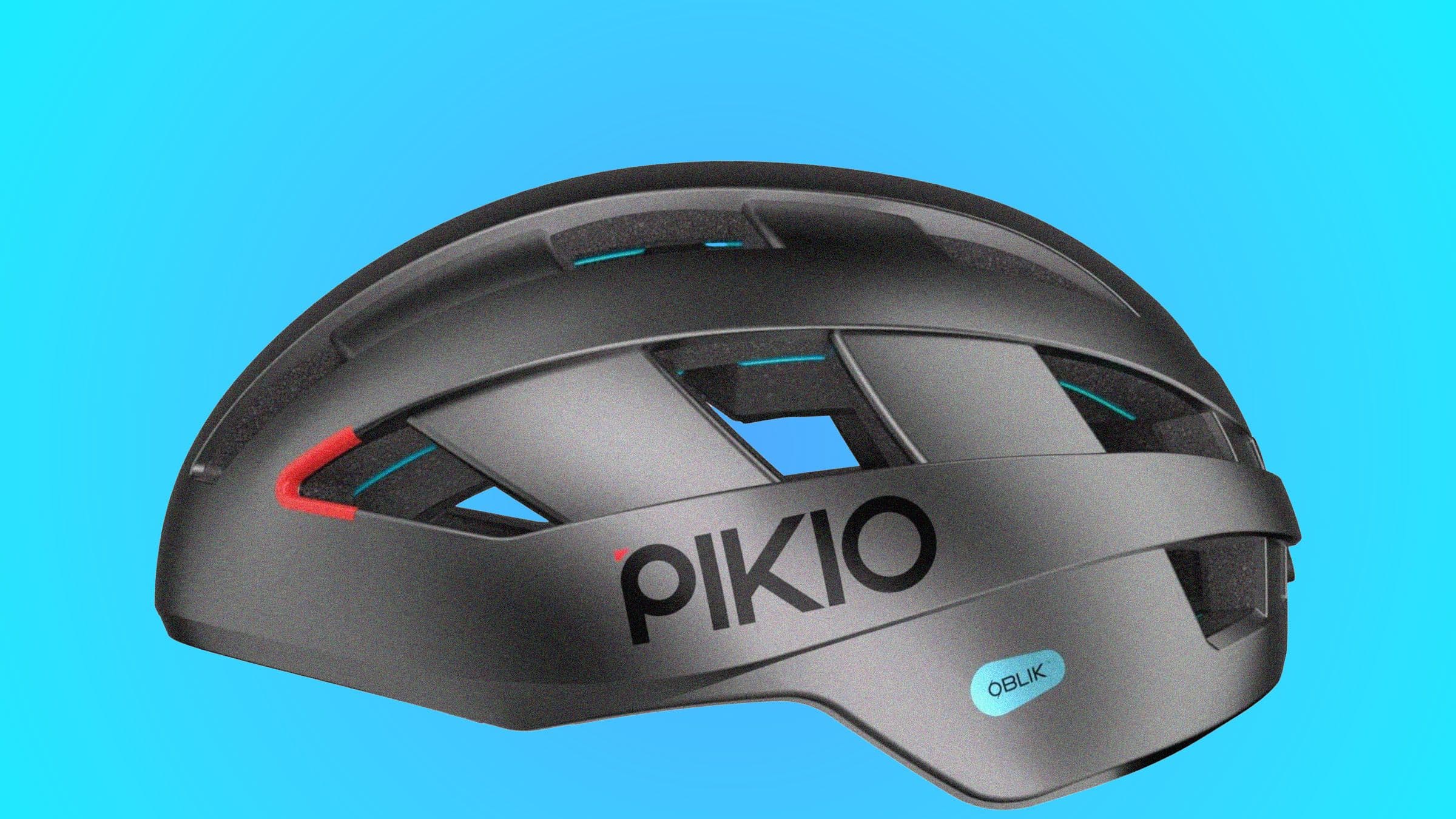
A Vancouver-based startup, Pikio, has developed the Si Oblik, a bike helmet recognized as the world’s safest by Virginia Tech’s helmet STAR ratings. The helmet’s record-low score of 4.61 is attributed to its Oblik safety system, which mimics woodpecker anatomy to reduce impact forces. Priced at $379, it challenges industry norms with its advanced technology and premium cost.

Editor, Lazyfounder
30 SEC SUMMARY
- Pikio, a Vancouver-based startup, has launched the Pikio Si Oblik, a bike helmet rated as the world’s safest by Virginia Tech’s STAR ratings with a record-low score of 4.61.
- The helmet features Oblik, a safety system inspired by woodpecker anatomy, designed to reduce both linear and rotational impact forces.
- Unlike standard helmets, the Pikio Si Oblik uses 80 individual components and is priced at $379, significantly higher than competitors.
- Founder Daniel Abram leverages 18 years of experience in impact protection and helmet design research.
- Pikio offers a 30% discount on replacements if damaged helmets are returned for analysis.
TABLE OF CONTENTS
KEY HIGHLIGHTS
- Pikio’s Si Oblik helmet achieved a record-low score of 4.61 in Virginia Tech’s helmet STAR ratings, the best performance ever recorded.
- The Oblik safety system is inspired by woodpecker anatomy and reduces both linear and rotational impact forces.
- The helmet consists of 80 individual components, far exceeding the 8-10 components in standard helmets.
- Priced at $379, the Pikio Si Oblik costs $219 more than the second-best helmet, Canyon Deflectr RLS.
- Pikio offers a 30% discount on replacements if customers return damaged helmets for analysis.
Pikio Si Oblik achieves record safety rating
According to WIRED, the Pikio Si Oblik road cycling helmet has achieved the lowest score ever recorded in Virginia Tech’s helmet STAR ratings, with a 4.61. This score is 32% lower than the previous best, the Canyon Deflectr RLS, which scored 6.82.
Virginia Tech’s STAR ratings evaluate helmets for both linear and rotational impacts, testing beyond the legal minimum requirements. The lower the score, the better the helmet’s performance in reducing head injury risk.
Oblik safety system inspired by woodpecker anatomy
The Pikio Si Oblik helmet features a novel safety system called Oblik, inspired by the concussion-proof anatomy of woodpeckers. According to WIRED, the system is designed to mitigate both linear and rotational impact forces, which are critical in preventing head injuries.
Unlike traditional helmets, Oblik breaks the foam structure into independently mounted sections. It uses dual-density foam and flexible connection points to manage impact energy more effectively.
The helmet contains around 80 individual components, a stark contrast to the 8-10 components typically found in standard cycling helmets.
Founder’s background and industry impact
Daniel Abram, founder of Pikio, brings 18 years of experience in impact protection and helmet design research to the company. According to WIRED, Abram studied mechanical engineering and later worked on helmet research at Simon Fraser University, where he contributed to the development of BrainShield, a safety technology.
In 2022, MIPS, a competing safety technology provider, acquired the patents and intellectual property of Abram’s previous company, BiaGuard, for approximately $1 million. MIPS later licensed its technology across the helmet industry, becoming a widely adopted standard.
Pikio’s achievement in Virginia Tech’s rankings is notable for a relatively unknown company in the cycling industry, competing against established brands like MIPS, 6D, WaveCel, Hexr, POC, and Giro.
Pricing and customer incentives
The Pikio Si Oblik helmet is priced at $379, which is $219 more expensive than the Canyon Deflectr RLS, the second-best helmet in Virginia Tech’s rankings.
To encourage customers to return damaged helmets for analysis, Pikio offers a 30% discount on replacement units. This initiative not only fosters customer loyalty but also provides the company with valuable data for further product development.
Pikio plans to release a second helmet design early in the new year, expanding its product lineup.
What this means
Lazyfounder analysis — our interpretation, not reported fact.
Pikio’s success with the Si Oblik helmet underscores how niche startups can disrupt established industries by focusing on deep research and innovation. The Oblik system’s inspiration from woodpecker anatomy is a clear example of biomimicry driving product differentiation—a strategy that could inspire founders in other sectors to explore nature-inspired solutions.
However, the helmet’s premium price point raises questions about market adoption. While safety-conscious cyclists may be willing to pay extra for cutting-edge protection, Pikio’s challenge will be convincing a broader audience that the added cost is justified. The 30% discount for returned damaged helmets is a smart move, as it transforms customers into partners in product improvement, creating a feedback loop that could further refine the technology.
For founders, Pikio’s story is a reminder that third-party validation—like Virginia Tech’s STAR ratings—can be a powerful tool for building trust, especially when competing against well-established brands. It also highlights the importance of founder expertise: Abram’s 18 years in impact protection research lent credibility to the product and likely played a key role in its development.
Key takeaways
- For founders in the safety and protective gear space, Pikio’s approach demonstrates that deep research and biomimicry can differentiate a product in a crowded market.
- The higher price point of the Si Oblik highlights a potential trade-off between cost and cutting-edge safety, which may appeal to niche but high-value customer segments.
- Startups can leverage third-party validation, like Virginia Tech’s STAR ratings, to build credibility and trust with consumers.
- Pikio’s emphasis on post-purchase engagement—such as offering discounts for returned damaged helmets—shows how data collection can drive both customer loyalty and product improvement.
FAQ
What makes the Pikio Si Oblik helmet safer than others?
The Pikio Si Oblik uses the Oblik safety system, which is inspired by woodpecker anatomy. It breaks the helmet’s foam structure into 80 independently mounted sections, using dual-density foam and flexible connection points to reduce both linear and rotational impact forces. This design achieved the lowest score ever in Virginia Tech’s STAR ratings, indicating superior protection.
Why is the Pikio Si Oblik helmet so expensive?
The helmet is priced at $379 due to its advanced safety technology, which includes 80 individual components—far more than the 8-10 components in standard helmets. The complexity of the Oblik system and its research-driven design contribute to the higher cost.
How does Virginia Tech’s STAR rating work?
Virginia Tech’s STAR ratings evaluate helmets for their ability to reduce head injury risk by testing both linear and rotational impacts. The ratings go beyond legal minimum requirements, with lower scores indicating better performance. The Pikio Si Oblik achieved a record-low score of 4.61.
What is Pikio’s incentive for customers to return damaged helmets?
Pikio offers a 30% discount on a replacement helmet if customers return their damaged unit. This not only encourages customer loyalty but also provides Pikio with data to analyze real-world impacts and improve future designs.
Related on Lazyfounder
Sources
- WIRED · 2026-10-10
How This Tiny Startup Built the World’s Safest Bike Helmet
This story is an original summary drafted with AI by Lazyfounder from the reporting listed above and checked by automated validation. Facts are attributed to their original publishers; sections marked as analysis are Lazyfounder's. Where a source is in another language, facts were machine-translated and quotations are reported, not reproduced. Read the original coverage via the links, and see our AI policy and corrections policy.

About the author
Editor, Lazyfounder
Tarun Mottlia edits LazyFounders, covering Indian startups, funding rounds, AI and product launches. Every story on the site is AI-assisted and checked against its cited sources before publication.
More stories by Tarun MottliaGet the LazyFounder Brief
Startup, funding and AI news in a five-minute read. Join the early-access list.
