
Thermal drones track hidden fires and ecosystem recovery in Scotland
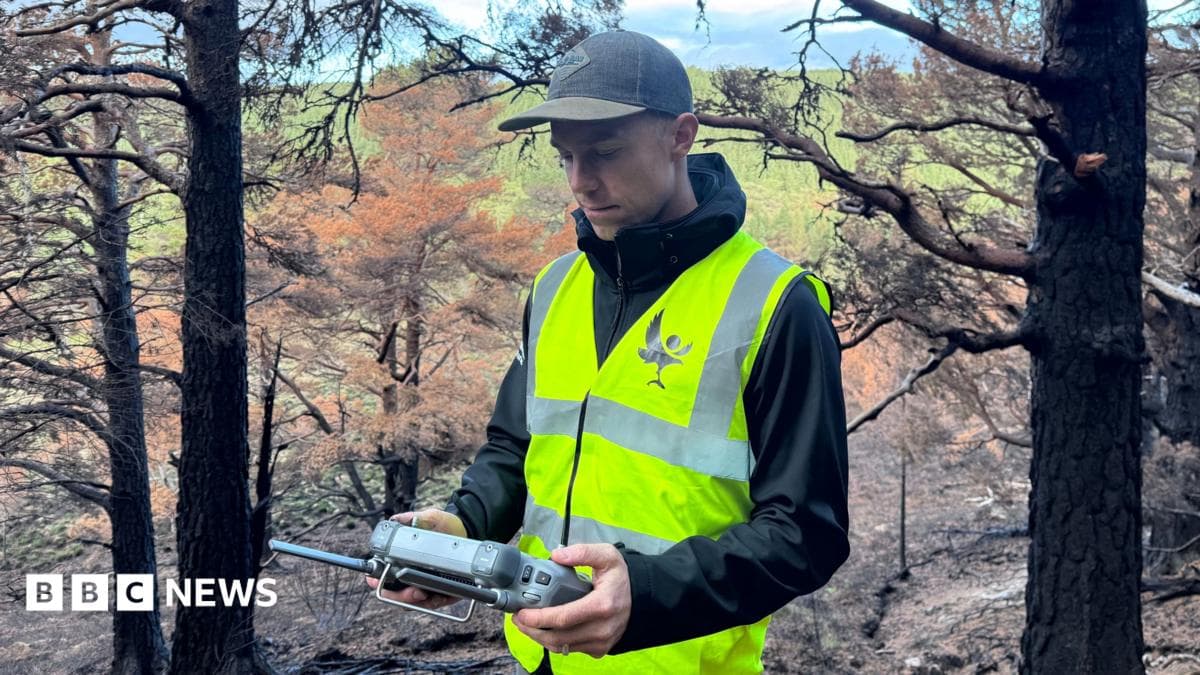
A drone pilot in Scotland’s Cairngorms National Park is using thermal drones to locate hidden fires lingering beneath the landscape months after a large wildfire. The same technology is now being repurposed to monitor ecosystem recovery, offering a dual solution for wildfire management and conservation.

Editor, Lazyfounder
30 SEC SUMMARY
- A drone pilot in Scotland’s Cairngorms National Park is using thermal drones to detect hidden fires months after a large wildfire.
- Thermal drones identified eight hidden fires during recent flights, some still smoldering beneath the surface.
- The same drones are being repurposed to monitor ecosystem recovery by flying repeat routes over damaged areas.
- This approach could also enable early detection of future wildfires, potentially preventing larger outbreaks.
TABLE OF CONTENTS
KEY HIGHLIGHTS
- A wildfire in Cairngorms National Park in July left hidden fires smoldering beneath the landscape for months.
- Thermal drones detected eight hidden fires during the latest patrols, including one beneath a tree.
- Drones are now being used to track ecosystem recovery by repeatedly flying the same routes over affected areas.
- The technology could help spot future fires early, reducing the risk of large-scale outbreaks.
Thermal drones detect hidden fires months later
According to BBC News, drone pilot Pete Short has been using thermal drones in Scotland’s Cairngorms National Park to search for hidden fires nearly three months after a large wildfire in July. During recent flights, the drones identified eight hidden fires still smoldering beneath the landscape, including one beneath a tree.
The technology works by detecting heat signatures that are invisible to the naked eye. In one case, stirring the soil near a detected hot spot revealed smoke, confirming the presence of a lingering fire. Experts warn that such hidden fires can persist for years or even decades, posing a risks of reignition.
Drones repurposed for ecosystem recovery
Beyond fire detection, the drones are now being used to monitor the recovery of the damaged ecosystem. According to BBC News, they are programmed to fly the same routes repeatedly, allowing researchers to track changes in vegetation and soil conditions over time.
This approach provides a low-cost, scalable method for gathering long-term environmental data, which could inform conservation efforts and land management strategies.
Potential for early wildfire detection
The same thermal drone technology could also play a role in preventing future wildfires. By patrolling fire-prone areas, drones may detect small fires before they spread, enabling faster intervention and reducing the risk of large-scale outbreaks.
This application could be particularly valuable in regions with dry climates or frequent wildfires, where early detection is critical to minimizing damage.
What this means
Lazyfounder analysis — our interpretation, not reported fact.
For founders and operators in environmental technology, this story highlights a practical and scalable use case for drone technology beyond traditional surveillance. The ability to detect hidden fires and monitor ecosystem recovery with the same tools demonstrates how existing hardware can be repurposed to address urgent challenges like wildfire management and conservation.
Startups in this space could explore partnerships with national parks, forestry agencies, or emergency services to deploy similar solutions. The dual application—both for immediate fire detection and long-term recovery monitoring—also suggests a compelling value proposition for potential customers. However, regulatory hurdles, battery life limitations, and data processing challenges remain key considerations for scaling such initiatives.
Key takeaways
- Thermal drones can detect hidden fires that may persist for months or years after a wildfire, reducing the risk of reignition.
- Repurposing drones for ecosystem monitoring creates a cost-effective way to track recovery and gather long-term environmental data.
- Early wildfire detection using drones could prevent larger outbreaks, offering a proactive tool for fire-prone regions.
- Founders in environmental tech should consider partnerships with public agencies to pilot and refine drone-based solutions.
FAQ
How do thermal drones detect hidden fires?
Thermal drones detect hidden fires by capturing heat signatures that are invisible to the naked eye. These signatures reveal smoldering hot spots beneath the surface, such as soil or vegetation, that may still be burning long after the visible flames have died down.
Can drones help monitor ecosystem recovery after a wildfire?
Yes, drones are being programmed to fly repeat routes over damaged areas, allowing researchers to track changes in vegetation, soil conditions, and other environmental factors. This provides a cost-effective way to monitor recovery over time.
Could this technology prevent future wildfires?
Thermal drones have the potential to spot small fires early, before they spread. By patrolling fire-prone areas, they could enable faster intervention, reducing the risk of large-scale wildfires.
Related on Lazyfounder
Sources
- BBC News (Tech & Business) · 2026-10-10
How drones are hunting fires hidden beneath the Cairngorms
This story is an original summary drafted with AI by Lazyfounder from the reporting listed above and checked by automated validation. Facts are attributed to their original publishers; sections marked as analysis are Lazyfounder's. Where a source is in another language, facts were machine-translated and quotations are reported, not reproduced. Read the original coverage via the links, and see our AI policy and corrections policy.

About the author
Editor, Lazyfounder
Tarun Mottlia edits LazyFounders, covering Indian startups, funding rounds, AI and product launches. Every story on the site is AI-assisted and checked against its cited sources before publication.
More stories by Tarun MottliaGet the LazyFounder Brief
Startup, funding and AI news in a five-minute read. Join the early-access list.
