
Artemis II Astronauts Observe Faint Meteor Impacts on the Moon During Lunar Flyby
NASA’s Artemis II astronauts reported seeing five meteor impact flashes on the moon during their lunar flyby, offering new insights into lunar meteorite activity. The observations, described as some of the faintest ever recorded by humans, occurred outside any known meteor shower and could help assess risks for future moon missions and bases.

Editor, Lazyfounder
30 SEC SUMMARY
- NASA’s Artemis II astronauts observed five meteor impact flashes on the moon during their lunar flyby, marking some of the faintest such sightings ever recorded by humans.
- The flashes occurred on the moon’s unlit side and were unexpected, as they happened outside any known meteor shower.
- Scientists estimate the meteoroids were only a few centimeters across, providing new data on lunar meteorite activity.
- Observations were timed to maximize visibility by leveraging the moon’s shadow to block the sun’s glare from the Orion capsule.
- The findings lend credibility to Apollo-era reports and help assess risks for future moon missions and bases.
TABLE OF CONTENTS
- Astronauts spot unexpected flashes during lunar flyby
- Scientists surprised by observations outside meteor shower
- Flashes provide critical data for lunar risk assessment
- NASA’s strategic timing enhances visibility
- Findings validate Apollo-era reports
- Why ground-based systems missed the flashes
- What this means
- Key takeaways
- FAQ
- Sources
KEY HIGHLIGHTS
- Artemis II astronauts reported seeing five meteor impact flashes on the moon’s unlit side during their lunar flyby.
- The flashes were likely the faintest ever observed by humans and occurred outside any major meteor shower.
- NASA timed the observations for when the moon blocked the sun from the Orion capsule’s view to enhance visibility.
- Scientists estimate the meteoroids were only a few centimeters across, too small for ground-based telescopes or the Lunar Reconnaissance Orbiter to detect.
- The observations provide critical data on lunar meteorite activity, helping assess risks for future moon missions and bases.
Astronauts spot unexpected flashes during lunar flyby
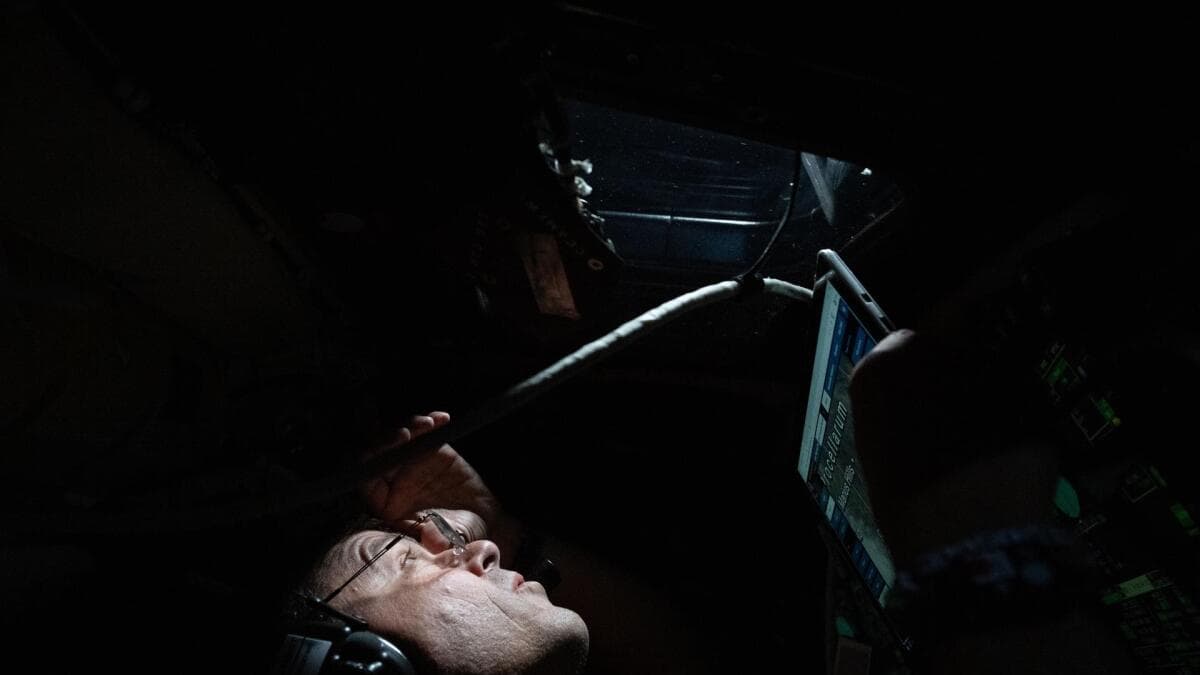
According to Mashable, the Artemis II crew observed five meteor impact flashes on the moon’s surface during their mission. The flashes, described as tiny sparks, were among the faintest ever seen by humans and occurred on the moon’s unlit side. Artemis II Commander Reid Wiseman was the first to report the sighting, which surprised scientists monitoring the mission.
Scientists surprised by observations outside meteor shower
Kelsey Young, NASA’s Lunar Science Operations Lead for the Artemis II mission, stated that the team did not anticipate the crew would observe any micrometeorite impacts. The flashes occurred outside any major meteor shower, making the sightings particularly unexpected. Reaction in mission control was reportedly one of shock and excitement, with audible expressions of delight from the team.
Flashes provide critical data for lunar risk assessment
The observed flashes are providing NASA with valuable data on how often and where comets and asteroids strike the moon. This information is critical for assessing risks to future moon missions, including the establishment of lunar bases. According to scientists, the meteoroids causing the flashes were likely only a few centimeters across—roughly the size of a grape or a walnut.
NASA’s strategic timing enhances visibility
NASA timed the astronauts’ observations for a period when the moon blocked the sun from the Orion capsule’s view. This strategic decision enhanced the visibility of faint flashes, allowing the crew to spot the impacts despite their small size. Ground-based telescopes and orbital cameras, including those on the Lunar Reconnaissance Orbiter, failed to capture the flashes due to their faintness and the resulting craters’ tiny size.
Findings validate Apollo-era reports
The Artemis II observations lend new credibility to reports from Apollo missions, which documented similar flashes over half a century ago. While telescopes on Earth have logged over 400 lunar impact flashes since the Apollo era, the Artemis II sightings are notable for their faintness and the context in which they were observed.
Why ground-based systems missed the flashes
A camera mounted on the Orion capsule’s exterior filmed approximately two minutes of the event but did not capture any flashes. Similarly, the Lunar Reconnaissance Orbiter, which has mapped the moon’s surface in high detail, was unable to detect the impact sites because the resulting craters were too small. Scientists believe the meteoroids’ small size and the flashes’ faintness made them undetectable by automated systems.
What this means
Lazyfounder analysis — our interpretation, not reported fact.
For founders and operators in space technology, this story underscores the fragility of lunar operations and the unpredictability of the moon’s environment. The Artemis II astronauts’ observations highlight that even small meteorite impacts—previously dismissed as negligible—can pose risks to future missions and infrastructure. This data is critical for companies designing habitats, landers, or other lunar assets, as it provides real-world evidence of the frequency and distribution of impacts.
The fact that these flashes were only visible to human eyes—rather than automated systems—also speaks to the value of human presence in space exploration. While AI and machine learning are transforming how we monitor and interpret data, the Artemis II observations remind us that human intuition and adaptability remain irreplaceable in certain scenarios. Startups in space situational awareness or autonomous sensing may need to revisit their assumptions about the limitations of human observation.
Finally, the story is a reminder that serendipity plays a role in scientific discovery. The astronauts weren’t originally tasked with observing meteor impacts, yet their unexpected findings could shape NASA’s lunar strategy for years to come. For founders, this is a lesson in building flexibility into mission protocols and fostering a culture where teams can pivot quickly to capitalize on unforeseen opportunities.
Key takeaways
- Lunar meteorite impacts, even small ones, pose measurable risks for future moon missions and infrastructure. Founders in space technology and lunar exploration should incorporate impact risk assessments into their designs.
- Human observation remains a valuable tool for detecting faint or transient events in space, even as automation and AI-driven sensing advance. Operators should consider hybrid human-AI monitoring systems for critical missions.
- Timing and environmental conditions—such as leveraging the moon’s shadow—can significantly enhance the visibility of faint phenomena. Startups in space observation should account for such variables in their mission planning.
- Collaboration between astronauts and ground teams can yield unexpected scientific discoveries. Founders should foster real-time communication protocols to capitalize on such opportunities during missions.
FAQ
Why were the meteor impact flashes significant?
The flashes were significant because they represent some of the faintest meteor impacts ever observed by humans. They provide critical data on lunar meteorite activity, helping NASA assess risks for future moon missions and the establishment of lunar bases.
Why couldn’t ground-based telescopes or orbital cameras detect the flashes?
The flashes were too faint and the resulting craters too small—likely caused by meteoroids only a few centimeters across. Ground-based telescopes and the Lunar Reconnaissance Orbiter were not equipped to detect such small or transient events.
How did NASA maximize the chances of observing the flashes?
NASA timed the observations for when the moon blocked the sun from the Orion capsule’s view. This created optimal conditions for spotting faint flashes on the moon’s unlit side.
Related on Lazyfounder
Sources
- Mashable · 2026-10-10
Artemis II astronauts saw the flashes of 5 meteor impacts on the moon
This story is an original summary drafted with AI by Lazyfounder from the reporting listed above and checked by automated validation. Facts are attributed to their original publishers; sections marked as analysis are Lazyfounder's. Where a source is in another language, facts were machine-translated and quotations are reported, not reproduced. Read the original coverage via the links, and see our AI policy and corrections policy.

About the author
Editor, Lazyfounder
Tarun Mottlia edits LazyFounders, covering Indian startups, funding rounds, AI and product launches. Every story on the site is AI-assisted and checked against its cited sources before publication.
More stories by Tarun MottliaGet the LazyFounder Brief
Startup, funding and AI news in a five-minute read. Join the early-access list.
