
Nazca mummies discovery may rewrite history of Wari Empire
Archaeologists have uncovered four Nazca mummies at Peru’s Huaca del Loro site, a discovery that could reshape the historical narrative of the Wari Empire’s relationship with the Nasca civilization. The mummies, found near a Wari temple, suggest a more complex and potentially peaceful interaction than previously thought.

Editor, Lazyfounder
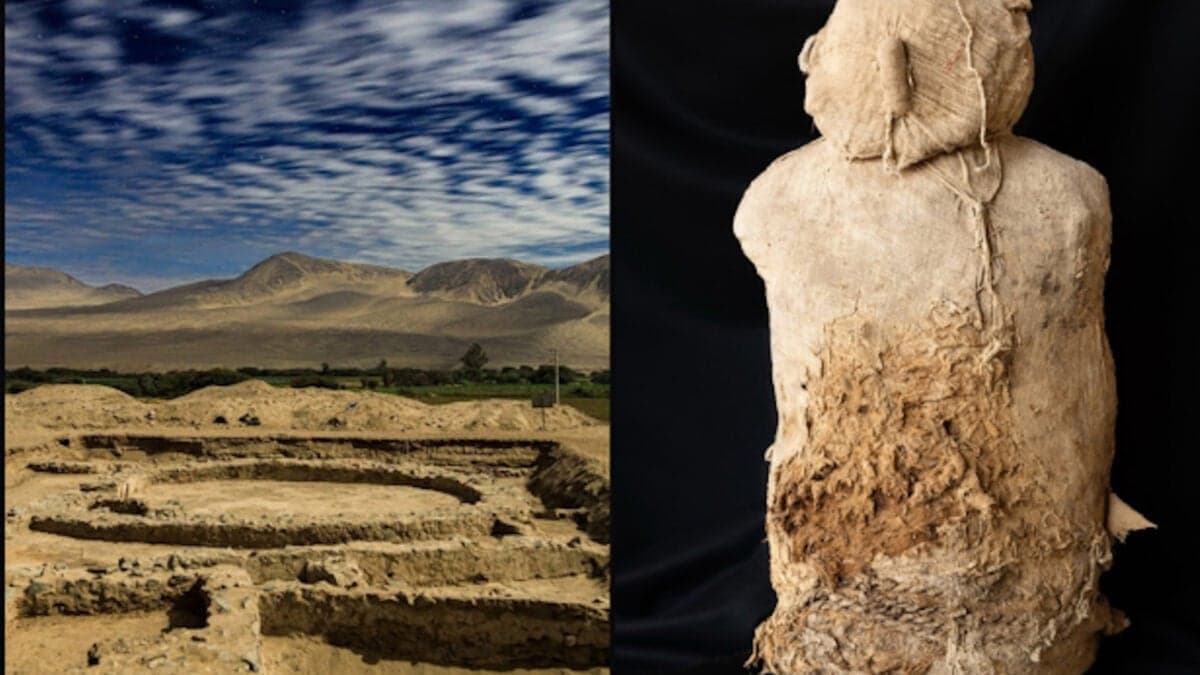
Archaeologists have uncovered four Nazca mummies at Peru’s Huaca del Loro site, a discovery that could reshape the historical narrative of the Wari Empire’s relationship with the Nasca civilization. The mummies, found near a Wari temple, suggest a more complex and potentially peaceful interaction than previously thought.
30 SEC SUMMARY
- Archaeologists led by Professor Corina Kellner discovered four Nazca mummies at Peru’s Huaca del Loro site, challenging existing narratives about the Wari Empire’s relationship with the Nasca civilization.
- The mummies were found near a Wari temple, unlike typical Nasca burials, which were usually in cemeteries.
- The discovery suggests potential cultural intermixing, as the tomb contained offerings like local foods, ceramics, and camelid sacrifices.
- The Wari Empire, often associated with violent military campaigns, may have had a more peaceful relationship with the Nasca civilization.
- Further isotopic analyses are planned to study diet, migration, and interactions between the two cultures.
TABLE OF CONTENTS
- Discovery Challenges Historical Narratives
- Cultural Insights from the Tomb
- Next Steps in Research
- What this means
- Key takeaways
- FAQ
- Sources
KEY HIGHLIGHTS
- Four Nazca mummies were discovered at Huaca del Loro, a site in Peru, by a team led by Professor Corina Kellner of Northern Arizona University.
- The mummies were found near a Wari temple, unlike typical Nasca burials, which were usually in cemeteries.
- The tomb contained offerings like local foods, ceramics, and camelid sacrifices, suggesting cultural intermixing.
- The Wari Empire, existing from 600 to 1100 CE, is often associated with violent military campaigns, but this discovery may indicate a more peaceful interaction.
- Huaca del Loro may have been a center of Wari administrative power in the Nasca region.
Discovery Challenges Historical Narratives
A team of archaeologists led by Professor Corina Kellner of Northern Arizona University has uncovered four Nazca mummies at the Huaca del Loro site in Peru. The discovery, located near a Wari temple, is unusual because Nasca burials typically occurred in cemeteries rather than near Wari structures. According to Gizmodo, this finding could challenge long-held assumptions about the relationship between the Wari Empire and the Nasca civilization.
The Wari Empire, which thrived from approximately 600 to 1100 CE, is often depicted as a militaristic society that expanded through violent campaigns. However, the location and context of these mummies suggest a more nuanced interaction, potentially indicating cultural exchange or integration rather than conquest.
Cultural Insights from the Tomb
The tomb containing the mummies included a variety of offerings, such as local foods, ceramics, and camelid sacrifices. According to reports, these items point to a blending of cultural practices, further hinting at a more peaceful or cooperative relationship between the Wari and Nasca peoples.
Huaca del Loro, the site of the discovery, is believed to have been a center of Wari administrative power in the Nasca region. This adds weight to the idea that the Wari may have governed or interacted with the Nasca in ways that extended beyond military dominance.
Next Steps in Research
Researchers plan to conduct isotopic analyses on the mummies to study diet, migration patterns, and the nature of the relationship between the Wari and Nasca. These analyses could provide deeper insights into how these two cultures coexisted and influenced each other.
The discovery is part of a broader effort to protect Peru’s archaeological heritage, which has been heavily pillaged over the years. Collaborating institutions include the Institute of Andean Studies, the Museo Nacional de Lima, and Peru’s Ministry of Culture.
What this means
Lazyfounder analysis — our interpretation, not reported fact.
This discovery is a reminder of how fragile historical narratives can be—and how quickly new evidence can reshape our understanding of the past. For founders and operators in fields like edtech, cultural heritage, or even tourism, it highlights the value of interdisciplinary collaboration. Archaeology isn’t just about digging up relics; it’s about rewriting stories, challenging assumptions, and revealing overlooked connections. If a single excavation can overturn decades of accepted history, it’s worth asking: What assumptions is your industry operating under? Are there "buried" insights in your data or user behavior that could redefine your market or product strategy?
Key takeaways
- Four Nazca mummies were discovered at Huaca del Loro, a site in Peru, near a Wari temple, which is unusual for Nasca burials.
- The finding challenges the traditional view of the Wari Empire as solely militaristic and suggests a more complex relationship with the Nasca civilization.
- The tomb contained offerings like local foods, ceramics, and camelid sacrifices, indicating cultural exchange or integration.
- Huaca del Loro may have been a center of Wari administrative power in the Nasca region.
- Further scientific analysis could provide insights into diet, migration, and interactions between the Wari and Nasca peoples.
FAQ
Why is this discovery significant?
The discovery is significant because the mummies were found near a Wari temple, unlike typical Nasca burials, which were usually in cemeteries. This suggests a possible cultural or administrative connection between the Wari Empire and the Nasca civilization, challenging the traditional view of the Wari as purely militaristic.
What do the offerings in the tomb indicate?
The offerings, including local foods, ceramics, and camelid sacrifices, indicate cultural intermixing or exchange. This supports the idea that the Wari and Nasca may have had a more cooperative or integrated relationship.
What will further research focus on?
Further research will involve isotopic analyses to study the diet, migration patterns, and relationships between the Wari and Nasca peoples. This could provide deeper insights into how these civilizations interacted.
What was the Wari Empire’s reputation before this discovery?
The Wari Empire, which existed from about 600 to 1100 CE, has historically been associated with violent military campaigns and expansion. This discovery may challenge that narrative by suggesting more peaceful or cooperative interactions with the Nasca civilization.
Sources
- Gizmodo · 2026-10-01
Archaeologists Found 4 Nazca Mummies in the Wrong Place. It Could Turn the Story of an Ancient Empire ‘Upside Down’
This story is an original summary drafted with AI by Lazyfounder from the reporting listed above and checked by automated validation. Facts are attributed to their original publishers; sections marked as analysis are Lazyfounder's. Where a source is in another language, facts were machine-translated and quotations are reported, not reproduced. Read the original coverage via the links, and see our AI policy and corrections policy.

About the author
Editor, Lazyfounder
Tarun Mottlia edits LazyFounders, covering Indian startups, funding rounds, AI and product launches. Every story on the site is AI-assisted and checked against its cited sources before publication.
More stories by Tarun MottliaGet the LazyFounder Brief
Startup, funding and AI news in a five-minute read. Join the early-access list.
