
Lithuanian defence startup PDKINEMATICS develops precision-guidance systems for drones
Lithuanian startup PDKINEMATICS is rethinking drone warfare with its precision-guidance system, Gannet, designed to improve the accuracy and survivability of unmanned aerial vehicles in high-threat environments. Founded by Rapolas Markevičius, a former private equity manager, the company responds to gaps exposed by Russia’s invasion of Ukraine and the resulting shift in European defence priorities.

Editor, Lazyfounder
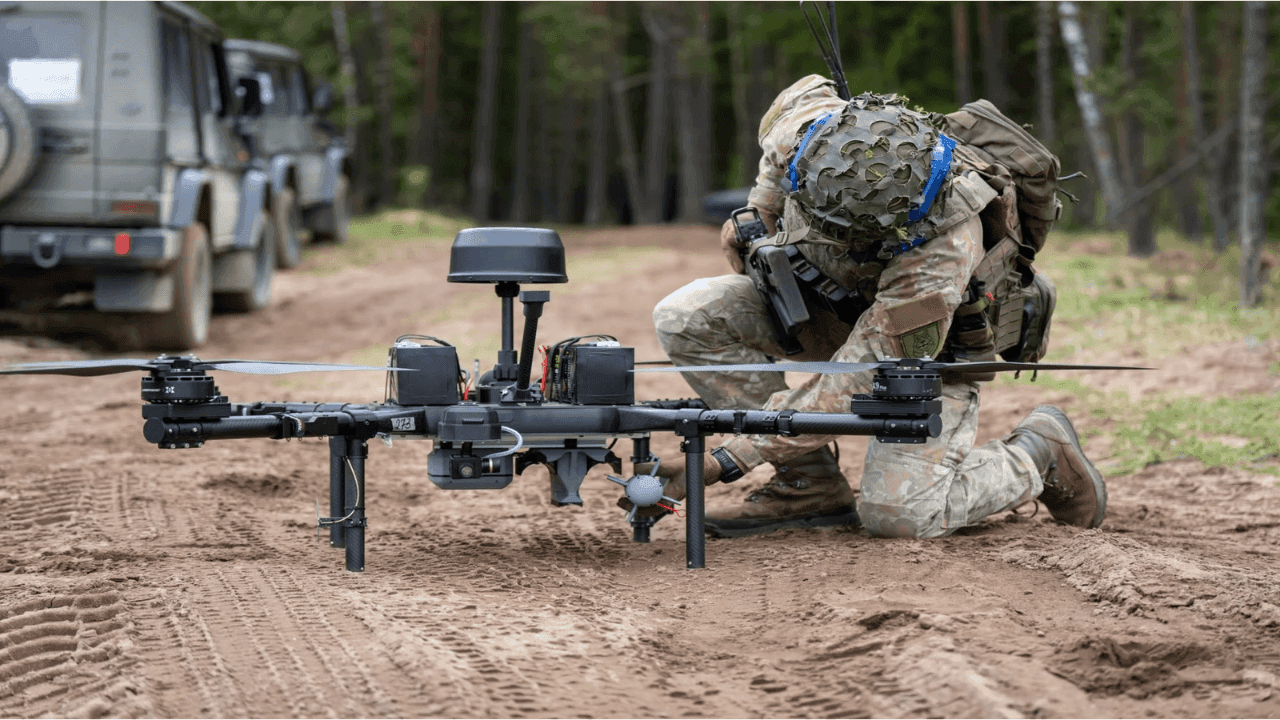
TABLE OF CONTENTS
Why a private equity background led to defence technology
Rapolas Markevičius, Founder and CEO of Lithuanian startup PDKINEMATICS, transitioned from private equity to defence technology following Russia’s invasion of Ukraine in 2022. His background includes managing investments at 1 Asset Management and training as a reserve officer at the Lithuanian Military Academy. This combination of financial expertise and military awareness shaped PDKINEMATICS’ mission: to address gaps in drone warfare through precision-guidance systems.
The company was founded amid a broader shift in European defence priorities, driven by the urgency of supporting Ukraine and strengthening regional security. Markevičius described the decision as a response to the geopolitical upheaval, where the need for effective, scalable solutions became critical.
How Gannet changes drone warfare
PDKINEMATICS’ flagship product, Gannet, is a precision-guidance system designed to enhance the effectiveness of drones in contested environments. It enables unmanned aerial vehicles (UAVs) to deploy precision-guided munitions from altitudes up to 700 metres—significantly higher than the typical range for unguided systems. This reduces exposure to ground-based threats while maintaining accuracy.
Gannet is jam-resistant, platform-agnostic, and capable of operating in GPS-denied environments, making it adaptable to electronic warfare conditions. The system can be integrated with existing UAV fleets in under four weeks, a critical advantage for militaries seeking rapid upgrades. It is already deployed in Ukraine and several European countries.
Challenges in scaling defence technology
PDKINEMATICS employs around 20 people, a modest team for its ambitions. The company faces talent shortages in the Baltic region, particularly for specialised roles in defence and aerospace engineering. To mitigate this, it adapts established technologies to modern hardware, allowing it to recruit from broader tech sectors rather than relying solely on traditional defence expertise.
The company also benefits from direct feedback from Ukrainian military end users, incorporating battlefield insights into product development within weeks. This agility contrasts with slower, bureaucratic cycles in some NATO militaries, which struggle to replicate Ukraine’s operational tempo.
The shift toward autonomy and regulatory hurdles
PDKINEMATICS and its competitors, including Ukrainian startups like M-FLY, Deftak, and The Fourth Law, are pushing the boundaries of autonomous military operations. Technologies like AI-powered terminal-guidance systems and computer-vision-guided munitions are already technically capable of autonomous targeting, though deployment varies by country.
European and NATO militaries remain cautious about full autonomy due to regulatory and accountability concerns. While Ukraine deploys autonomous systems on the battlefield, Western allies are navigating ethical and legal frameworks, slowing adoption despite technological readiness.
Markevičius anticipates a broader industry shift toward autonomy but acknowledges that regulatory alignment will determine how quickly this transition occurs.
Market focus: Ukraine first, then Europe
PDKINEMATICS’ immediate priority is supporting Ukraine and expanding its presence across Europe. The company’s close ties with Ukrainian military users and Lithuania’s strategic partnerships have expedited deployments and feedback loops. Ukraine’s mature defence technology ecosystem, with procurement standards aligning with European norms, further eases market entry.
Global opportunities are not a near-term focus. The company’s strategy reflects a deliberate choice to consolidate its position in Europe before addressing broader demand.
What this means
Lazyfounder analysis — our interpretation, not reported fact.
PDKINEMATICS’ work signals a broader trend in defence technology: startups are increasingly filling gaps left by traditional defence contractors, particularly in areas like drone warfare and precision systems. For founders and operators, this story highlights three key dynamics:
-
Geopolitics as a catalyst for innovation: The urgency created by Russia’s invasion of Ukraine has accelerated the development of defence technologies in Europe. Startups that can align with emerging security priorities—whether in Europe or other regions—may find unexpected opportunities. PDKINEMATICS’ pivot from private equity to defence tech underscores how geopolitical shifts can redefine markets.
-
Speed and agility in defence innovation: The company’s ability to integrate battlefield feedback within weeks and deploy its system in under a month contrasts sharply with traditional defence procurement cycles. This agility is a competitive advantage for startups, especially in conflict zones where operational needs evolve rapidly. For founders in adjacent sectors, the takeaway is clear: partnerships with end users (militaries, in this case) can create closed-loop innovation cycles that outpace larger competitors.
-
Regulatory caution as a bottleneck: While the technology for autonomous military systems is advancing, European and NATO countries remain hesitant due to regulatory and ethical concerns. This creates a paradox—defence startups may develop cutting-edge capabilities, but deployment depends on aligning with slower-moving policy frameworks. Founders in this space must anticipate regulatory hurdles early, particularly when expanding beyond conflict zones like Ukraine.
Related on Lazyfounder
Sources
- Tech.eu · 2026-10-28
From private equity to precision strikes: How Lithuania's PDKinematics is rethinking drone warfare
This story is an original summary drafted with AI by Lazyfounder from the reporting listed above and checked by automated validation. Facts are attributed to their original publishers; sections marked as analysis are Lazyfounder's. Where a source is in another language, facts were machine-translated and quotations are reported, not reproduced. Read the original coverage via the links, and see our AI policy and corrections policy.

About the author
Editor, Lazyfounder
Tarun Mottlia edits LazyFounders, covering Indian startups, funding rounds, AI and product launches. Every story on the site is AI-assisted and checked against its cited sources before publication.
More stories by Tarun MottliaGet the LazyFounder Brief
Startup, funding and AI news in a five-minute read. Join the early-access list.
