
Leaked footage reveals canceled Assassin’s Creed Destiny set in ancient China
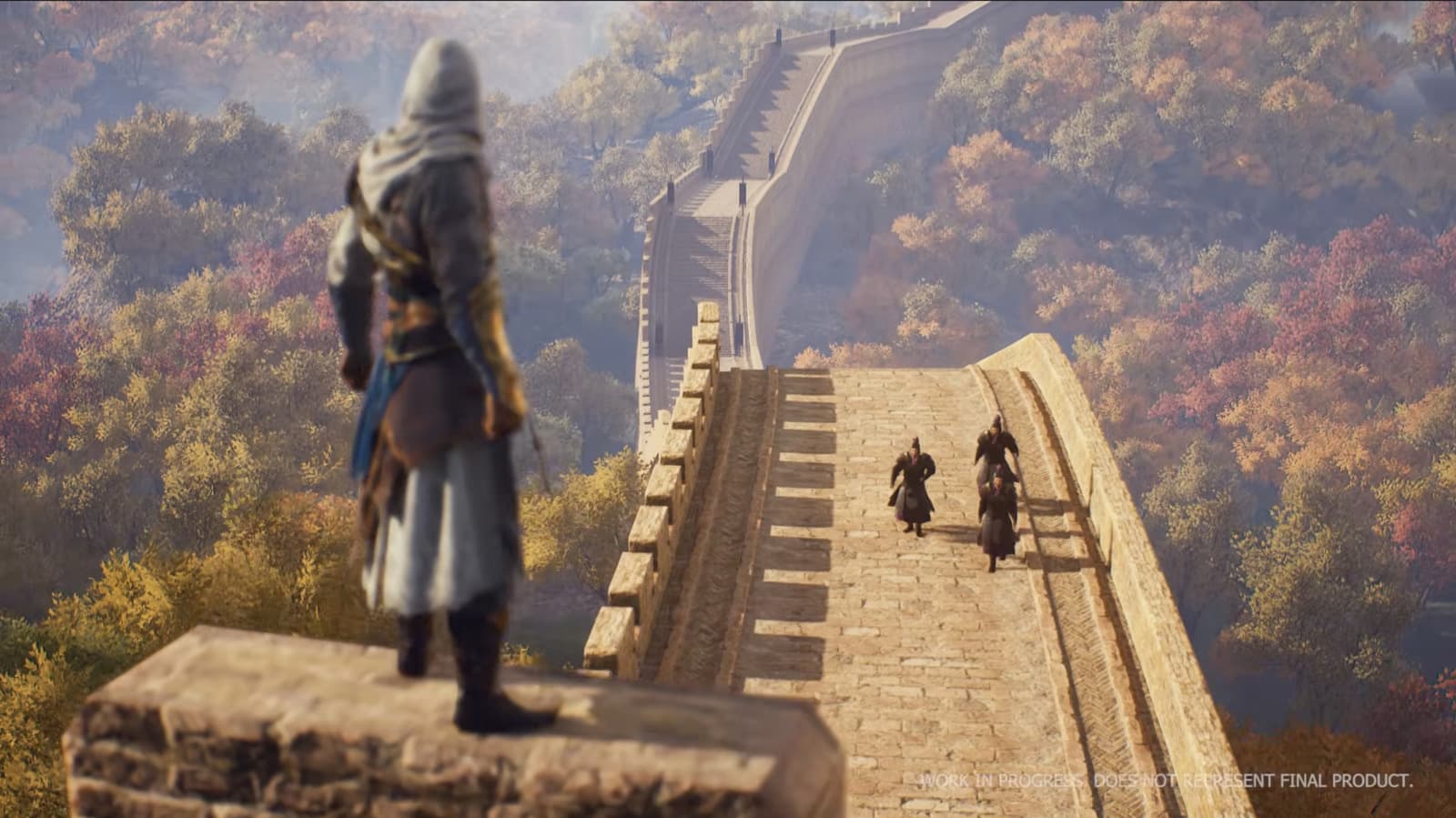
Leaked gameplay footage allegedly shows Assassin’s Creed Destiny, a canceled Ubisoft game reportedly developed in collaboration with Tencent. The game was set in ancient China during the Qin Empire and may have influenced the development of Assassin’s Creed Jade, another China-set title delayed until 2025.

Editor, Lazyfounder
30 SEC SUMMARY
- A leaked gameplay video reportedly shows a canceled Assassin’s Creed game, Assassin’s Creed Destiny, set in ancient China during the Qin Empire.
- Ubisoft and Tencent were allegedly developing the game before its cancellation.
- The leaked footage includes gameplay mechanics like stealth kills and unique weapons, such as an umbrella.
- Ubisoft is still developing Assassin’s Creed Jade, another title set in ancient China, delayed until 2025.
- Jade may incorporate elements from the canceled Destiny and could feature co-op gameplay.
TABLE OF CONTENTS
KEY HIGHLIGHTS
- Leaked gameplay footage allegedly shows Assassin’s Creed Destiny, a canceled game set in ancient China during the Qin Empire.
- Ubisoft and Tencent were reportedly developing the game before its cancellation.
- The footage includes mechanics like scaling castle walls, stealth kills, and unique weapons, including an umbrella.
- Ubisoft is still developing Assassin’s Creed Jade, another China-set title, delayed until 2025.
- Jade may feature co-op gameplay and could incorporate elements from the canceled Destiny.
Leaked footage shows canceled Assassin’s Creed Destiny
According to Engadget, leaked gameplay footage purports to show Assassin’s Creed Destiny, a canceled game in the franchise that was reportedly set in ancient China during the Qin Empire in 206 BCE. The footage includes playable sequences of a character scaling castle walls, performing stealth kills, and using period-accurate weapons.
The leak also features placeholder videos demonstrating combat skills and unique weapons, such as an umbrella designed for lethal use. These details suggest the game was in an advanced stage of development before its cancellation.
Ubisoft and Tencent’s involvement
Engadget reports that Ubisoft and Tencent were jointly developing Assassin’s Creed Destiny before the project was canceled. Neither company has confirmed the game’s existence or the reasons for its cancellation.
Tencent’s involvement aligns with its broader strategy of investing in and partnering with Western game studios to expand its global footprint in the gaming industry.
Assassin’s Creed Jade as a potential successor
Ubisoft is still developing Assassin’s Creed Jade, a mobile game also set in ancient China, though its release has been delayed until 2025. A Ubisoft executive recently told Video Games Chronicle (VGC) that Jade would feature co-op gameplay, a first for the franchise’s single-player-focused titles.
Reports suggest that elements from Assassin’s Creed Destiny, such as assets or mechanics, may have been folded into Jade. This could explain the delayed release timeline as Ubisoft repurposes work from the canceled project.
Why this matters for game developers
Ubisoft’s history of franchise expansion includes both successful and canceled projects. The company has previously pivoted or delayed titles to align with market trends or internal priorities. For example, Rainbow Six Tactics, another Ubisoft title, introduces fatigue and injury systems to encourage roster diversity, reflecting a focus on deeper gameplay mechanics.
The cancellation of Assassin’s Creed Destiny and the delay of Jade highlight the challenges of balancing innovation with execution, particularly in a competitive industry where delays can impact player trust and investor confidence.
What this means
Lazyfounder analysis — our interpretation, not reported fact.
For game developers and startup founders in the gaming sector, this leak highlights the risks and opportunities of franchise expansion. Canceling a project after significant development—especially one tied to a major intellectual property like Assassin’s Creed—can be costly, but it also opens the door to repurposing assets or ideas for other titles. Ubisoft’s decision to delay Jade and potentially integrate elements from Destiny suggests a strategy of consolidating efforts rather than abandoning them entirely. This could serve as a case study for how studios handle internal pivots and the value of reusing work to mitigate losses.
Key takeaways
- Leaks like this underscore the importance of securing internal development materials, particularly for high-profile franchises.
- Cancellation of a game doesn’t always mean wasted effort—assets or concepts may be reused in other projects, as appears to be the case with Assassin’s Creed Jade.
- Delays in game releases (e.g., Jade’s push to 2025) can signal a studio’s focus on polishing or reworking a title, but they also risk frustrating players and investors.
- Co-op gameplay in Jade could be a response to industry trends emphasizing multiplayer experiences, even in single-player franchises.
- For startups in gaming, Ubisoft’s approach to franchise expansion—balancing mobile and traditional platforms—shows the challenges of adapting to diverse audiences without diluting the brand.
FAQ
Has Ubisoft confirmed the existence of Assassin’s Creed Destiny?
No, Ubisoft has not confirmed the existence of Assassin’s Creed Destiny or provided details about its cancellation.
What is Assassin’s Creed Jade?
Assassin’s Creed Jade is an upcoming mobile game from Ubisoft, also set in ancient China. It was delayed until 2025 and may feature co-op gameplay.
Could Assassin’s Creed Jade include elements from the canceled Destiny?
Reports suggest that Jade may incorporate assets or mechanics from Assassin’s Creed Destiny, but Ubisoft has not confirmed this.
Why was Assassin’s Creed Destiny canceled?
The reasons for the cancellation of Assassin’s Creed Destiny have not been disclosed. Neither Ubisoft nor Tencent has commented on the matter.
Related on Lazyfounder
Sources
- Engadget · 2026-10-17
Leaked Gameplay Purports To Show A Canceled Assassin's Creed Game Set In Ancient China
This story is an original summary drafted with AI by Lazyfounder from the reporting listed above and checked by automated validation. Facts are attributed to their original publishers; sections marked as analysis are Lazyfounder's. Where a source is in another language, facts were machine-translated and quotations are reported, not reproduced. Read the original coverage via the links, and see our AI policy and corrections policy.

About the author
Editor, Lazyfounder
Tarun Mottlia edits LazyFounders, covering Indian startups, funding rounds, AI and product launches. Every story on the site is AI-assisted and checked against its cited sources before publication.
More stories by Tarun MottliaGet the LazyFounder Brief
Startup, funding and AI news in a five-minute read. Join the early-access list.
