
Apple and Meta partner to bring Muse Spark Open AI model to Mac Studio
Apple and Meta have announced their first public collaboration since 2017, enabling Meta’s open-weight AI model, Muse Spark Open, to run on Apple’s Mac Studio desktops. The partnership highlights a shift in their relationship and underscores the growing role of hardware in AI innovation.

Editor, Lazyfounder
30 SEC SUMMARY
- Apple and Meta have partnered to bring Meta’s open-weight AI model, Muse Spark Open, to Apple’s Mac Studio desktops.
- Muse Spark Open is the first model of its scale (816 billion parameters) to run on a desktop, requiring two Mac Studios with M5 Ultra chips.
- The model runs locally using Apple’s MLX framework, ensuring user prompts remain private.
- This marks the first public collaboration between Apple and Meta since 2017.
- The partnership highlights a shift in their relationship, despite past tensions over privacy and revenue.
TABLE OF CONTENTS
KEY HIGHLIGHTS
- Apple and Meta collaborated to enable Meta’s Muse Spark Open AI model to run on Mac Studio desktops.
- Muse Spark Open is the first model in its class to run on a desktop, with 816 billion parameters and 42 billion active at a time.
- The setup requires two Mac Studios with M5 Ultra chips and Apple’s MLX framework, costing at least $10,799 per machine.
- Meta’s model runs locally, meaning user prompts are not visible to the company.
- This partnership is the first public collaboration between Apple and Meta since 2017.
What the partnership enables
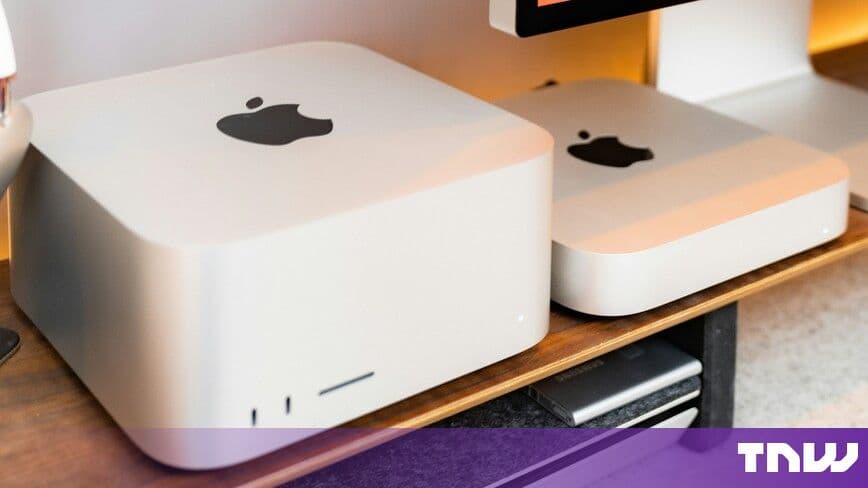
Apple and Meta have partnered to bring Meta’s new open-weight AI model, Muse Spark Open, to Apple’s Mac Studio desktops. According to The Next Web, this collaboration allows the model to run locally on Mac hardware, making it the first AI model of its scale to operate on a desktop.
Muse Spark Open has 816 billion parameters, with 42 billion active at any given time. The setup requires two Mac Studios equipped with Apple’s M5 Ultra chips and the company’s MLX machine learning framework. Users can link multiple machines to perform tasks like coding, video analysis, or running AI agents.
Hardware requirements and costs
Running Muse Spark Open demands significant hardware resources. Each Mac Studio must have an M5 Ultra chip and at least 256GB of memory, with the option to upgrade to 512GB. A single Mac Studio with 256GB of memory starts at $10,799, according to The Next Web. A 512GB version is expected to launch later this month.
The model’s size and complexity mean it can only run on high-end configurations. Meta’s team noted that two Mac Studios can hold the entire model, with each machine’s graphics processor capable of using up to 512GB of memory.
Privacy and technical advantages
Because Muse Spark Open runs locally on Apple’s hardware, Meta does not have access to users’ prompts or data. This aligns with Apple’s emphasis on privacy, a key differentiator for its products.
The partnership also leverages Apple’s MLX framework, which is optimized for running machine learning models on its silicon. This integration could set a precedent for future collaborations between hardware manufacturers and AI developers.
A shift in Apple-Meta relations
This partnership marks the first public collaboration between Apple and Meta since 2017. Their relationship has been strained in recent years, particularly after Apple’s 2021 privacy changes, which The Next Web reports cost Meta an estimated $10 billion in 2022 revenue.
Daniel Gross, a former Apple executive now working at Meta, reportedly played a role in facilitating the collaboration. The deal comes after John Ternus succeeded Tim Cook as Apple’s CEO on September 1, a transition that may have influenced the company’s strategic direction.
Reactions from leadership
Mark Zuckerberg, Meta’s chief executive, publicly praised the collaboration. In a post, he stated that Muse Spark Open runs "great on new Mac Studios thanks to work with @johnternus and Apple." He also congratulated the team on efficiently running a model of this scale from a desktop.
Alexandr Wang, Meta’s chief AI officer, added that it was "amazing to run a model of Muse Spark Open’s caliber and scale this efficiently, right from your desk." Another Meta employee reportedly quipped, "We’re excited for mommy and daddy to be playing nice again," reflecting the significance of the partnership for both companies.
Context on Apple and Meta’s history
Apple and Meta have had a contentious relationship in recent years. Apple’s 2021 privacy updates, which required apps to ask users for tracking permissions, significantly impacted Meta’s advertising revenue. These changes highlighted their competing interests in data privacy and monetization.
Meta has also faced scrutiny over its AI ambitions, including its approach to data scraping and content moderation. Meanwhile, Apple has positioned itself as a leader in privacy-focused technology, integrating AI features into its devices while emphasizing on-device processing to protect user data.
What this means
Lazyfounder analysis — our interpretation, not reported fact.
This partnership is a notable shift for two tech giants that have often been at odds. For founders and operators, it signals that even competitors can find common ground when mutual benefits outweigh past disputes. The collaboration also underscores the growing importance of hardware-software integration in AI, particularly as models become more powerful and require specialized infrastructure.
For Meta, the ability to run Muse Spark Open on Mac Studios could open new avenues for enterprise and developer adoption, especially among users who prioritize privacy. For Apple, it reinforces its position as a viable platform for cutting-edge AI workloads, beyond its own in-house models like Apple Intelligence.
The move also raises questions about whether this collaboration will extend to other areas, such as consumer devices or cloud services. If successful, it could encourage more hardware manufacturers and AI developers to explore similar partnerships, blurring the lines between software and hardware innovation.
Key takeaways
- Meta’s Muse Spark Open is the first AI model of its scale to run on a desktop, requiring high-end Mac Studio hardware.
- The partnership leverages Apple’s privacy-focused approach, as the model runs locally without sharing user prompts with Meta.
- This collaboration could set a precedent for future hardware-AI integrations, even between companies with competing interests.
- Founders should watch how this partnership evolves—it may reveal opportunities for startups to leverage specialized hardware for AI workloads.
- The deal highlights the importance of flexibility in business relationships, especially in fast-moving sectors like AI.
FAQ
Why is this partnership significant for Apple and Meta?
This is the first public collaboration between Apple and Meta since 2017. It marks a shift in their relationship, despite past tensions over privacy and revenue, and demonstrates how hardware and AI software can integrate to create new capabilities.
What hardware do I need to run Muse Spark Open?
Running Muse Spark Open requires two Mac Studios with Apple’s M5 Ultra chips and at least 256GB of memory each. A single machine starts at $10,799, making this a high-end solution for developers or enterprises.
Does Meta have access to my data if I run Muse Spark Open on a Mac Studio?
No. Because the model runs locally on Apple’s hardware, Meta does not see or have access to user prompts or data.
Related on Lazyfounder
Sources
- The Next Web · 2026-10-17
Apple and Meta team up to run Meta’s Muse Spark Open model on Macs
This story is an original summary drafted with AI by Lazyfounder from the reporting listed above and checked by automated validation. Facts are attributed to their original publishers; sections marked as analysis are Lazyfounder's. Where a source is in another language, facts were machine-translated and quotations are reported, not reproduced. Read the original coverage via the links, and see our AI policy and corrections policy.

About the author
Editor, Lazyfounder
Tarun Mottlia edits LazyFounders, covering Indian startups, funding rounds, AI and product launches. Every story on the site is AI-assisted and checked against its cited sources before publication.
More stories by Tarun MottliaGet the LazyFounder Brief
Startup, funding and AI news in a five-minute read. Join the early-access list.
