
Italian Army defuses 250+ WWI bombs exposed by glacial melt in Dolomites
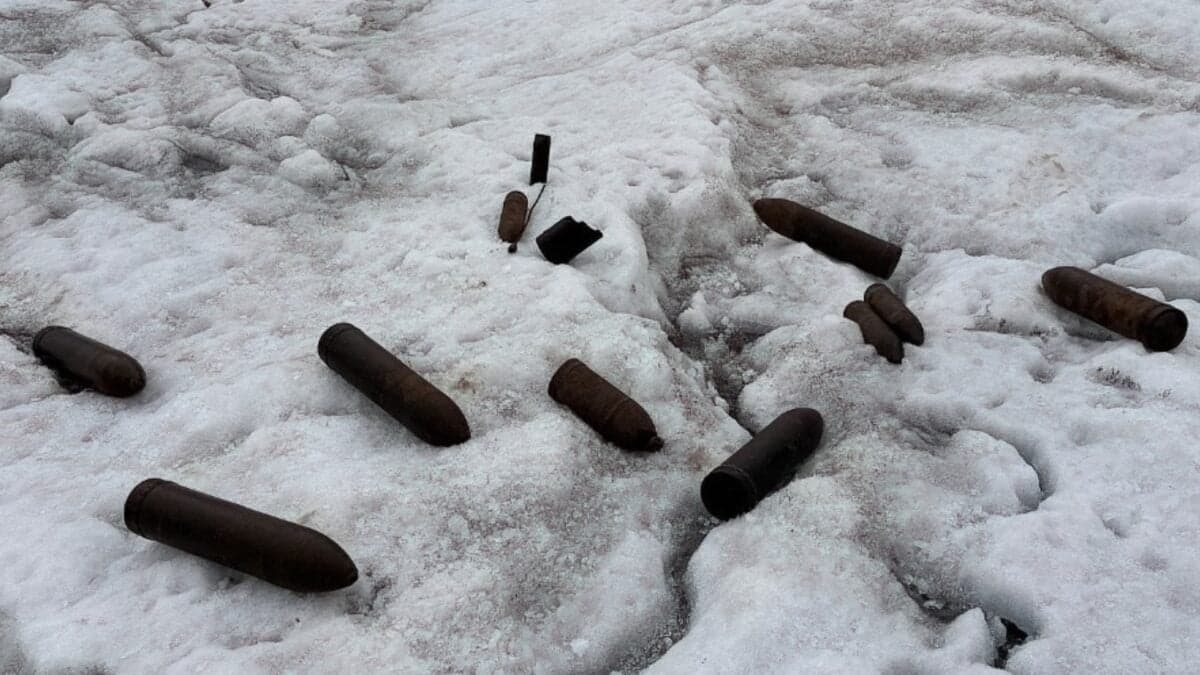
The Italian Army’s Julia Alpine Brigade has recovered and defused over 250 unexploded World War I bombs in the Dolomites, exposed by glacial melt. Rising temperatures have accelerated the retreat of glaciers, revealing historical artifacts and posing new risks to safety and preservation.

Editor, Lazyfounder
30 SEC SUMMARY
- Italian Army’s Julia Alpine Brigade recovered and defused over 250 unexploded WWI bombs exposed by glacial melt in the Dolomites.
- The bombs, including Italian and French-made shells, were abandoned during the White War (1915-1918).
- Glacial retreat in the Dolomites has accelerated, with a 56% decline in glacial area since the 1980s.
- Rising temperatures have exposed WWI artifacts, including weapons, shelters, and corpses, since the 1990s.
KEY HIGHLIGHTS
- Italian Army’s Julia Alpine Brigade defused over 250 unexploded WWI bombs in the Dolomites, exposed by glacial melt.
- Bombs included Italian 75-millimeter artillery shells and French-made Thevetot mortar shells from the White War (1915-1918).
- Glacial area in the Dolomites declined by 56% from the 1980s to 2023 due to rising temperatures.
- Summer 2026 was the hottest on record for Piedmonte, Trentino, and South Tyrol, accelerating glacial retreat.
- WWI artifacts, including weapons, shelters, and corpses, have been emerging since the 1990s due to glacial melt.
- A White War museum will open in Bormio in June 2027 to display these artifacts.
Bombs recovered from melting glaciers
The Italian Army’s Julia Alpine Brigade has recovered and defused more than 250 unexploded World War I bombs in the Dolomites region of Trentino Alto Adige. The bombs, including Italian 75-millimeter artillery shells and French-made Thevetot mortar shells, were abandoned during the White War (1915-1918), a conflict between the Austro-Hungarian Army and Italian troops fought at high altitudes.
According to reports, the munitions resurfaced due to rapid glacial retreat driven by rising temperatures. The brigade conducted the recovery operation to mitigate risks posed by the exposed explosives.
Glacial retreat accelerates exposure of artifacts
Glacial retreat in the Dolomites has accelerated significantly, with a 56% decline in glacial area from the 1980s to 2023. Summer 2026 was the hottest on record for the Piedmonte Region, Trentino, and South Tyrol, further accelerating the melt.
Since the 1990s, melting glaciers have exposed a range of WWI artifacts, including weapons, cave shelters, sleds, letters, diaries, and uniformed corpses. These relics, once preserved by ice, now pose safety risks and preservation challenges as they emerge.
Stefano Morosini, Professor and Coordinator of Heritage Projects at the University of Bergamo and Stelvio National Park, has documented the emergence of these artifacts, which are tied to the harsh conditions faced by soldiers during the White War.
Museum to preserve White War relics
A White War museum is scheduled to open in Bormio in June 2027, where many of the recovered artifacts will be displayed. The museum aims to preserve the historical narrative of the conflict while highlighting the impact of climate change on heritage preservation.
The project reflects growing efforts to document and protect historical artifacts exposed by environmental changes.
What this means
Lazyfounder analysis — our interpretation, not reported fact.
This story highlights how climate change is not just an environmental or economic challenge but also a disruptor of historical legacies—and, in this case, a literal threat. For founders and operators, especially those in environmental tech, insurance, or risk assessment, the intersection of climate change and historical hazards presents a niche but growing market. The discovery of these munitions underscores the need for specialized services in hazard detection, historical artifact preservation, and climate-resilient infrastructure. It also serves as a reminder that climate risks can manifest in unexpected ways, requiring adaptive solutions beyond traditional mitigation strategies.
Key takeaways
- Over 250 unexploded WWI bombs were recovered in the Dolomites due to glacial retreat, posing ongoing risks to safety and environmental stability.
- The 56% decline in glacial area since the 1980s signals accelerating climate impacts, which may expose more historical hazards in the future.
- Artifacts emerging from glacial melt, including weapons and corpses, create opportunities for specialized recovery, preservation, and risk-assessment services.
- The opening of a White War museum in 2027 reflects growing public and institutional interest in preserving historical narratives linked to climate change.
Related on Lazyfounder
Sources
- Gizmodo · 2026-10-27
Melting Glaciers Expose More Than 250 Unexploded WWI Bombs in the Dolomites
This story is an original summary drafted with AI by Lazyfounder from the reporting listed above and checked by automated validation. Facts are attributed to their original publishers; sections marked as analysis are Lazyfounder's. Where a source is in another language, facts were machine-translated and quotations are reported, not reproduced. Read the original coverage via the links, and see our AI policy and corrections policy.

About the author
Editor, Lazyfounder
Tarun Mottlia edits LazyFounders, covering Indian startups, funding rounds, AI and product launches. Every story on the site is AI-assisted and checked against its cited sources before publication.
More stories by Tarun MottliaGet the LazyFounder Brief
Startup, funding and AI news in a five-minute read. Join the early-access list.
