
FCC ban halts new foreign-made routers in the US, including Davolink’s Minions models
The US Federal Communications Commission (FCC) has blocked new foreign-made routers from receiving authorization to sell in the US, effective March 2024. This rule affects South Korean networking company Davolink, whose viral Minions-shaped routers, Kevin and Bob, can no longer be followed by newer models like a planned Wi-Fi 7 version. Existing models remain legal to sell, but firmware updates are only guaranteed until the end of 2028.

Editor, Lazyfounder
Why the FCC banned foreign-made routers
The FCC added "routers produced in a foreign country" to its Covered List on March 23, 2024, following a national security determination from an interagency body convened by the White House. Routers on this list cannot receive the authorization required for sale in the US unless the manufacturer obtains an exemption.
The ban applies to any router where a major stage of production—including design, development, or manufacturing—occurs outside the US, regardless of the company’s nationality. Law firm Wiley interprets the rule broadly, meaning even companies headquartered elsewhere are affected if their routers are developed or built abroad.
Routers authorized before March 2024, such as Davolink’s Kevin and Bob models, can still be imported and sold. However, the FCC’s rule bars changes to these devices, including firmware updates, unless they fall under a waiver for security patches or compatibility fixes. This waiver expires on January 1, 2029.
Davolink’s Minions routers caught in the ban
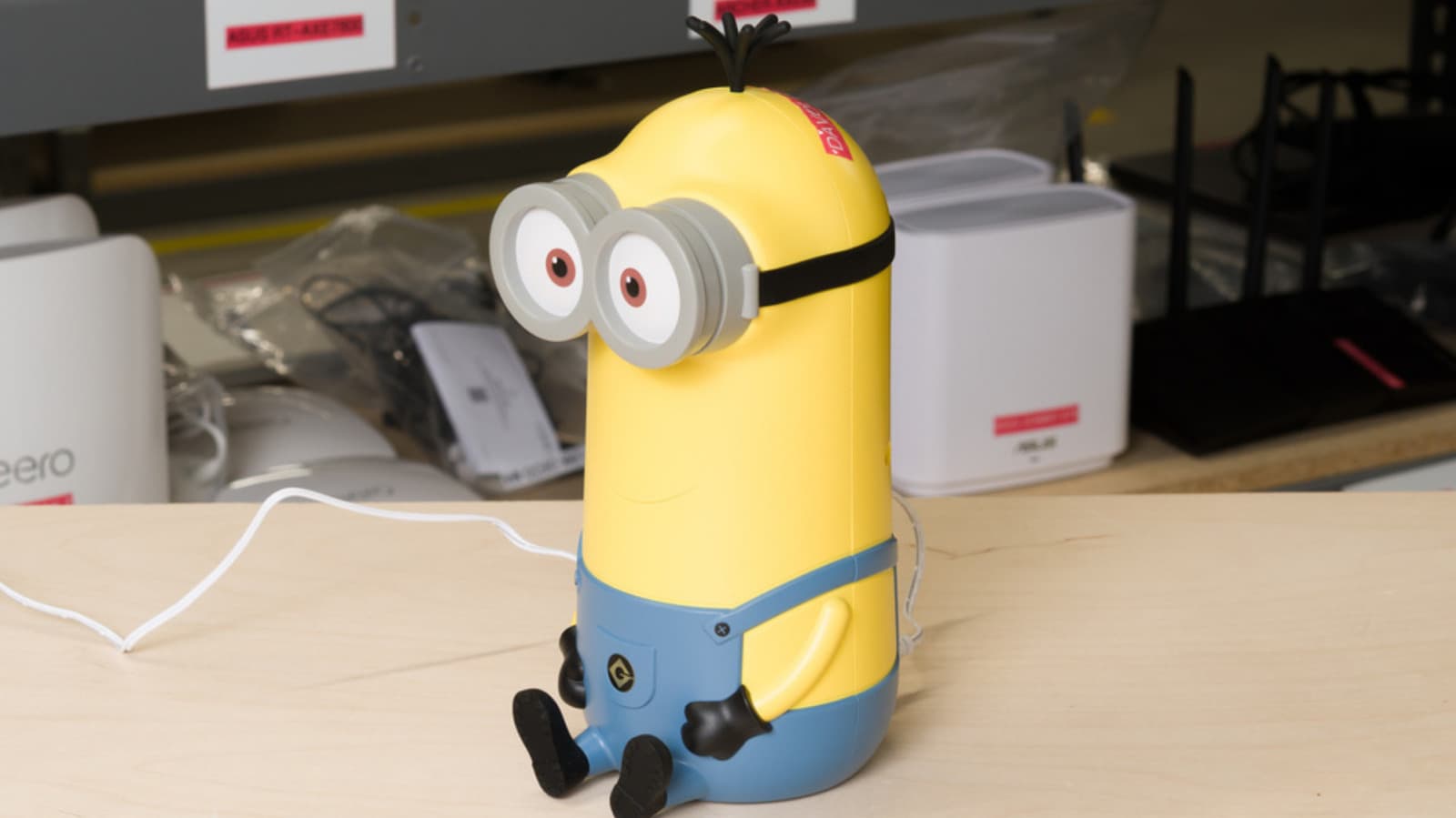
Davolink’s Minions-shaped routers, Kevin (DVW-632) and Bob (DVW-642), gained popularity after a viral post on X praised Kevin as one of the best Wi-Fi 6E routers available. Kevin, a tri-band Wi-Fi 6E router with an AXE5400 rating, outperformed TP-Link’s Archer AXE75 in speed and range during testing by RTINGS. However, it lacks multiple LAN ports, requiring users to add a network switch for wired devices.
Despite their popularity, the FCC’s ban prevents Davolink from introducing new models, such as a planned Wi-Fi 7 version of the Minions router. Existing units remain legal to sell, but firmware updates are only guaranteed through the end of 2028, after which Davolink may no longer provide patches.
Davolink, which supplies networking equipment to South Korea’s major carriers—SK Broadband, KT, and LG Uplus—has reported operating losses since 2022. The company has not disclosed whether it applied for an exemption from the FCC’s ban.
How exemptions work and who has them
The FCC offers exemptions, called Conditional Approvals, for foreign-made routers if the manufacturer obtains clearance from the Department of Defense or the Department of Homeland Security. These exemptions last up to 18 months and require applicants to disclose the origin of every component and firmware, justify offshore production, and commit to a dated plan for shifting manufacturing to the US, including spending details and quarterly progress reports.
Netgear, Eero, and ASUS have received Conditional Approvals, allowing them to continue selling new foreign-made routers in the US. Netgear’s exemption was granted on April 14, Eero’s on April 22, and ASUS’s on September 9. Davolink has not publicly announced whether it sought or received an exemption.
What this means
Lazyfounder analysis — our interpretation, not reported fact.
The FCC’s ban reflects broader US regulatory shifts toward restricting foreign-made technology in critical infrastructure, particularly networking equipment. For Davolink, the ban cuts off a niche but high-profile product line from the US market, limiting revenue potential and long-term support for existing customers. Competitors like TP-Link, which already comply with US manufacturing or exemption requirements, face less disruption and may gain market share as a result.
For founders and operators in consumer electronics or networking, the rule signals tighter scrutiny of supply chains and manufacturing origins. Companies relying on non-US production must weigh the costs of relocating manufacturing against the risks of losing market access. The exemption process offers a temporary workaround, but the financial and operational burden—such as auditing components, justifying offshore production, and committing to US manufacturing plans—may deter smaller players like Davolink from pursuing it.
Key takeaways
- The FCC’s ban blocks new foreign-made routers from US authorization, affecting Davolink’s ability to introduce future Minions models like a Wi-Fi 7 version.
- Davolink’s existing Minions routers remain legal to sell, but firmware updates are only guaranteed until the end of 2028, after which they may become unsupported.
- Exemptions (Conditional Approvals) require detailed disclosures, a plan for US manufacturing, and clearance from the Department of Defense or Homeland Security—raising barriers for smaller companies.
- Competitors like TP-Link, Netgear, Eero, and ASUS, which have secured exemptions or comply with US manufacturing rules, face fewer disruptions and may benefit from reduced competition.
Related on Lazyfounder
Sources
- Engadget · 2026-10-27
Why Does The FCC Hate Minions Routers?
This story is an original summary drafted with AI by Lazyfounder from the reporting listed above and checked by automated validation. Facts are attributed to their original publishers; sections marked as analysis are Lazyfounder's. Where a source is in another language, facts were machine-translated and quotations are reported, not reproduced. Read the original coverage via the links, and see our AI policy and corrections policy.

About the author
Editor, Lazyfounder
Tarun Mottlia edits LazyFounders, covering Indian startups, funding rounds, AI and product launches. Every story on the site is AI-assisted and checked against its cited sources before publication.
More stories by Tarun MottliaGet the LazyFounder Brief
Startup, funding and AI news in a five-minute read. Join the early-access list.
