
iPhone Duo vs. Razr Ultra: How Apple and Motorola Compare in Foldable Phones
Apple’s newly announced iPhone Duo and Motorola’s 2026 Razr Ultra represent two distinct visions for foldable smartphones. The iPhone Duo, with its passport-like design and high-end performance, aims to replace both a phone and a small tablet. The Razr Ultra, meanwhile, prioritizes portability with its compact candybar layout. Here’s how the two devices stack up.

Editor, Lazyfounder
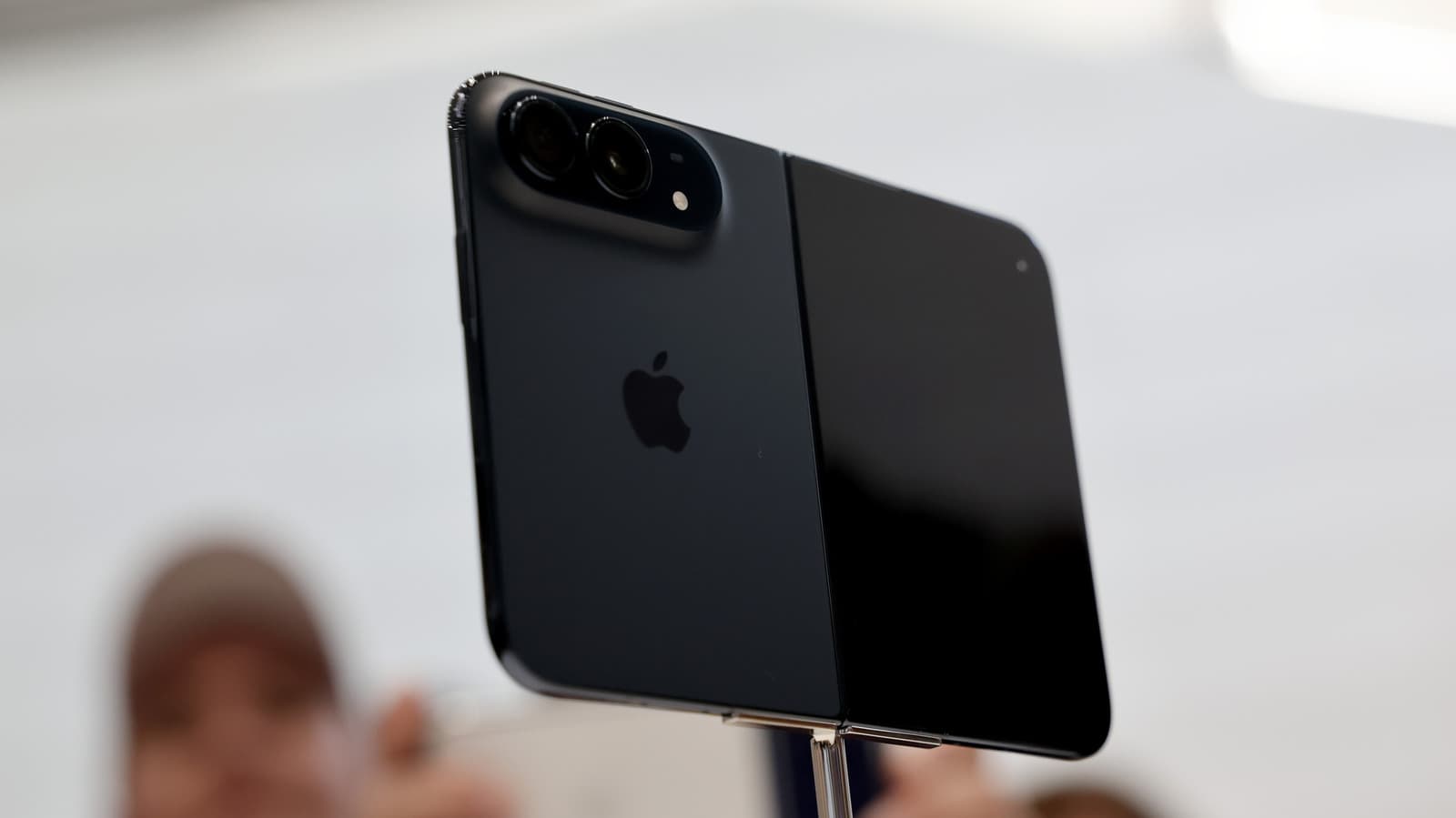
Apple’s newly announced iPhone Duo and Motorola’s 2026 Razr Ultra represent two distinct visions for foldable smartphones. The iPhone Duo, with its passport-like design and high-end performance, aims to replace both a phone and a small tablet. The Razr Ultra, meanwhile, prioritizes portability with its compact candybar layout. Here’s how the two devices stack up.
30 SEC SUMMARY
- Apple’s iPhone Duo and Motorola’s Razr Ultra showcase two distinct approaches to foldable smartphones: a productivity-focused passport design vs. a compact candybar layout.
- The iPhone Duo, priced at $2,000, features a 7.6-inch display and Apple’s A20 Pro chip, targeting users who want a device that replaces both a phone and a small tablet.
- Motorola’s Razr Ultra, at $1,500, offers a 7-inch display and Snapdragon 8 Elite processor, emphasizing portability and one-handed use.
- Both devices have dual rear cameras, but Apple’s hardware-software integration may give the Duo an edge in performance and camera quality.
- Battery life is comparable, with both phones lasting a full day, though the Razr Ultra achieved 31 hours in video testing.
TABLE OF CONTENTS
- Design and form factor
- Performance and hardware
- Camera capabilities
- Durability and pricing
- What this means
- Key takeaways
- FAQ
- Sources
KEY HIGHLIGHTS
- Apple’s iPhone Duo is priced at $2,000 and features a 7.6-inch display, targeting productivity-focused users with its passport-like design.
- Motorola’s Razr Ultra, priced at $1,500, offers a 7-inch display and a candybar layout, emphasizing portability and one-handed use.
- The iPhone Duo runs on Apple’s A20 Pro chip, while the Razr Ultra uses Qualcomm’s Snapdragon 8 Elite processor with 16GB of RAM.
- Both devices have dual rear cameras, but the iPhone Duo’s hardware-software integration may deliver superior performance.
- Battery life is similar, with both phones lasting a full day, though the Razr Ultra achieved 31 hours in video testing.
Design and form factor
According to Engadget, Apple’s iPhone Duo adopts a passport-like foldable design, featuring a 7.6-inch display when unfolded. This form factor mirrors Samsung’s Galaxy Z Fold series and is designed to appeal to users who want a single device to replace both a phone and a small tablet, such as an iPad mini.
Motorola’s Razr Ultra, in contrast, uses a candybar layout when opened, measuring 7 inches diagonally. This design prioritizes portability and ease of use with one hand, catering to consumers who value convenience over multitasking capabilities.
Performance and hardware
The iPhone Duo is expected to run on Apple’s A20 Pro chip, a successor to the A18 Pro used in the iPhone 18 Pro. Engadget reports that this chip, combined with iOS optimizations, could give the Duo a performance edge over competitors, including the Razr Ultra.
Motorola’s Razr Ultra is powered by Qualcomm’s Snapdragon 8 Elite processor and comes with 16GB of RAM. While this hardware is formidable, Apple’s tighter integration of hardware and software may allow the Duo to outperform the Razr Ultra in real-world usage, particularly for tasks like multitasking and split-screen applications.
Camera capabilities
Both the iPhone Duo and Razr Ultra feature dual rear cameras—one wide and one ultra-wide—but their specifications differ. Engadget notes that Apple’s rear cameras are rated at 48 megapixels, while Motorola’s are rated at 50 megapixels. However, Apple’s camera performance is often enhanced by its image processing algorithms and iOS optimizations, which could give the Duo an advantage in photo and video quality.
The Razr Ultra’s front camera stands out with a 50-megapixel sensor, compared to the Duo’s 12-megapixel front camera. However, the iPhone Duo includes an additional under-screen internal camera, which could improve FaceTime calls and selfie functionality by reducing bezels and providing a more seamless experience.
Battery life is a critical factor for foldable phones, and both devices are designed to last a full day with mixed usage. According to Engadget, the Razr Ultra achieved 31 hours of runtime in video-based testing, suggesting strong endurance. While the iPhone Duo’s battery life hasn’t been tested as rigorously, Apple’s efficiency optimizations may yield comparable results.
Durability and pricing
Durability is another key differentiator. The iPhone Duo boasts an IP68 rating for dust and water resistance, which is superior to the Razr Ultra’s IP48 rating. This makes the Duo a more robust option for users who prioritize longevity and protection against the elements.
Pricing reflects the devices’ differing target audiences. The iPhone Duo starts at $2,000, with the potential to reach $3,200 for the maximum storage configuration. Motorola’s Razr Ultra, meanwhile, is priced at $1,500, making it a more accessible option for consumers who want a foldable phone without the premium cost.
What this means
Lazyfounder analysis — our interpretation, not reported fact.
Apple’s iPhone Duo represents a calculated entry into the foldable phone market—one that prioritizes refinement over early adoption. By waiting for competitors like Samsung and Motorola to test the waters, Apple has crafted a device that aligns with its strengths: seamless hardware-software integration, premium build quality, and a focus on productivity. The Duo’s passport-like design and multitasking capabilities position it as a potential replacement for both an iPhone and an iPad mini, which could redefine how users approach mobile computing.
For founders and operators, this comparison underscores the importance of use-case-driven innovation. The iPhone Duo and Razr Ultra cater to different audiences, each with distinct needs. The Duo appeals to professionals and power users willing to pay a premium for performance and versatility, while the Razr Ultra targets consumers who prioritize convenience and portability.
The pricing disparity—$2,000 for the Duo vs. $1,500 for the Razr Ultra—also highlights the cost of entry for foldable technology. For startups, this serves as a reminder that foldable or flexible displays may not be a viable mass-market solution yet, but they could unlock opportunities in niche segments where durability, multitasking, or novel form factors solve real problems.
Key takeaways
- The iPhone Duo and Razr Ultra cater to different user needs: productivity and multitasking for the Duo, portability and convenience for the Razr Ultra.
- Apple’s A20 Pro chip and iOS optimizations may give the Duo a performance edge, despite the Razr Ultra’s powerful Snapdragon 8 Elite processor.
- Camera performance will likely favor the iPhone Duo due to Apple’s hardware-software integration, even with the Razr Ultra’s higher front-camera resolution.
- Battery life is comparable, but the Duo’s IP68 rating offers superior durability, justifying its higher price for some users.
- The iPhone Duo’s potential to replace an iPhone and iPad mini could shift how users approach mobile productivity, if software support evolves to match.
FAQ
Why is the iPhone Duo more expensive than the Razr Ultra?
The iPhone Duo’s higher price reflects its larger display, premium build quality, and advanced hardware-software integration. It also targets users who want a device that can replace both a phone and a small tablet, justifying the additional cost.
Which device has better camera performance?
While the Razr Ultra has a higher-resolution front camera, the iPhone Duo’s camera performance is expected to benefit from Apple’s hardware-software optimizations and image processing algorithms, which often deliver superior results.
How does battery life compare between the two phones?
Both devices are designed to last a full day with mixed usage. The Razr Ultra has been tested to last 31 hours during video playback, while the iPhone Duo’s battery life is expected to be comparable due to Apple’s efficiency optimizations.
Can the iPhone Duo replace an iPad mini?
The iPhone Duo’s large 7.6-inch display and multitasking capabilities could theoretically replace an iPad mini for some users, particularly those who prioritize productivity and portability in a single device.
Related on Lazyfounder
Sources
- Engadget · 2026-10-06
Apple iPhone Duo Vs. Motorola Razr Ultra: How Do These Foldables Compare?
This story is an original summary drafted with AI by Lazyfounder from the reporting listed above and checked by automated validation. Facts are attributed to their original publishers; sections marked as analysis are Lazyfounder's. Where a source is in another language, facts were machine-translated and quotations are reported, not reproduced. Read the original coverage via the links, and see our AI policy and corrections policy.

About the author
Editor, Lazyfounder
Tarun Mottlia edits LazyFounders, covering Indian startups, funding rounds, AI and product launches. Every story on the site is AI-assisted and checked against its cited sources before publication.
More stories by Tarun MottliaGet the LazyFounder Brief
Startup, funding and AI news in a five-minute read. Join the early-access list.
