
Study: Human emissions reversed onset of next ice age starting 2,000 years ago
A new study in Science argues that human-induced greenhouse gas emissions have disrupted Earth’s natural glacial cycles, reversing the onset of a glacial period that began around 2,000 years ago. The findings highlight the unintended consequences of global warming on long-term climate patterns.

Editor, Lazyfounder
KEY HIGHLIGHTS
- A study published in Science suggests that human-induced greenhouse gas emissions reversed the onset of a glacial period that began around 2,000 years ago.
- The Barnes Ice Cap, a remnant of the Laurentide Ice Sheet, began expanding 2,000 years ago but started retreating in the 1960s due to global warming.
- Researchers warn that continued emissions could delay the next ice age for hundreds of thousands of years.
- The Barnes Ice Cap is projected to disappear within the next 300 years, potentially altering future glacial cycles.
What the study found
Researchers from Columbia University and the University of Wisconsin-Madison, publishing in Science, suggest that Earth was entering a new glacial period approximately 2,000 years ago. However, rising global temperatures driven by greenhouse gas emissions since the 1960s appear to have halted this process.
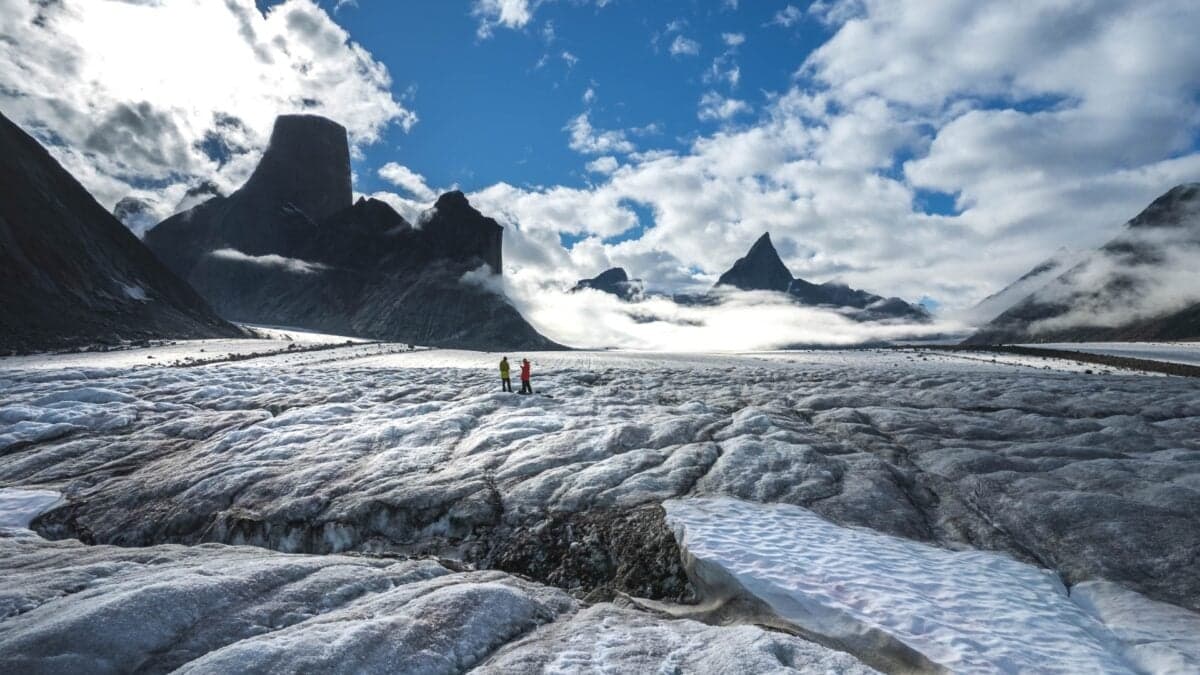
The study focuses on the Barnes Ice Cap on Baffin Island in Nunavut, Canada, a remnant of the Laurentide Ice Sheet that once covered much of northern North America. Evidence shows the ice cap began expanding 2,000 years ago—a typical sign of a glacial period onset—but started retreating in the 1960s as global temperatures rose.
According to the researchers, this reversal aligns with the rapid increase in atmospheric carbon dioxide levels during the mid-20th century.
Long-term climate implications
The study warns that continued greenhouse gas emissions could delay the next ice age for hundreds of thousands of years. This would represent an unprecedented alteration of Earth’s natural climate cycles, governed by orbital variations known as Milankovitch cycles.
The Barnes Ice Cap, already in decline, is projected to disappear within the next 300 years. Its loss could further disrupt future glaciations, as ice sheets play a critical role in reflecting sunlight and regulating global temperatures.
Global temperatures are expected to exceed 2.7°F (1.5°C) above pre-industrial levels in the coming years, a threshold linked to severe climate impacts.
What this means
Lazyfounder analysis — our interpretation, not reported fact.
This study underscores the scale of human influence on Earth’s climate system. For founders and operators, the findings reinforce the stakes of climate change—not just as a short-term policy issue but as a force capable of reshaping natural cycles over geological timescales. Industries built on assumptions of environmental stability may need to rethink vulnerabilities, while climate-focused startups could see renewed investor interest as the urgency for solutions grows. The unintended consequence of delaying an ice age also serves as a stark reminder of the unintended consequences of industrial activity.
Key takeaways
- Founders and operators in climate tech, renewable energy, and sustainability-focused startups may see increased urgency for innovation as evidence mounts of irreversible climate impacts.
- Policy shifts driven by climate research could accelerate regulations on emissions, creating both challenges and opportunities for businesses in carbon-intensive industries.
- Long-term climate projections, like the potential delay of the next ice age, may influence investment strategies in sectors reliant on stable environmental conditions, such as agriculture and infrastructure.
Related on Lazyfounder
Sources
- Gizmodo · 2026-10-26
Humans Accidentally Canceled the Next Ice Age, Scientists Say
This story is an original summary drafted with AI by Lazyfounder from the reporting listed above and checked by automated validation. Facts are attributed to their original publishers; sections marked as analysis are Lazyfounder's. Where a source is in another language, facts were machine-translated and quotations are reported, not reproduced. Read the original coverage via the links, and see our AI policy and corrections policy.

About the author
Editor, Lazyfounder
Tarun Mottlia edits LazyFounders, covering Indian startups, funding rounds, AI and product launches. Every story on the site is AI-assisted and checked against its cited sources before publication.
More stories by Tarun MottliaGet the LazyFounder Brief
Startup, funding and AI news in a five-minute read. Join the early-access list.
