
Tech roundup: AI voice assistants, smart device resets, and industry critiques
Recent reports highlight practical tech tips, AI advancements, and industry critiques. From factory resetting Google Home Minis to comparing AI voice assistants like Gemini Live and ChatGPT Voice, users and founders alike are navigating trade-offs in functionality, cost, and ethics. Meanwhile, AI researcher Timnit Gebru challenges the industry’s focus on existential risks, emphasizing immediate harms like bias and labor exploitation.

Editor, Lazyfounder
Recent reports highlight practical tech tips, AI advancements, and industry critiques. From factory resetting Google Home Minis to comparing AI voice assistants like Gemini Live and ChatGPT Voice, users and founders alike are navigating trade-offs in functionality, cost, and ethics. Meanwhile, AI researcher Timnit Gebru challenges the industry’s focus on existential risks, emphasizing immediate harms like bias and labor exploitation.
30 SEC SUMMARY
- Google has discontinued the Google Home Mini, but users can still factory reset it using physical buttons.
- Factory resetting Google smart devices erases all personal data and requires re-setup.
- AI voice assistants like Gemini Live and ChatGPT Voice offer real-time conversations but differ in expressiveness and functionality.
- Android and iOS provide features to free up storage by archiving or offloading unused apps.
- AI researcher Timnit Gebru critiques narratives around AI’s existential risks, focusing on bias, labor exploitation, and transparency.
TABLE OF CONTENTS
- How to factory reset Google Home Mini and Nest devices
- AI voice assistants: Gemini Live vs. ChatGPT Voice
- Managing mobile storage: Archiving vs. offloading apps
- Improving Android call quality and performance
- Smartphones vs. bike computers: Which is better for cycling?
- Timnit Gebru’s critique of AI’s existential risk narrative
- Is the Google Pixel 8 still worth buying?
- What this means
- Key takeaways
- FAQ
- Sources
KEY HIGHLIGHTS
- Google Home Mini can still be factory reset despite being discontinued, requiring physical button use.
- AI voice assistants Gemini Live and ChatGPT Voice enable real-time conversations but differ in expressiveness and functionality.
- Archiving or offloading unused apps on Android and iOS frees up storage while preserving key data.
- Timnit Gebru argues that AI’s existential risk narratives distract from immediate harms like bias and labor exploitation.
- Simple Android tweaks, like adjusting animation speeds or enabling VoLTE, can improve call quality and user experience.
How to factory reset Google Home Mini and Nest devices
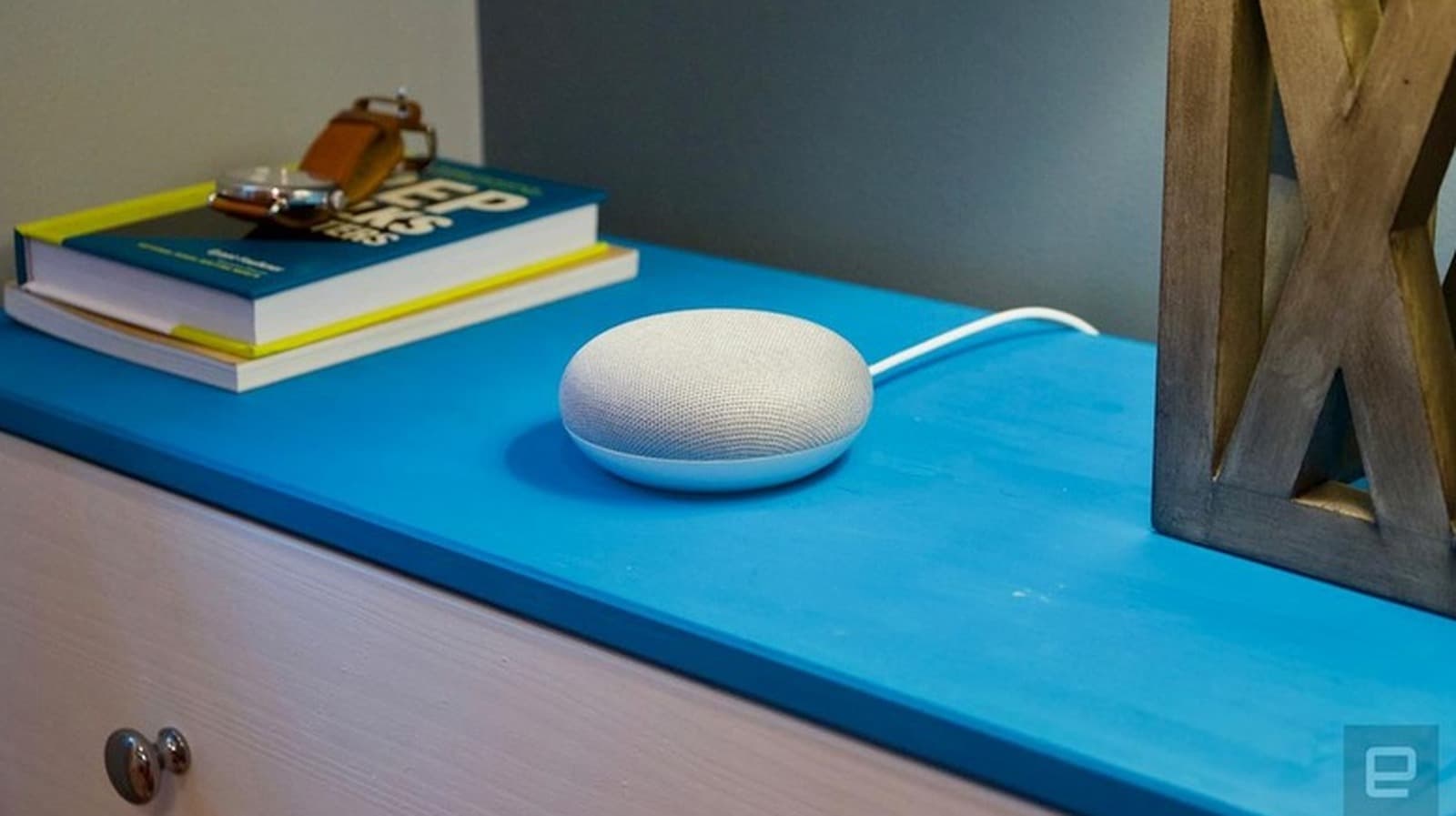
According to Engadget, the Google Home Mini, a smart speaker launched nearly nine years ago, has been discontinued but can still be reset using physical buttons. The process is straightforward and does not require technical expertise or special tools.
To reset the original Google Home Mini (1st generation), users must press and hold the reset button on the bottom of the device for about 15 seconds until a confirmation chime sounds. For the Google Nest Mini (2nd generation), users should first turn off the microphone, then press and hold the center of the device for 15 seconds. For Nest Hub displays, pressing and holding both volume buttons on the back for 10 seconds initiates the reset.
A factory reset erases all personal data, Wi-Fi credentials, and linked Google accounts from the device. This action cannot be undone, and the device must be set up again from scratch. Google has confirmed it will continue supporting discontinued models like the Nest Home Mini and Nest Audio with software updates and customer care.
AI voice assistants: Gemini Live vs. ChatGPT Voice
Engadget compares two AI voice assistants, Gemini Live (Google) and ChatGPT Voice (OpenAI), which enable real-time voice conversations—a significant upgrade over older voice assistants like Siri or Google Assistant. Both tools use slightly less capable AI models to prioritize speed over accuracy, though they differ in tone, expressiveness, and functionality.
ChatGPT Voice tends to be more expressive, using conversational markers like "mhmm" and mid-sentence stutters to mimic human speech. It also searches the internet for up-to-date information before responding, improving factual accuracy. However, some users may find its exaggerated intonations unnatural.
Gemini Live, in contrast, delivers flatter responses in tone and inflection. It sometimes defaults to its existing knowledge, requiring explicit prompts to research answers. However, Gemini Live offers deeper integration with Google’s ecosystem, including access to personal data like emails, YouTube videos, and Google Drive documents. It can also control smart home devices and add calendar events during conversations.
Both tools are computationally demanding, limiting free-tier users to just a few minutes of conversation. Paid plans, which start at $5 per month for Google’s AI Plus and $8 per month for ChatGPT Go, increase usage limits and provide access to more capable AI models.
Managing mobile storage: Archiving vs. offloading apps
TechRadar explains how both Android and iOS allow users to free up storage by archiving or offloading unused apps. These features remove the bulk of the app while retaining key files and the app icon, making it easy to reinstate the app later without losing data.
On Android, Google claims archiving can free up to 60% of an app’s storage. The feature, called Auto Archive, is disabled by default but can be enabled in the Play Store settings. iOS introduced a similar feature, Offload Unused Apps, in 2017 with iOS 11. Offloaded apps display a small arrow icon next to their name, and users can manually archive or offload specific apps on both platforms.
Improving Android call quality and performance
Engadget outlines several ways to improve call quality on Android devices. Enabling VoLTE (Voice over LTE) delivers clearer sound and faster connections compared to older 2G and 3G networks. Wi-Fi calling can also enhance call clarity, especially in areas with weak cellular signals. On Pixel phones, the Clear Calling feature reduces background noise during calls and is available on models starting from the Pixel 7.
Samsung devices offer a Mic mode feature with three settings—Standard, Voice focus, and Full spectrum—to filter call audio. Samsung’s Adapt sound tunes audio output to the user’s hearing, though it only works with headphones. Pixel devices feature Adaptive Sound, which adjusts speaker audio based on the environment.
Engadget also highlights a simple tweak to make Android phones feel snappier: adjusting animation speeds in Developer Options. By setting the Window animation scale, Transition animation scale, and Animator duration scale to 0.5x, animations play twice as fast, creating the illusion of improved performance. However, this does not actually enhance the phone’s speed.
Smartphones vs. bike computers: Which is better for cycling?
Engadget compares smartphones to dedicated bike computers for cycling enthusiasts. While smartphones can handle turn-by-turn directions, ride logging, and basic metrics like speed and distance, they fall short in key areas like battery life, durability, and sensor compatibility.
Dedicated bike computers, such as those from Garmin or Wahoo, offer superior battery life, water resistance, and compatibility with power meters, heart-rate straps, and other sensors. They are also designed for secure mounting and operation in harsh conditions, making them ideal for endurance riders or bikepackers.
However, smartphones provide advantages like larger screens for navigation and mid-ride adjustments, as well as access to apps like Google Maps. For casual cyclists, a smartphone in a secure handlebar mount may suffice, while serious riders may prefer a dedicated bike computer.
Timnit Gebru’s critique of AI’s existential risk narrative
In an interview with WIRED, AI researcher Timnit Gebru, co-author of the influential 2021 paper "On the Dangers of Stochastic Parrots," critiques the tech industry’s focus on AI’s existential risks. Gebru argues that this narrative distracts from immediate harms like bias, environmental costs, labor exploitation, and lack of transparency in AI development.
Gebru founded the Distributed AI Research Institute (DAIR) to investigate these issues and support the creation of unbiased tech tools. She describes the existential risk narrative as a form of "regulatory capture," where billionaires and AI companies lobby to weaken regulations while positioning themselves as leaders in creating "superintelligence."
The paper "On the Dangers of Stochastic Parrots" highlights concerns like large language models (LLMs) parroting training data without understanding, environmental costs, and automation bias. Gebru calls for simple governance measures, such as transparency, documentation, and addressing labor exploitation, rather than alarmist rhetoric about AI’s future dangers.
Is the Google Pixel 8 still worth buying?
Engadget reviews the Google Pixel 8, launched in 2023 at $700, now available refurbished for under $300 on Amazon. The device features a 6.2-inch, 120Hz OLED display, a dual-camera setup with AI-powered features like Magic Editor and Best Take, and the Tensor G3 chip. Google’s promise of seven years of OS and security updates means the Pixel 8 will receive support until at least 2030.
While the Pixel 8 offers a premium build with an aluminum frame, glass back, and IP68 water resistance, users have reported performance issues over time, including choppy animations, slow app launches, and battery degradation. The Tensor G3 chip, though adequate for casual use, lags behind Qualcomm and Apple’s latest processors in performance.
Newer models like the Pixel 9 and Pixel 9a offer upgrades such as a 48MP ultrawide camera, 12GB of RAM, and the Tensor G4 chip. The Pixel 9a, priced around $330 refurbished, includes the same silicon as the Pixel 9 and an extra year of OS updates, making it a compelling alternative to the Pixel 8.
What this means
Lazyfounder analysis — our interpretation, not reported fact.
For founders and operators, this roundup of recent tech developments highlights a few key themes. First, the persistence of older hardware like the Google Home Mini—even after discontinuation—shows how long-lived consumer tech can be if support remains intact. This underscores the value of backward compatibility and ongoing software updates, which can extend a product’s lifespan and maintain user trust.
Second, the rise of AI voice assistants like Gemini Live and ChatGPT Voice reflects a shift toward more natural, interactive AI experiences. However, their limitations (e.g., accuracy trade-offs for speed, subscription costs, and computational demands) reveal gaps in the market. Founders could explore niches like offline functionality, better integration with personal data, or more transparent AI models to differentiate their offerings.
Third, the debate around AI’s existential risks versus immediate harms (e.g., bias, labor exploitation, and environmental impact) is a critical one. Gebru’s critique serves as a reminder that regulatory and ethical considerations should be baked into product development from the start, not bolted on later. For startups, this means prioritizing transparency, accountability, and fair labor practices—especially as AI adoption accelerates.
Finally, the practical tips for optimizing smartphones (e.g., call quality tweaks, animation adjustments) highlight how small UX improvements can significantly enhance user satisfaction. Operators should take note: even minor friction points can erode trust, while thoughtful refinements can set a product apart.
Key takeaways
- Factory resetting Google smart devices is straightforward but irreversible—users must reconfigure them afterward.
- AI voice assistants like Gemini Live and ChatGPT Voice offer real-time conversations but differ in tone, accuracy, and features.
- Android and iOS provide tools to free up storage by archiving or offloading unused apps without losing data.
- Timnit Gebru’s work critiques AI’s existential risk narratives, emphasizing immediate harms like bias and labor exploitation.
- Small UX tweaks, like adjusting animation speeds or enabling VoLTE, can improve smartphone performance and call quality.
FAQ
How do I factory reset a Google Home Mini?
To reset the Google Home Mini (1st gen), press and hold the reset button on the bottom of the device for about 15 seconds until a chime confirms the reset. For the Google Nest Mini (2nd gen), turn off the microphone, then press and hold the center of the device for 15 seconds. For Nest Hub displays, press and hold both volume buttons on the back for 10 seconds.
What’s the difference between Gemini Live and ChatGPT Voice?
Gemini Live and ChatGPT Voice both enable real-time voice conversations, but they differ in tone, expressiveness, and integration. ChatGPT Voice is more conversational and searches the internet for up-to-date information, while Gemini Live offers deeper integration with Google’s ecosystem, including access to personal data like emails and smart home controls.
How can I improve call quality on my Android phone?
Enable VoLTE for clearer sound and faster connections, or use Wi-Fi calling in areas with weak cellular signals. Pixel users can enable Clear Calling to reduce background noise, while Samsung users can adjust Mic mode settings for better audio filtering.
What does Timnit Gebru mean by "harmful distraction" in AI?
Gebru argues that narratives focusing on AI’s existential risks distract from immediate issues like bias, environmental costs, labor exploitation, and lack of transparency. She believes the tech industry uses these narratives to avoid accountability and weaken regulations.
Is the Google Pixel 8 still a good buy in 2026?
The Pixel 8, now available refurbished for under $300, still offers strong features like a 120Hz OLED display, AI-powered cameras, and seven years of updates. However, performance issues with the Tensor G3 chip and battery degradation may make newer models like the Pixel 9a more appealing.
Related on Lazyfounder
Sources
- Engadget · 2026-09-26
How To Factory Reset Your Google Home Mini - TechRadar · 2026-09-27
Your phone has a hidden feature to free up space by automatically ditching the apps you're not using — here's how it works on Android and iOS - Engadget · 2026-09-27
Gemini Live Vs. ChatGPT Voice: Which AI Offers A More Natural Conversation? - Engadget · 2026-09-27
When Is It Worth Using A Bike Computer Over A Smartphone? - Engadget · 2026-09-28
How To Improve Sound Quality On Your Android Phone During Calls - Engadget · 2026-09-28
This Setting Change Can Make Your Android Phone Feel Instantly Faster - WIRED · 2026-09-29
Timnit Gebru Believes There Is No ‘Existential Threat’ From AI - Engadget · 2026-09-29
Is The Google Pixel 8 Still Worth Buying In 2026?
This story is an original summary drafted with AI by Lazyfounder from the reporting listed above and checked by automated validation. Facts are attributed to their original publishers; sections marked as analysis are Lazyfounder's. Where a source is in another language, facts were machine-translated and quotations are reported, not reproduced. Read the original coverage via the links, and see our AI policy and corrections policy.

About the author
Editor, Lazyfounder
Tarun Mottlia edits LazyFounders, covering Indian startups, funding rounds, AI and product launches. Every story on the site is AI-assisted and checked against its cited sources before publication.
More stories by Tarun MottliaGet the LazyFounder Brief
Startup, funding and AI news in a five-minute read. Join the early-access list.
