
Euclid Space Telescope Discovers First Comet During Dark Matter Mission
The European Space Agency’s Euclid Space Telescope has discovered its first comet, C/2026 S1 (Euclid), while conducting its primary mission to map galaxies and study dark matter. The comet, detected using advanced moving-object software, offers new insights into the solar system’s distant objects and the versatility of space-based observatories.

Editor, Lazyfounder
30 SEC SUMMARY
- The Euclid Space Telescope, launched by the European Space Agency in 2023, has discovered its first comet, C/2026 S1 (Euclid), between September 16 and 24, 2026.
- The comet was identified using moving-object software developed by a doctoral student at the University of Helsinki.
- C/2026 S1 (Euclid) is located roughly between Jupiter and Saturn, about 800 million miles from Earth, and follows an unusual orbit outside the solar system’s flat plane.
- The discovery was confirmed by the International Astronomical Union’s Minor Planet Center on October 8, 2026.
- Euclid’s mission focuses on mapping galaxies and studying dark matter and dark energy, with NASA as a partner.
TABLE OF CONTENTS
KEY HIGHLIGHTS
- The Euclid Space Telescope discovered comet C/2026 S1 (Euclid) between September 16 and 24, 2026, during its mission to map galaxies and study dark matter.
- The comet was detected using moving-object software developed by Mikko Pöntinen, a doctoral student at the University of Helsinki.
- C/2026 S1 (Euclid) is approximately 800 million miles from Earth, positioned between Jupiter and Saturn, and follows an orbit outside the solar system’s flat plane.
- The International Astronomical Union’s Minor Planet Center confirmed the comet’s detection on October 8, 2026.
- Euclid’s primary mission, in partnership with NASA, aims to map galaxies and investigate dark matter and dark energy.
Euclid’s Unexpected Comet Discovery
According to Mashable, the European Space Agency’s Euclid Space Telescope has discovered its first comet, designated C/2026 S1 (Euclid). The discovery occurred between September 16 and 24, 2026, while the telescope was conducting its primary mission to map galaxies and study dark matter.
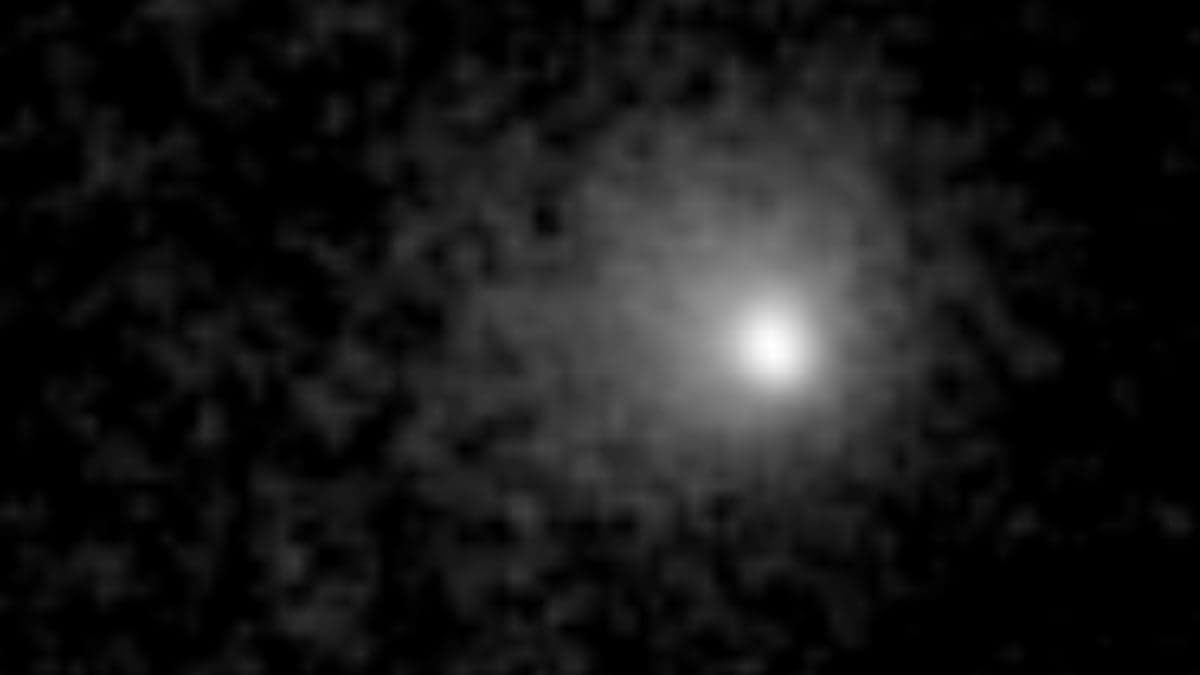
The comet was identified after it appeared as a smudge in five image sets captured by Euclid. This detection was made possible by moving-object software developed by Mikko Pöntinen, a doctoral student at the University of Helsinki. The software is designed to find and remove stray signals that could interfere with Euclid’s goal of photographing approximately one-third of the sky.
Characteristics of Comet C/2026 S1 (Euclid)
The comet is currently about 800 million miles from Earth, roughly located between the orbits of Jupiter and Saturn. Unlike most objects in the solar system, C/2026 S1 (Euclid) does not orbit within the flat plane where the planets reside; instead, it loops above and over the solar system, according to Mashable.
The comet’s fuzzy appearance—a cloud of dust and gas—indicates it is an active object shedding material as it moves. One full orbit of C/2026 S1 (Euclid) is estimated to take thousands of years. It was spotted in the direction of the Draco constellation in the far northern sky.
Comets like C/2026 S1 (Euclid) are remnants of the solar system’s formation around 4.6 billion years ago. Most originate from the Kuiper Belt or the Oort cloud, regions beyond the orbits of the outer planets.
Confirmation and Significance of the Discovery
The International Astronomical Union’s Minor Planet Center officially confirmed the detection of C/2026 S1 (Euclid) on October 8, 2026. With this discovery, Euclid joins a small group of space telescopes capable of identifying new comets early, even while they are still far from the sun.
Mashable reports that there are over 4,000 known comets, with C/2026 S1 (Euclid) being one of just 13 discovered so far in 2026. The Euclid mission, a collaboration between the European Space Agency and NASA, primarily aims to map galaxies and investigate dark matter and dark energy.
Euclid’s Primary Mission and Technological Capabilities
Launched in 2023, the Euclid Space Telescope is designed to survey one-third of the sky, focusing on mapping galaxies and studying the properties of dark matter and dark energy. Its instruments are optimized to detect faint signals and anomalies, which occasionally lead to unexpected discoveries like C/2026 S1 (Euclid).
Euclid’s ability to identify moving objects, such as comets, stems from its advanced imaging technology and the software tools developed by researchers like Mikko Pöntinen. These tools are critical for filtering out interference and ensuring the accuracy of the telescope’s primary observations.
What this means
Lazyfounder analysis — our interpretation, not reported fact.
Euclid’s discovery of C/2026 S1 (Euclid) demonstrates the unexpected scientific dividends of large-scale space missions. While the telescope’s primary goal is to map galaxies and study dark matter, its advanced imaging and detection capabilities have enabled it to contribute to comet research. For founders and operators in the space technology sector, this highlights the value of building flexible, multi-purpose systems that can adapt to serendipitous discoveries.
The role of academic researchers—like the doctoral student whose software identified the comet—also underscores the importance of collaboration between institutions and space agencies. Startups and established players alike can learn from this model, where open innovation and partnerships amplify the impact of technological investments. Finally, the discovery reinforces the potential of space-based observatories to push the boundaries of astronomy, even as they pursue their core objectives.
Key takeaways
- Euclid’s discovery of C/2026 S1 (Euclid) showcases the potential for space missions to yield unexpected scientific breakthroughs beyond their primary goals.
- Advanced software and imaging technology, like the moving-object detection tool developed by Mikko Pöntinen, are critical for identifying transient or unexpected phenomena in space.
- The discovery highlights the importance of collaboration between space agencies, academic institutions, and researchers to maximize the value of technological investments.
- For space technology startups, Euclid’s success underscores the opportunity to design flexible systems that can adapt to serendipitous discoveries while pursuing core mission objectives.
- Comet discoveries like this one provide valuable insights into the solar system’s formation and the behavior of distant celestial objects, contributing to broader astronomical research.
Related on Lazyfounder
Sources
- Mashable · 2026-10-21
The Euclid Space Telescope discovers its first comet
This story is an original summary drafted with AI by Lazyfounder from the reporting listed above and checked by automated validation. Facts are attributed to their original publishers; sections marked as analysis are Lazyfounder's. Where a source is in another language, facts were machine-translated and quotations are reported, not reproduced. Read the original coverage via the links, and see our AI policy and corrections policy.

About the author
Editor, Lazyfounder
Tarun Mottlia edits LazyFounders, covering Indian startups, funding rounds, AI and product launches. Every story on the site is AI-assisted and checked against its cited sources before publication.
More stories by Tarun MottliaGet the LazyFounder Brief
Startup, funding and AI news in a five-minute read. Join the early-access list.
