
Elon Musk spends $366 million to back Republicans in 2026 US midterms as Starlink restrictions lift in Ukraine
Elon Musk has directed $366 million toward supporting Republican candidates and groups in the 2026 US midterm elections, making him the largest individual donor this cycle. Meanwhile, Ukraine’s Defense Ministry confirmed that Starlink’s military-grade service, Starshield, has resumed normal operations after a 10-day speed restriction disrupted drone interceptions of Russian attacks.

Editor, Lazyfounder
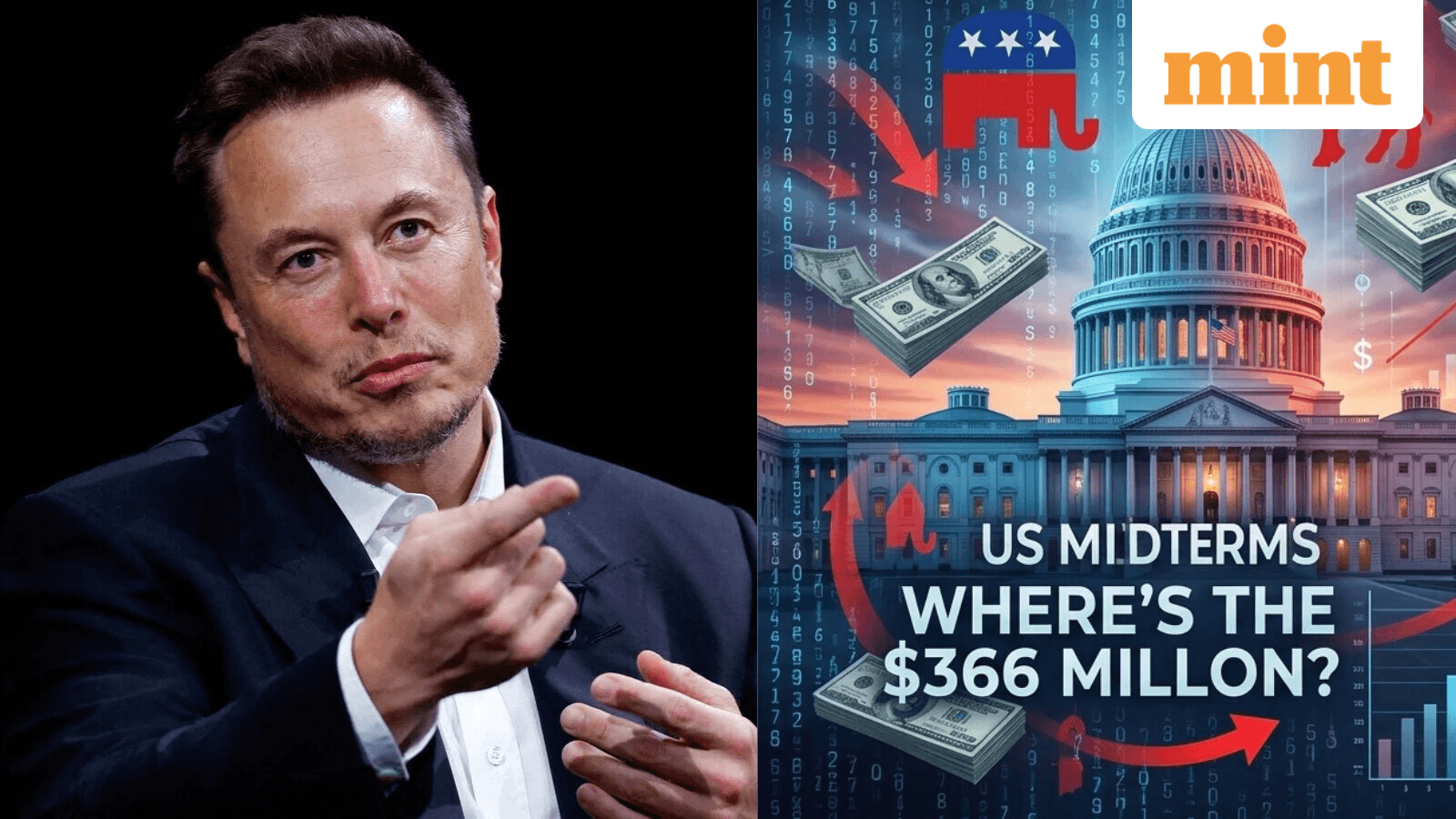
TABLE OF CONTENTS
Musk’s $366 million bet on Republicans
Elon Musk has spent approximately $366 million on the 2026 US midterm elections, the largest individual contribution in this cycle. According to Mint (Technology), at least $276 million has been directed toward Republican groups and his political action committee, America PAC, since July. The spending reflects Musk’s strategic bet on preserving influence over federal contracts and regulatory decisions affecting SpaceX and Tesla.
Musk’s financial support is concentrated in states where his companies operate or face regulatory scrutiny. In Texas, where Tesla’s headquarters and largest factory are located, $189.6 million has been allocated to support Republican Senate candidate Ken Paxton. SpaceX’s launch facility in South Texas and The Boring Company’s operations in the state further tie Musk’s political spending to his business interests.
SpaceX has secured over $30.7 billion in federal contracts since 2008, including $6.78 billion in 2026 alone. The company and Tesla have spent $5.3 million and $3.6 million, respectively, on lobbying since January 2025, underscoring their reliance on federal policy and funding.
Starlink speed restrictions lifted in Ukraine
Ukraine’s Defense Minister, Evgeniy Khmara, confirmed that Starlink’s military-grade service, Starshield, has returned to normal operation after a 10-day speed restriction disrupted Ukrainian drone operations against Russian attacks. The slowdown, which began on October 14, caused drones to lose connectivity above approximately 160 km/h, hindering Ukraine’s ability to intercept Russian jet drones flying at speeds up to 400 km/h.
The restrictions sparked diplomatic friction, with Ukrainian President Volodymyr Zelenskyy stating that the slowdown directly impacted Ukraine’s defense capabilities. Elon Musk initially blamed the US government for the speed cap, but reporting suggested he personally ordered the limit. Donald Trump later claimed to have intervened to restore service, though it remains unclear who ultimately lifted the restriction.
Starshield, a military version of SpaceX’s Starlink network, is critical for Ukraine’s drone intercept operations. Restoration of normal speeds follows statements from US and UK leaders emphasizing the need for Ukraine to maintain full access to the system. Ukraine’s Defense Ministry continues to monitor the service’s stability.
Why the election outcome matters for Musk’s businesses
The 2026 midterm elections could shape the regulatory and political environment for Musk’s companies. A Republican victory would likely preserve his access to policymakers and federal contracts, while a Democratic win could lead to increased scrutiny, investigations, or subpoenas targeting SpaceX, Tesla, or his role at xAI.
Musk’s relationship with former President Donald Trump has been volatile. While he spent nearly $300 million supporting Trump and congressional Republicans in 2024, their collaboration later soured over policy disputes. Trump reportedly threatened to cut government support for Musk’s companies in 2025, highlighting the risks of political alignment.
Beyond Texas, America PAC has spent $22.7 million in six battleground states, including Ohio and Michigan. The PAC’s efforts include advertising and voter outreach to support Republican candidates and oppose Democrats, reflecting a broader strategy to influence federal policy and regulatory decisions.
Context on Musk’s federal contracts and satellite diplomacy
This story builds on Lazyfounder’s earlier reporting about tech companies navigating federal contracts and international conflicts. For example, Google DeepMind researchers resigned over ethical concerns regarding the Pentagon’s use of AI models in classified settings, highlighting the scrutiny tech firms face when working with governments (Lazyfounder).
SpaceX’s Starshield restrictions in Ukraine were previously reported by Lazyfounder as a point of tension, with Ukrainian officials confirming the system’s restoration but seeking clarity on the cause of the disruption. The episode underscores the geopolitical risks of relying on private satellite networks for military operations.
While Musk’s companies are expanding in aerospace and defense, competitors in Europe are developing alternatives to Starlink for Ukraine. The Next Web reports that European satellite firms are positioning themselves as backups, reflecting broader efforts to reduce dependence on US-based providers.
What this means
Lazyfounder analysis — our interpretation, not reported fact.
Musk’s political spending and the Starlink restrictions in Ukraine reveal the high-stakes intersection of business, technology, and global politics. For founders and operators, this story signals three key risks:
-
Regulatory and political exposure: Musk’s $366 million bet on Republicans is a calculated move to protect federal contracts and regulatory leeway for SpaceX and Tesla. The strategy underscores how founders in regulated industries—like aerospace, defense, or automotive—may need to engage in political spending or lobbying to safeguard their interests. The potential for investigations or policy shifts under a Democratic victory also highlights the risks of partisan alignment.
-
Geopolitical dependencies: Ukraine’s reliance on Starlink’s Starshield for drone operations—and its subsequent disruption—exposes the vulnerabilities of depending on private companies for critical military or infrastructure needs. Founders operating in international markets, especially in conflict zones, must weigh the risks of service restrictions or political interference. The development of European alternatives to Starlink also signals growing competition in the satellite communications sector.
-
Diplomatic fallout and reputation: Musk’s public disputes over Starlink’s restrictions strained his relationship with Ukraine and allied governments. For founders whose products or services operate across borders, navigating political sensitivities is becoming as critical as technical or financial challenges. The episode also shows how quickly reputational risks can escalate when private interests clash with national security priorities.
Related on Lazyfounder
Sources
- Mint (Technology) · 2026-10-24
US Midterms: Where is Elon Musk spending $366 million? What could a Republican win mean for SpaceX and Tesla? Deep Dive - Gizmodo · 2026-10-24
Ukraine Says Starlink Is Back to Full Power - The Next Web · 2026-10-25
Ukraine says Starlink drone speeds are back above 400 km/h
This story is an original summary drafted with AI by Lazyfounder from the reporting listed above and checked by automated validation. Facts are attributed to their original publishers; sections marked as analysis are Lazyfounder's. Where a source is in another language, facts were machine-translated and quotations are reported, not reproduced. Read the original coverage via the links, and see our AI policy and corrections policy.

About the author
Editor, Lazyfounder
Tarun Mottlia edits LazyFounders, covering Indian startups, funding rounds, AI and product launches. Every story on the site is AI-assisted and checked against its cited sources before publication.
More stories by Tarun MottliaGet the LazyFounder Brief
Startup, funding and AI news in a five-minute read. Join the early-access list.
