
Driverless cars crash at 155 mph in A2RL’s Imola test—why it’s a win for autonomous tech
The Abu Dhabi Autonomous Racing League (A2RL) hosted its first international event at Italy’s Imola circuit, where two driverless cars crashed at speeds up to 155 mph. While only two of the five teams finished the race, the failures provided critical insights into the limits of autonomous vehicle technology under extreme conditions.

Editor, Lazyfounder
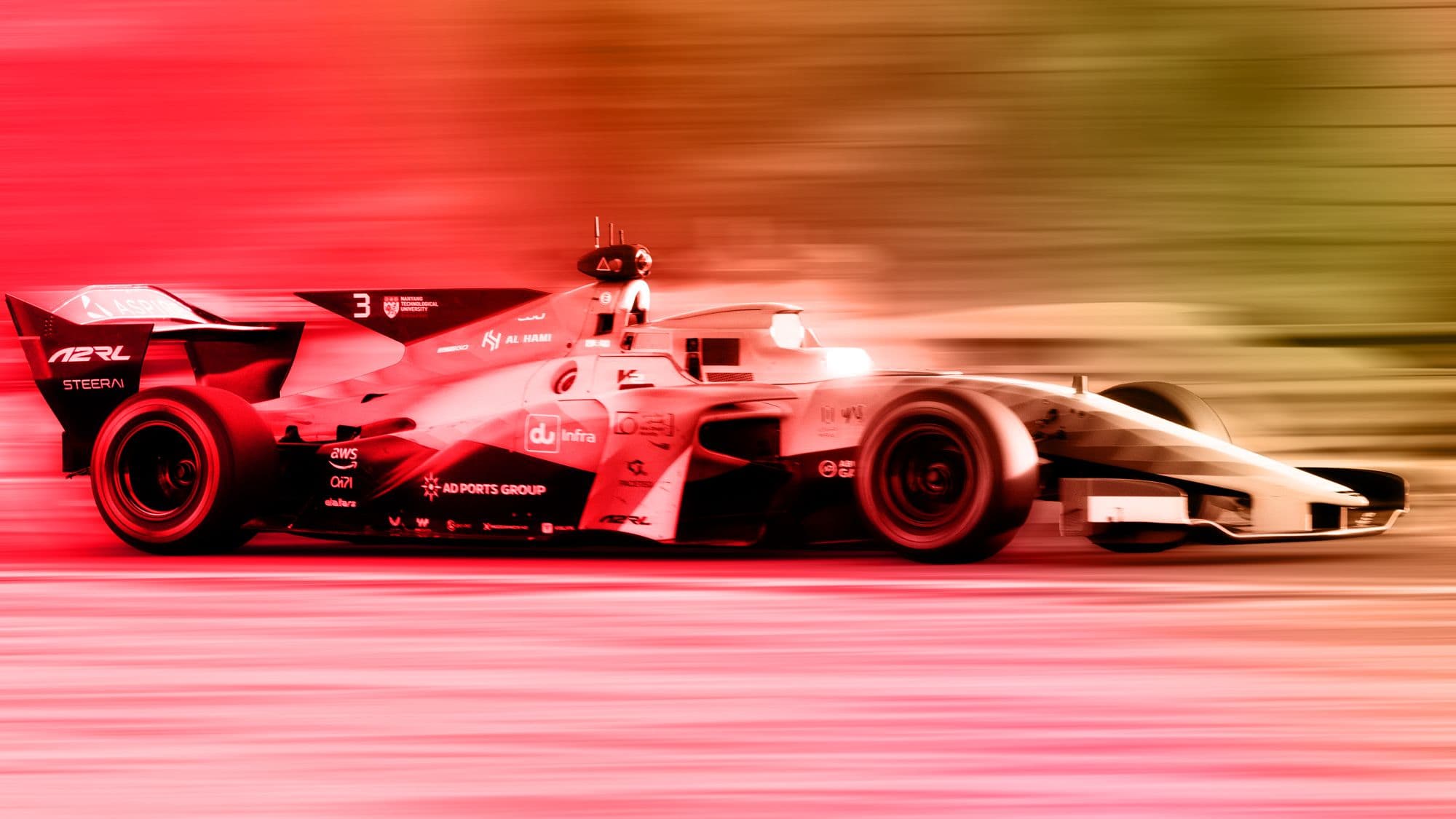
The Abu Dhabi Autonomous Racing League (A2RL) hosted its first international event at Italy’s Imola circuit, where two driverless cars crashed at speeds up to 155 mph. While only two of the five teams finished the race, the failures provided critical insights into the limits of autonomous vehicle technology under extreme conditions.
30 SEC SUMMARY
- The Abu Dhabi Autonomous Racing League (A2RL) hosted its first international autonomous racing event at Italy’s Imola circuit, featuring teams from the UAE, Germany, and other countries.
- Two of five driverless cars crashed at speeds up to 155 mph, while only two completed the race: Kinetiz (UAE) and Constructor Racing (Germany).
- Teams had just nine days of physical testing before the race, which included extreme conditions like rain, hail, and cockpit temperatures near 170°F.
- Failures during the race provided critical data on edge cases like sensor loss, sudden braking, and mechanical faults in autonomous systems.
- The event aims to push the limits of autonomous vehicle technology, with potential applications for improving civilian vehicle safety.
TABLE OF CONTENTS
- Crashes and breakthroughs at Imola
- Testing limits under pressure
- Why racing matters for autonomous tech
- What this means
- Key takeaways
- FAQ
- Sources
KEY HIGHLIGHTS
- A2RL hosted its first international autonomous racing event at Italy’s Imola circuit, featuring teams from the UAE, Germany, and other countries.
- Two of five driverless cars crashed at speeds up to 155 mph, while Kinetiz (UAE) won the race, followed by Constructor Racing (Germany).
- Teams had only nine days of physical testing before the race, which included extreme conditions like rain, hail, and cockpit temperatures near 170°F.
- Failures during the race exposed edge cases like sensor loss, sudden braking, and mechanical faults, providing critical data for improving autonomous systems.
- The event aims to test AI and vehicle control at extreme speeds, with potential applications for enhancing civilian vehicle safety.
Crashes and breakthroughs at Imola
The Abu Dhabi Autonomous Racing League (A2RL) held its first international autonomous racing event at the Imola circuit in Italy, marking a shift from its usual Yas Marina Circuit in Abu Dhabi. According to WIRED, the event brought together teams from the UAE, Germany, and other countries to test driverless cars under extreme conditions.
Out of five autonomous cars on the track, two crashed at speeds reaching 155 mph. The crashes occurred during high-stakes scenarios: one vehicle, named Gianna, lost all data from its lidar and radar sensors and came to a sudden stop. Another, Eva, could not avoid a collision after Gianna braked abruptly, with just 1.5 seconds of reaction time at speeds where physics leaves little room for error.
Only two cars completed the race. The UAE’s Kinetiz team finished first with its vehicle, Sparkz, followed by Germany’s Constructor Racing. The remaining teams—including Italy’s PoliMove and Germany’s TUM—retired due to issues like mechanical faults and compromised localization.
Testing limits under pressure
Teams had just nine days of physical testing before the race, a tight timeline that mirrors the pressure startups often face when deploying technology in high-stakes environments. The Imola circuit, known for its technical challenges like the Rivazza corner, posed additional hurdles, including rain and hail during practice sessions.
Temperatures inside the cockpits soared to nearly 170 degrees Fahrenheit, adding another layer of stress to the vehicles’ hardware and cooling systems. According to WIRED, failures during the race produced critical data on edge cases, such as sensor loss, sudden braking, limited visibility, and interactions between autonomous systems.
Alexander Winkler, Head of Sporting at A2RL, emphasized that the league’s goal is to push autonomous vehicle technology to its limits. By testing perception, prediction, and control systems at extreme speeds, the event aims to uncover weaknesses that are difficult to replicate in simulations or controlled environments.
Why racing matters for autonomous tech
Autonomous racing leagues like A2RL are designed to accelerate the development of AI and vehicle control systems without risking human lives. The data from edge cases—such as the sensors failing on Gianna or the mechanical fault on TUM’s Hailey—provide insights that could improve the safety and reliability of civilian autonomous vehicles.
Nicola Palarchi, Engineering Director at Aspire, highlighted that predictive algorithms developed in motorsport could help consumer vehicles respond more effectively to emergencies. For example, algorithms trained to handle sudden braking at high speeds might one day prevent rear-end collisions on highways.
However, WIRED reports that companies participating in A2RL are not required to share the precise data collected from their vehicles. This limits the potential for industry-wide collaboration but allows teams to protect proprietary innovations.
What this means
Lazyfounder analysis — our interpretation, not reported fact.
For founders and operators in the autonomous vehicle and AI spaces, A2RL’s Imola event is a real-world stress test that reveals how far the technology has come—and how far it still has to go. The crashes and failures aren’t setbacks; they’re data goldmines. Edge cases like sensor loss, sudden braking, and extreme temperatures expose gaps in perception, prediction, and control systems that lab simulations can’t replicate.
What stands out is the compressed timeline: nine days of testing before race day. This mirrors the pressure startups face when scaling from prototype to production under tight deadlines. The fact that only two of five cars finished underscores the importance of resilience in hardware and software design, especially when operating at the limits of physics.
For commercial applications, the takeaway is clear: algorithms honed in motorsport could trickle down to consumer vehicles, improving safety in emergencies. But the lack of mandatory data-sharing among teams also highlights a tension in AI development—collaboration accelerates progress, but proprietary insights are a competitive edge. Founders should watch how A2RL balances these dynamics as the league evolves.
Key takeaways
- A2RL’s Imola event was the first international autonomous racing competition held outside Abu Dhabi’s Yas Marina Circuit, testing cutting-edge AI and vehicle technology.
- Extreme conditions—including rain, hail, and cockpit temperatures near 170°F—pushed teams to adapt quickly, with only nine days of physical testing before the race.
- Two of five driverless cars crashed at speeds up to 155 mph, while Kinetiz (UAE) and Constructor Racing (Germany) finished the race, demonstrating varying levels of system robustness.
- Failures provided valuable insights into edge cases like sensor loss, sudden braking, and mechanical faults, which are difficult to simulate in controlled environments.
- Predictive algorithms developed for racing could improve civilian vehicle safety, but proprietary data ownership may limit broader industry collaboration.
FAQ
What is A2RL, and why was the Imola event significant?
A2RL, or the Abu Dhabi Autonomous Racing League, is a platform launched in 2024 to test autonomous vehicle technology in motorsport. The Imola event was significant because it was the league’s first international competition outside Abu Dhabi, exposing teams to new challenges like the Imola circuit’s technical layout and unpredictable weather.
Why did the crashes during the race matter?
The crashes were not just failures—they provided valuable data on edge cases, such as sensor loss, sudden braking, and mechanical faults. These scenarios are difficult to simulate in labs and offer critical lessons for improving the safety and reliability of autonomous systems.
How could autonomous racing technology benefit civilian vehicles?
Predictive algorithms developed for racing—such as those designed to handle sudden braking or sensor failures at high speeds—could improve the safety of consumer autonomous vehicles. Motorsports push technology to its limits, uncovering weaknesses that might not appear in everyday driving conditions.
What were the biggest challenges teams faced at Imola?
Teams had only nine days of physical testing before the race, and they faced extreme conditions like rain, hail, and cockpit temperatures near 170°F. These challenges tested the resilience of both hardware and software, revealing how well autonomous systems can adapt to real-world unpredictability.
Related on Lazyfounder
Sources
- WIRED · 2026-10-01
2 Driverless Cars Crashed Going 155 mph. That Could Be a Good Thing
This story is an original summary drafted with AI by Lazyfounder from the reporting listed above and checked by automated validation. Facts are attributed to their original publishers; sections marked as analysis are Lazyfounder's. Where a source is in another language, facts were machine-translated and quotations are reported, not reproduced. Read the original coverage via the links, and see our AI policy and corrections policy.

About the author
Editor, Lazyfounder
Tarun Mottlia edits LazyFounders, covering Indian startups, funding rounds, AI and product launches. Every story on the site is AI-assisted and checked against its cited sources before publication.
More stories by Tarun MottliaGet the LazyFounder Brief
Startup, funding and AI news in a five-minute read. Join the early-access list.
