
Colliers report: AI is creating new roles but 25% of occupiers lack workplace performance metrics
A Colliers report on Asia Pacific workplace trends reveals that AI is driving the creation of specialized roles and cross-functional teams, yet a quarter of occupiers still do not formally measure workplace performance. In India and Southeast Asia, growth-focused markets are prioritizing AI-driven collaboration and talent attraction, but risks remain for companies slow to adapt.

Editor, Lazyfounder
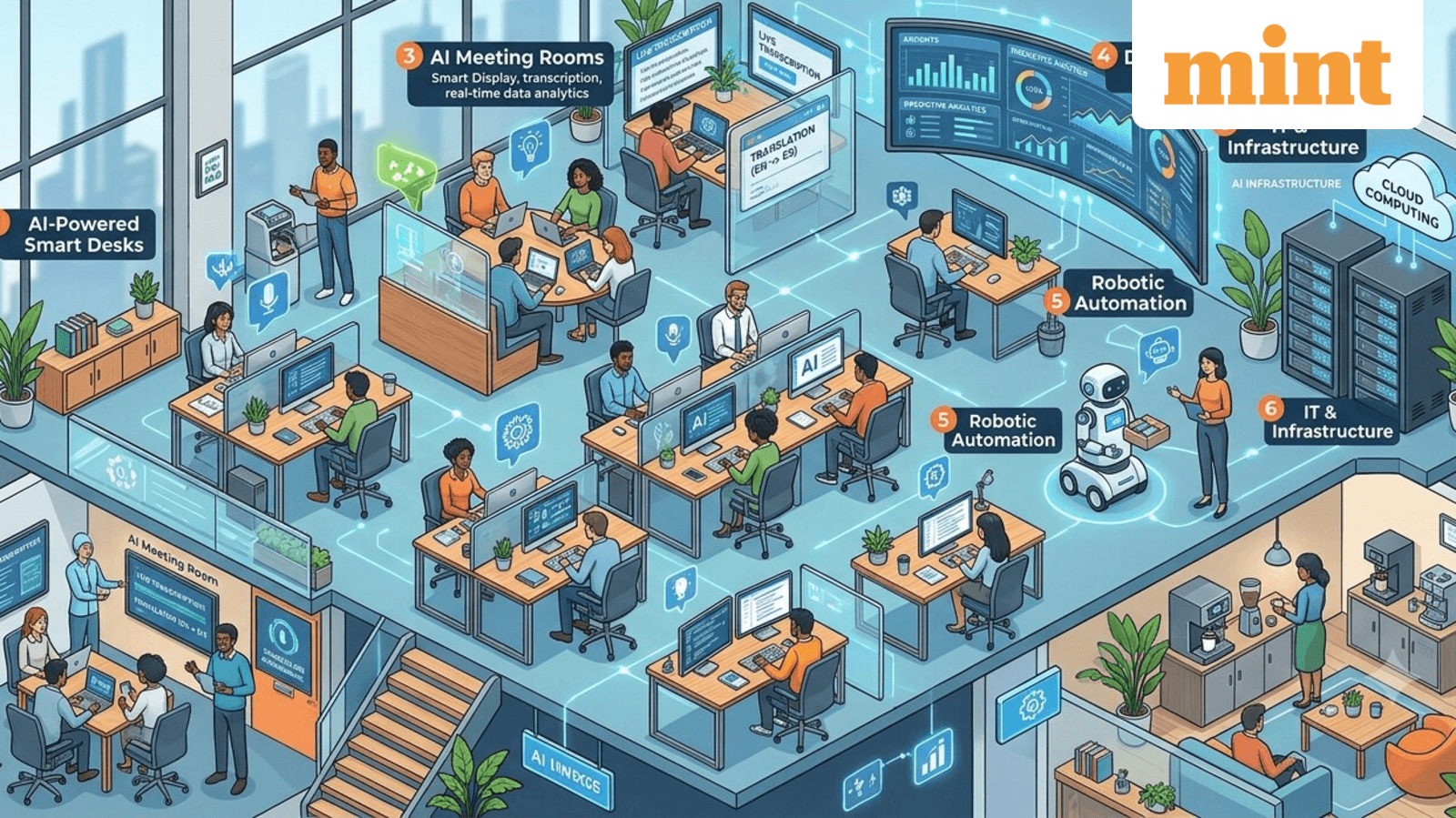
AI’s impact on workforce and workplace strategy
A recent report by Colliers, Asia Pacific Workplace Insights: Forces shaping office decisions in 2027, highlights how AI is transforming the workforce across the region. According to the report, AI is creating specialized roles that require new skills and collaboration, with 100% of respondents expecting this shift. Additionally, 62% anticipate a rise in project-based or cross-functional teams due to AI integration.
The report identifies a disconnect between AI-driven workforce expectations and workplace strategy planning. While 85% of respondents expect AI to reduce the number of roles while increasing productivity, only 7% in India and Southeast Asia see footprint reduction as a priority. Instead, 40% in these markets prioritize AI-driven roles, skills, and collaboration, driving demand for diverse workspace types (50%).
Growth focus in India and Southeast Asia
India and Southeast Asia stand out as growth-focused markets, with 34% of occupiers actively expanding operations despite geopolitical risks. Cost efficiency and talent availability are the primary factors influencing location decisions, reflecting these regions' resilience and attractiveness for business growth.
Occupiers in India are increasingly investing in workplace upgrades to attract talent and enhance performance. Arpit Mehrotra, Managing Director of Office Services at Colliers India, stated that India remains a high-growth office market in the APAC region, supported by a resilient economy and sustained occupier expansion. The report notes that 71% of occupiers in these markets maintain an office-centric approach, emphasizing portfolio resilience and future readiness.
Workplace performance and risks
The report reveals that 55% of occupiers identify business performance as the office’s primary mandate, followed by collaboration and innovation (52%). However, 25% of occupiers do not formally measure workplace performance, and 10% rely primarily on leadership views for assessment.
The biggest risk highlighted in the report is the failure to plan for AI-driven changes. While AI is expected to elevate the role of physical workplaces as hubs for knowledge exchange, occupiers must align their workplace strategies with evolving workforce needs to avoid falling behind.
What this means
Lazyfounder analysis — our interpretation, not reported fact.
For founders and operators, the Colliers report underscores a critical gap between AI-driven workforce expectations and current workplace strategies. The demand for cross-functional teams and specialized roles means companies must rethink how they design workspaces and measure productivity—not just to attract talent but to stay competitive. The fact that 25% of occupiers still lack formal workplace performance metrics suggests many are flying blind, relying on intuition rather than data to guide decisions.
In India and Southeast Asia, where growth is a priority and AI adoption is accelerating, the pressure to adapt is even higher. Companies that invest in flexible, high-quality workspaces and align them with AI-driven collaboration needs will have an edge in talent attraction and retention. The report also signals that cost efficiency and talent availability remain key drivers for location decisions, reinforcing the importance of strategic site selection in high-growth markets like India. Ignoring these shifts could leave businesses struggling to keep up with competitors who are proactively reshaping their workplaces for the AI era.
Related on Lazyfounder
Sources
- Mint (Technology) · 2026-10-26
How AI is reshaping the workforce: New roles, more cross-functional teams; biggest risk is failing to plan, says report
This story is an original summary drafted with AI by Lazyfounder from the reporting listed above and checked by automated validation. Facts are attributed to their original publishers; sections marked as analysis are Lazyfounder's. Where a source is in another language, facts were machine-translated and quotations are reported, not reproduced. Read the original coverage via the links, and see our AI policy and corrections policy.

About the author
Editor, Lazyfounder
Tarun Mottlia edits LazyFounders, covering Indian startups, funding rounds, AI and product launches. Every story on the site is AI-assisted and checked against its cited sources before publication.
More stories by Tarun MottliaGet the LazyFounder Brief
Startup, funding and AI news in a five-minute read. Join the early-access list.
