
Bank of England Governor: AI Regulation Is Not the Starting Point
Bank of England Governor Andrew Bailey has stated that regulating artificial intelligence should not be the initial focus. Instead, he advocates for rigorous testing to identify vulnerabilities and establish safeguards. This perspective comes amid growing calls from tech leaders and policymakers for a coordinated approach to AI risks.

Editor, Lazyfounder
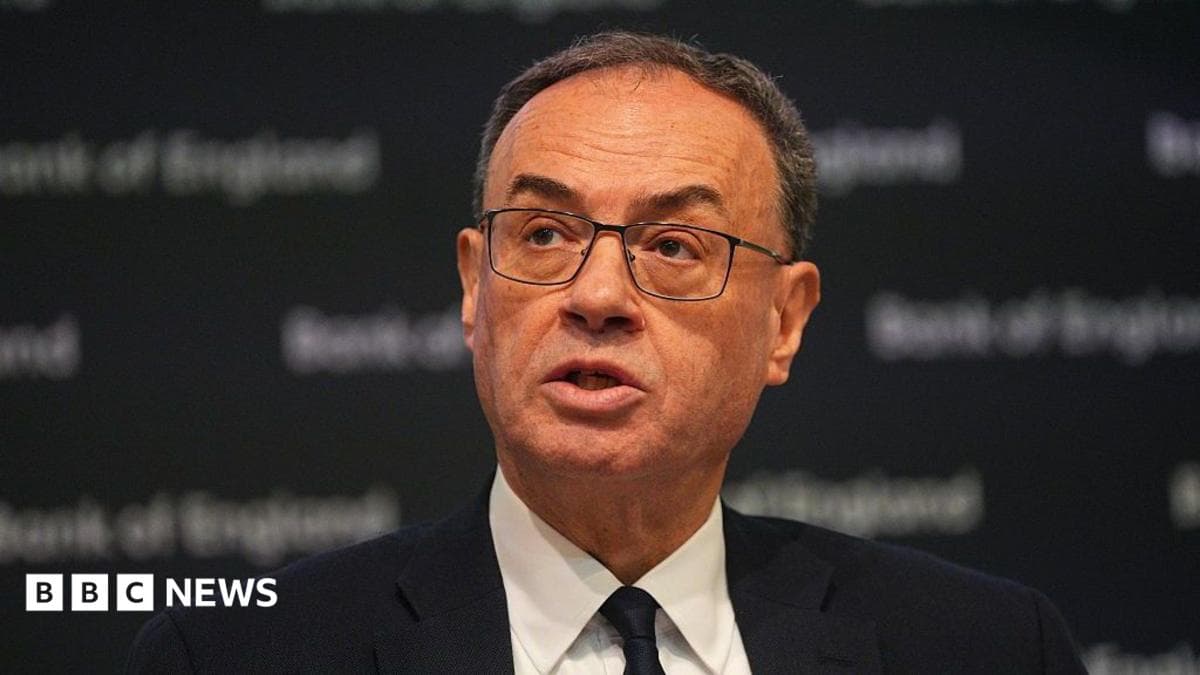
Bank of England Governor Andrew Bailey has stated that regulating artificial intelligence should not be the initial focus. Instead, he advocates for rigorous testing to identify vulnerabilities and establish safeguards. This perspective comes amid growing calls from tech leaders and policymakers for a coordinated approach to AI risks.
30 SEC SUMMARY
- Bank of England Governor Andrew Bailey argues that regulating AI should not be the initial focus, advocating instead for rigorous testing to identify vulnerabilities.
- Leading AI firms like Anthropic and OpenAI have pushed for slowing AI development and adopting internationally coordinated safeguards.
- Donald Trump rejected the idea of pausing AI development, emphasizing US leadership in the global AI race.
- The UK has launched the AI Security Institute to contribute to AI testing standards and frameworks.
- Debate over AI risks and regulation has intensified, with divergent views among policymakers, tech leaders, and global institutions.
TABLE OF CONTENTS
- Testing Over Regulation
- Divided Approaches to AI Development
- Political and Industry Perspectives
- Broader Context: AI Regulation and Global Coordination
- What this means
- Key takeaways
- FAQ
- Sources
KEY HIGHLIGHTS
- Bank of England Governor Andrew Bailey stated that regulating AI is "not the right place to start" and emphasized rigorous testing instead.
- Anthropic and OpenAI have called for slowing AI development and adopting an internationally coordinated approach to risk assessment.
- OpenAI delayed the release of its latest AI model due to safety concerns.
- Donald Trump rejected the idea of slowing AI development, citing US leadership in the AI race.
- The UK has established the AI Security Institute to contribute to AI testing standards.
Testing Over Regulation
According to BBC News, Bank of England Governor Andrew Bailey stated that regulating artificial intelligence (AI) is "not the right place to start." Instead, he emphasized the need for rigorous testing to identify vulnerabilities and establish safeguards in AI systems.
Bailey reportedly described the risks associated with AI as "real and increasingly significant." However, he argued that focusing on regulation prematurely could hinder progress. He called for a system that allows for intervention and sets boundaries for AI operation, rather than outright prohibition.
Divided Approaches to AI Development
The debate over AI risks has intensified in recent weeks. Leading AI firms, including Anthropic and OpenAI, have publicly advocated for slowing down AI development. These companies support an internationally coordinated approach to assess risks and implement safeguards, according to BBC News.
OpenAI recently delayed the release of its latest AI model, citing safety concerns. This decision aligns with calls from other industry leaders for a more cautious approach to AI advancement.
Political and Industry Perspectives
The discussion around AI regulation has also taken on a political dimension. Donald Trump, President of the United States, has rejected the idea of slowing AI development. In a recent statement, he framed AI as a critical area where the US must maintain leadership, particularly in competition with countries like China.
Trump also announced that AI executives had signed a "morally binding" agreement to address AI risks. Under this agreement, companies would be responsible for ensuring the safety of their own technology. The enforceability and practical impact of this pledge remain unclear.
The UK has taken steps to position itself as a leader in AI safety. Bailey highlighted the country’s progress in AI testing, including the establishment of the AI Security Institute. This institution is expected to play a role in developing standards for AI testing and safety frameworks.
Broader Context: AI Regulation and Global Coordination
The push for AI regulation and safety measures has gained traction among tech leaders and policymakers. In a recent meeting hosted by Donald Trump, CEOs from companies like OpenAI, Anthropic, and Meta signed a self-regulation agreement. Critics, however, argue that such agreements lack enforceability.
Religious leaders have also weighed in on the debate. Pope Leo XIV recently described AI safety concerns as legitimate, urging tech leaders and politicians to take them seriously during a meeting in France.
Governments are exploring practical applications of AI while addressing safety concerns. For example, the US government launched America.gov, an AI chatbot designed to provide information about federal services using only official sources. Such initiatives reflect the balance between innovation and risk mitigation.
What this means
Lazyfounder analysis — our interpretation, not reported fact.
Bailey’s stance reflects a pragmatic tension in the AI policy landscape: how to address genuine risks without stifling innovation. His emphasis on testing over regulation suggests that governments and institutions may favor flexible frameworks that evolve alongside AI advancements, rather than rigid rules that could become outdated quickly.
The divergence between Bailey’s approach and the calls from Anthropic, OpenAI, and other tech leaders highlights a broader debate about whether slowing development is feasible—or even desirable—in a competitive global environment. Trump’s rejection of pauses in AI progress underscores the geopolitical stakes, where technological leadership is seen as critical to economic and national security.
For founders and operators in the AI space, this environment creates both uncertainty and opportunity. Startups may benefit from clarity in testing standards and safety frameworks, but they must also navigate shifting political and regulatory expectations. The UK’s AI Security Institute and similar initiatives could provide valuable guidance, but the lack of international coordination risks fragmentation, with companies facing different demands in different markets.
Key takeaways
- Andrew Bailey believes AI regulation is premature and calls for prioritizing testing and safeguards.
- Anthropic, OpenAI, and other tech leaders advocate for slowing AI development to assess risks and implement international standards.
- Donald Trump opposes slowing AI progress, framing it as a competition for global leadership.
- The UK’s AI Security Institute is part of broader efforts to establish AI testing and safety frameworks.
- AI risks are described as "real and increasingly significant," but approaches to addressing them vary widely.
FAQ
Why does Andrew Bailey oppose regulating AI right now?
Bailey believes that focusing on regulation prematurely could hinder progress. He argues that rigorous testing to identify vulnerabilities and establish safeguards should come first.
What are Anthropic and OpenAI advocating for regarding AI development?
Both companies have called for slowing down AI development and adopting an internationally coordinated approach to assess risks and implement safeguards.
What is the UK’s AI Security Institute?
The AI Security Institute is a UK initiative aimed at contributing to AI testing standards and safety frameworks.
How does Donald Trump’s stance on AI differ from that of tech leaders like those at OpenAI?
Trump opposes slowing AI development, framing it as a competition for global leadership. In contrast, companies like OpenAI have delayed releases due to safety concerns and called for a more cautious approach.
What is the significance of the "morally binding" agreement signed by AI executives?
The agreement, announced by Trump, suggests that AI companies will self-regulate to ensure the safety of their technology. However, its enforceability and practical impact remain unclear.
Related on Lazyfounder
Sources
- BBC News (Tech & Business) · 2026-09-30
Regulating AI 'not the right place to start' says Bank of England governor
This story is an original summary drafted with AI by Lazyfounder from the reporting listed above and checked by automated validation. Facts are attributed to their original publishers; sections marked as analysis are Lazyfounder's. Where a source is in another language, facts were machine-translated and quotations are reported, not reproduced. Read the original coverage via the links, and see our AI policy and corrections policy.

About the author
Editor, Lazyfounder
Tarun Mottlia edits LazyFounders, covering Indian startups, funding rounds, AI and product launches. Every story on the site is AI-assisted and checked against its cited sources before publication.
More stories by Tarun MottliaGet the LazyFounder Brief
Startup, funding and AI news in a five-minute read. Join the early-access list.
