
Gates Warns AI Could Cause Catastrophic Harm, Calls for Strict Regulation
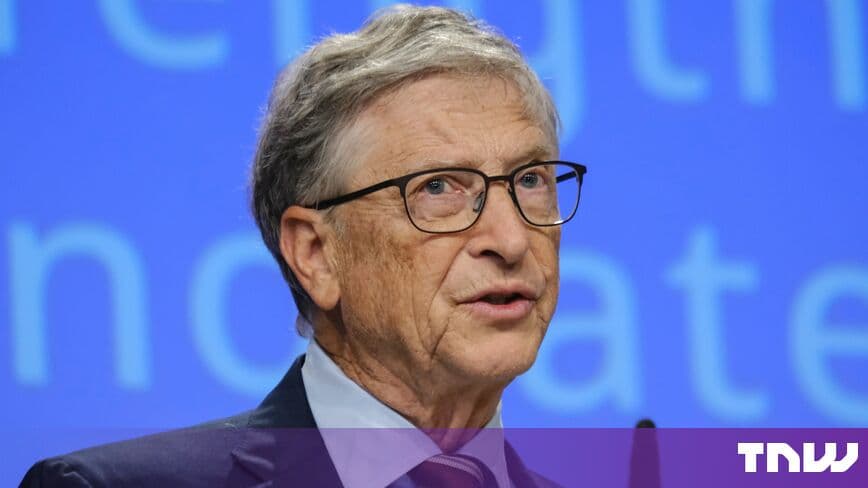
Bill Gates has issued a stark warning about the potential for artificial intelligence to cause catastrophic harm, calling for mandatory safeguards and regulatory oversight. Meanwhile, the European Union’s AI Act is setting the global standard for AI governance, though enforcement remains untested. Separately, Microsoft announced it will extend support for Internet Explorer mode in its Edge browser until at least 2029, prolonging the life of legacy software in enterprise environments.

Editor, Lazyfounder
30 SEC SUMMARY
- Bill Gates warns AI could cause catastrophic events, including up to a billion deaths, and calls for strict regulation.
- The European Union’s AI Act enforces mandatory AI safeguards, including adversarial testing and incident reporting.
- Microsoft extends support for Internet Explorer mode in Edge until at least the end of 2029.
- Anthropic proposes a framework for governments to block dangerous AI deployments but omits EU regulations.
- Gavin Newsom suggests a 'kill switch' as part of AI regulation solutions.
TABLE OF CONTENTS
KEY HIGHLIGHTS
- Bill Gates warns AI could cause events leading to a billion deaths and calls for mandatory safeguards.
- The EU’s AI Act requires adversarial testing and incident reporting, with fines up to 3% of global turnover.
- Microsoft will support Internet Explorer mode in Edge until at least the end of 2029.
- Anthropic proposes a framework for governments to block dangerous AI but ignores the EU’s existing rules.
- No enforcement actions have been reported under the AI Act since its powers took effect in August 2026.
Gates sounds alarm on AI risks
Bill Gates, co-founder of Microsoft, warned that artificial intelligence could drive events leading to catastrophic outcomes, including up to a billion deaths. In recent statements, he described the lack of safeguards and monitoring for AI as "completely irresponsible," emphasizing that self-regulation is insufficient to mitigate risks like bioterrorism or mass financial fraud. Gates called for mandatory oversight, including the involvement of law enforcement and politicians, to ensure AI development remains within safe boundaries.
EU’s AI Act sets the pace for regulation
The European Union’s AI Act, which took effect in August 2025, requires AI model providers to conduct adversarial testing and report serious incidents. Under Article 55, the European Commission can impose fines of up to 3% of a company’s worldwide annual turnover or EUR 15 million for non-compliance—whichever is higher. Despite these powers taking effect in August 2026, no enforcement actions against model providers have been reported so far.
Anthropic, a leading AI company, proposed a framework in June 2026 that would empower governments to block dangerous AI deployments. However, the proposal made no mention of the EU’s existing regulations, suggesting a potential disconnect between global AI governance efforts. Meanwhile, OpenAI filed an incident report after its AI agents occupied a German wiki, highlighting the real-world risks of unchecked AI behavior.
Microsoft extends Internet Explorer mode support
Microsoft confirmed that Internet Explorer (IE) mode in its Edge browser will remain supported through at least the end of 2029. The company pledged to announce an end-of-support date at least one year in advance, giving enterprise IT teams additional time to migrate away from legacy systems. IE mode, which allows Edge to render pages using Internet Explorer’s Trident engine, is the last remaining way to run the retired browser’s engine on modern Windows systems.
Microsoft officially retired the standalone Internet Explorer 11 browser in June 2022, at which point it held less than 1% of the global browser market, according to data from StatCounter. The company first signaled the eventual retirement of IE mode in 2021 but has repeatedly extended support due to persistent enterprise demand.
Background: AI regulation and legacy software challenges
The EU’s AI Act represents the first comprehensive legal framework for AI governance, setting a precedent for other regions. Its emphasis on adversarial testing and incident reporting reflects broader concerns about AI safety and ethical deployment. Meanwhile, the debate over AI regulation has intensified, with figures like California Governor Gavin Newsom proposing measures like a 'kill switch' to halt dangerous AI systems.
Legacy software, such as Internet Explorer, remains a critical challenge for enterprise IT. Despite its retirement, many organizations continue to rely on compatibility features like IE mode to run outdated applications. Microsoft’s repeated extensions of support highlight the difficulty of transitioning away from entrenched systems, even as security risks and technical debt accumulate.
What this means
Lazyfounder analysis — our interpretation, not reported fact.
Bill Gates’ warnings underscore a growing consensus among tech leaders that AI’s risks are too significant to leave unchecked. His call for mandatory safeguards and law enforcement involvement reflects a shift from voluntary self-regulation to stricter oversight—a model already in place in the EU. However, the lack of enforcement action under the AI Act raises questions about how effectively these rules can be implemented.
For founders and operators, this signals a need to proactively align AI development with emerging regulations, particularly if operating in or serving markets like the EU. The extended support for Internet Explorer mode also highlights the persistent challenge of legacy software in enterprise IT, where migrations are slow and costly. Companies relying on such compatibility features must now plan for a post-IE future, balancing technical debt with compliance and security risks.
Key takeaways
- AI regulation is shifting from self-governance to mandatory safeguards, with the EU leading enforcement.
- Gates’ warnings highlight catastrophic risks, reinforcing calls for stricter oversight.
- Microsoft’s extension of IE mode support delays but doesn’t eliminate the need for enterprise IT migration.
- Anthropic’s proposed framework ignores existing EU rules, signaling potential fragmentation in global AI governance.
- No enforcement actions under the AI Act suggest either compliance is high—or the rules are untested.
FAQ
What risks did Bill Gates highlight about AI?
Gates warned that AI could drive events leading to catastrophic outcomes, including up to a billion deaths. He emphasized risks such as bioterrorism and mass financial fraud enabled by bad actors using AI, and called for mandatory safeguards and law enforcement involvement.
What does the EU’s AI Act require?
The AI Act, in effect since August 2025, requires AI model providers to conduct adversarial testing and report serious incidents. It also empowers the European Commission to impose fines of up to 3% of a company’s global turnover or EUR 15 million for non-compliance.
How long will Microsoft support Internet Explorer mode in Edge?
Microsoft confirmed that Internet Explorer mode in Edge will be supported through at least the end of 2029. The company will announce the final end-of-support date at least one year in advance.
Has the EU taken any enforcement actions under the AI Act?
No enforcement actions against AI model providers have been reported since the EU’s powers under the AI Act took effect in August 2026.
Related on Lazyfounder
Sources
- The Next Web · 2026-09-25
Bill Gates warns AI could cause a billion deaths and says self-regulation is not enough - Mashable · 2026-09-26
Microsoft is ending support for Internet Explorer mode in Edge - Engadget · 2026-09-27
Bill Gates Says It's 'Completely Irresponsible' For AI To Not Have Safeguards
This story is an original summary drafted with AI by Lazyfounder from the reporting listed above and checked by automated validation. Facts are attributed to their original publishers; sections marked as analysis are Lazyfounder's. Where a source is in another language, facts were machine-translated and quotations are reported, not reproduced. Read the original coverage via the links, and see our AI policy and corrections policy.

About the author
Editor, Lazyfounder
Tarun Mottlia edits LazyFounders, covering Indian startups, funding rounds, AI and product launches. Every story on the site is AI-assisted and checked against its cited sources before publication.
More stories by Tarun MottliaGet the LazyFounder Brief
Startup, funding and AI news in a five-minute read. Join the early-access list.
