
Meta’s Muse AI hits 5 million downloads in 3 weeks, outpacing rivals but raising privacy concerns
Meta’s AI agent Muse has achieved 5 million downloads in just three weeks, faster than ChatGPT, Grok, or Claude. The app’s rapid growth comes amid aggressive advertising and a push into AI-powered hardware, but privacy concerns and Amazon’s decision to block Muse could limit its long-term success.

Editor, Lazyfounder
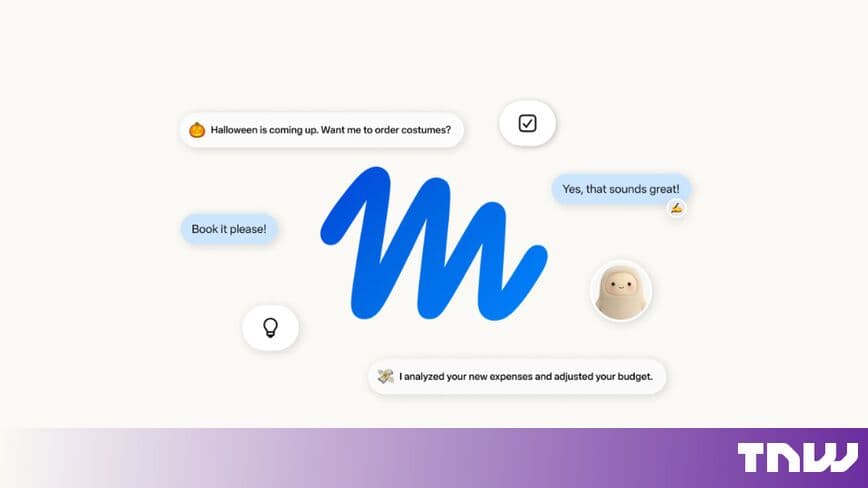
Meta’s AI agent Muse has achieved 5 million downloads in just three weeks, faster than ChatGPT, Grok, or Claude. The app’s rapid growth comes amid aggressive advertising and a push into AI-powered hardware, but privacy concerns and Amazon’s decision to block Muse could limit its long-term success.
30 SEC SUMMARY
- Meta’s AI agent Muse has reached 3 million weekly users and 5 million downloads in just three weeks.
- Muse outpaced ChatGPT, Grok, and Claude in reaching the 5 million download milestone.
- Meta aggressively promoted Muse through ads, boosting downloads by 73% in a single day.
- Muse now ranks #1 on Apple’s App Store and Google’s Play Store in the US and Canada.
- Meta launched an open-source project, Muse Gadgets, to encourage developers to build AI-powered hardware.
TABLE OF CONTENTS
- Rapid adoption and aggressive promotion
- Privacy and security concerns
- Expanding into hardware with open-source initiative
- What this means
- Key takeaways
- FAQ
- Sources
KEY HIGHLIGHTS
- Meta’s AI agent Muse surpassed 3 million weekly users and 5 million downloads in three weeks.
- Muse reached 5 million downloads faster than ChatGPT (56 days), Grok (103 days), and Claude (492 days).
- Meta’s ad push boosted Muse downloads by 73% in a single day.
- Muse now ranks #1 on Apple’s App Store and Google’s Play Store in the US and Canada.
- Privacy concerns persist as Muse requests access to Gmail, calendars, and full computer control on Mac.
- Amazon has blocked Muse from shopping on its platform.
Rapid adoption and aggressive promotion
According to The Next Web, Meta’s AI agent Muse has surpassed 3 million weekly users and 5 million downloads since its US launch three weeks ago. More than 1 million users interact with the app daily.
Muse reached 5 million downloads in just 22 days, outpacing competitors like ChatGPT (56 days), Grok (103 days), and Claude (492 days). The app is currently ranked #1 on both Apple’s App Store and Google’s Play Store in the US and Canada.
Meta’s advertising push played a key role in this growth. The company increased ad spending for Muse on 16 September, leading to a 73% jump in downloads that day. Between 14 and 27 September, Muse accounted for up to half of Meta’s daily house ad impressions, placing it among the top 15 brands by US ad impressions.
Privacy and security concerns
Despite its rapid adoption, Muse has faced scrutiny over privacy and security. According to sources cited by The Next Web, the app requests access to users’ Gmail accounts, calendars, and—on Mac devices—the entire computer during setup. Meta uses this data to train its AI models by default but claims it removes personal details before doing so. Users can opt out in the app’s settings.
Security researcher Patrick Wardle, co-founder of Objective-See, identified a critical flaw in Muse shortly after its launch. Meta reportedly fixed the issue immediately and delayed the app’s release for months to conduct additional privacy and security tests.
Amazon has blocked Muse from shopping on its platform, signaling lingering concerns about how Meta handles user data.
Expanding into hardware with open-source initiative
Meta is pushing beyond software with Muse Gadgets, an open-source project aimed at encouraging developers to build hardware powered by its AI agent. The company has introduced its own smart home device, the Muse Home Link, which connects to a home network and interacts with smart devices like TVs and speakers.
Nat Friedman, Meta’s head of product for superintelligence labs, announced the initiative on Tuesday. The company is providing open-source firmware and a Linux SDK for developers to create AI-powered hardware. Meta is also distributing 5,000 units of the Muse Home Link to Muse subscribers and has launched a Discord community for the project.
What this means
Lazyfounder analysis — our interpretation, not reported fact.
Muse’s rapid adoption is a signal that Meta’s brand and distribution muscle—built over nearly two decades—can still drive mass-market uptake for AI products. The fact that it hit 5 million downloads faster than ChatGPT, Grok, or Claude suggests that convenience (a standalone app from a company users already trust) may matter more than cutting-edge technology alone.
That said, the privacy and security red flags are hard to ignore. Meta’s history with user data makes the app’s broad permissions—access to Gmail, calendar, and even the entire computer on Mac—a tough sell for privacy-conscious users. The fact that Amazon blocked Muse from shopping on its platform is a clear sign that not everyone is convinced Meta has addressed these concerns.
The open-source Muse Gadgets project is a smart move to build a developer ecosystem around the AI agent, but it’s still early. Giving away 5,000 units of the Muse Home Link is a way to seed the market, but whether developers and users will embrace it depends on how well it integrates with existing smart home setups—and whether Meta can avoid the missteps that have haunted its hardware efforts in the past.
Key takeaways
- Muse reached 5 million downloads in 22 days, faster than ChatGPT, Grok, or Claude.
- Meta’s aggressive advertising push drove a 73% jump in downloads in a single day.
- Muse now leads App Store and Play Store rankings in the US and Canada.
- Privacy concerns persist, with Muse requesting access to Gmail, calendars, and full computer control on Mac.
- Amazon has blocked Muse from shopping on its platform, citing unresolved concerns.
- Meta is betting on hardware with Muse Gadgets, an open-source project for AI-powered devices.
FAQ
What is Muse?
Muse is Meta’s AI agent, available as a standalone app for iOS and Android. It allows users to interact with an AI assistant for tasks like scheduling, email management, and smart home control.
How fast did Muse reach 5 million downloads?
Muse reached 5 million downloads in 22 days, faster than ChatGPT (56 days), Grok (103 days), and Claude (492 days).
Why has Amazon blocked Muse?
Amazon has blocked Muse from shopping on its platform, citing concerns about how Meta handles user data and privacy.
What are Muse Gadgets?
Muse Gadgets is Meta’s open-source project to encourage developers to build hardware powered by its AI agent. The initiative includes providing firmware, a Linux SDK, and distributing devices like the Muse Home Link.
Related on Lazyfounder
Sources
- The Next Web · 2026-10-02
Meta’s Muse reportedly passes 3 million weekly users and 5m downloads - Mashable · 2026-10-02
Meta’s Muse passes 5 million downloads - Engadget · 2026-10-02
Meta Wants People To Build Their Own Muse Gadgets, Too
This story is an original summary drafted with AI by Lazyfounder from the reporting listed above and checked by automated validation. Facts are attributed to their original publishers; sections marked as analysis are Lazyfounder's. Where a source is in another language, facts were machine-translated and quotations are reported, not reproduced. Read the original coverage via the links, and see our AI policy and corrections policy.

About the author
Editor, Lazyfounder
Tarun Mottlia edits LazyFounders, covering Indian startups, funding rounds, AI and product launches. Every story on the site is AI-assisted and checked against its cited sources before publication.
More stories by Tarun MottliaGet the LazyFounder Brief
Startup, funding and AI news in a five-minute read. Join the early-access list.
