
Waymo and Hamburg test robotaxis as public transport partners
Waymo and Hamburg’s transit operator are testing two distinct models to integrate autonomous vehicles into public transport systems. While Waymo offers financial incentives in the San Francisco Bay Area, Hamburg embeds shuttles directly into its transit app—highlighting different strategies for urban mobility adoption.
LazyFounders
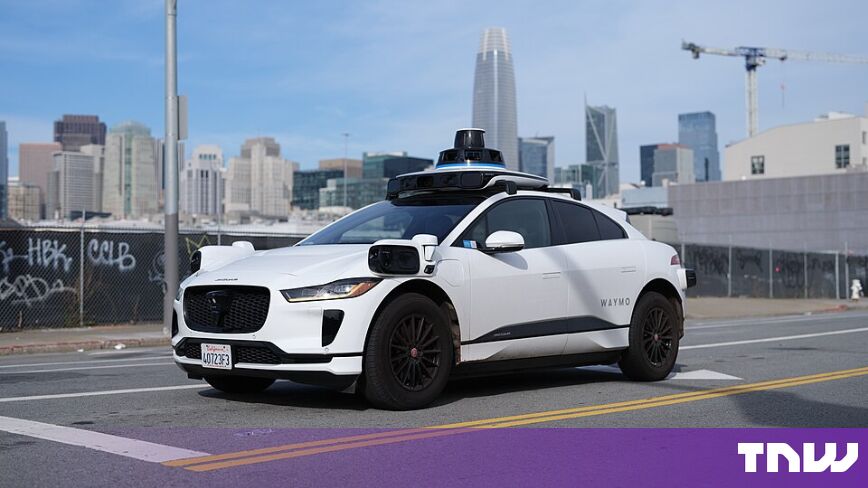

Waymo and Hamburg’s transit operator are testing two distinct models to integrate autonomous vehicles into public transport systems. While Waymo offers financial incentives in the San Francisco Bay Area, Hamburg embeds shuttles directly into its transit app—highlighting different strategies for urban mobility adoption.
30 SEC SUMMARY
- Waymo launches a $2.85 credit incentive in the San Francisco Bay Area for riders combining robotaxi trips with public transport, using a Visa card.
- Hamburg’s transit operator integrates autonomous shuttles into its app without financial incentives, funded by EUR 26M in federal support.
- Waymo’s pilot program starts with employees before expanding to the public, securing 40 parking spaces at Caltrain stations.
- Uber and Wayve debut London’s first robotaxi service, booked via Uber’s platform.
- Waymo begins mapping Munich for a commercial robotaxi launch targeted in late 2027.
TABLE OF CONTENTS
- Waymo’s incentive program in the Bay Area
- Hamburg’s integrated shuttle project
- Competing models in London and Munich
- What this means
- Key takeaways
- FAQ
- Sources
KEY HIGHLIGHTS
- Waymo offers $2.85 in credit to San Francisco Bay Area riders who combine robotaxi trips with public transport within two hours, using a Visa card.
- Hamburg’s transit operator, Hamburger Hochbahn, leads an autonomous shuttle project funded by EUR 26M from the federal transport ministry.
- The shuttles in Hamburg are bookable through the city’s transit app and Volkswagen’s MOIA platform.
- Waymo secures 40 parking spaces at Caltrain stations for vehicle staging in the Bay Area.
- Uber and Wayve launch London’s first robotaxi service, booked via Uber’s app.
Waymo’s incentive program in the Bay Area
According to The Next Web, Waymo has launched a program in the San Francisco Bay Area that offers riders $2.85 in credit for combining a robotaxi trip with a public transport journey within two hours. The credit is available only to riders who pay using a Visa card, which must be linked in the Waymo app. The program covers the 27 Bay Area agencies that support contactless tap-to-pay transactions.
The initiative begins with Waymo employees before opening to the public in the coming weeks. To support the program, Waymo will lease 40 dedicated parking spaces at Caltrain stations for vehicle staging. The $2.85 credit matches the cost of a San Francisco bus fare, a detail noted by California’s transport secretary and San Jose’s mayor, both of whom publicly welcomed the program.
The Next Web reports that over half of Waymo’s riders in San Francisco, Los Angeles, and Phoenix already use public transport, suggesting the incentive may reinforce existing habits rather than attract new users.
Hamburg’s integrated shuttle project
In Hamburg, the city’s transit operator, Hamburger Hochbahn, is leading an autonomous shuttle project that integrates Volkswagen’s ID Buzz vans into the urban mobility network. Unlike Waymo’s model, this project does not offer financial incentives but is instead funded by EUR 26 million from the federal transport ministry over three years, according to The Next Web.
The fleet consists of up to 20 vehicles operating across a 37-square-kilometer area, serving roughly 320,000 residents. Riders can book the shuttles through the transit authority’s app, hvv switch, as well as Volkswagen’s MOIA platform. The project positions autonomous shuttles as an extension of public transport rather than a standalone service.
Competing models in London and Munich
The Next Web reports that Uber and Wayve have launched London’s first robotaxi service, with vehicles featuring safety drivers. Unlike Hamburg’s model, these robotaxis are booked through Uber’s app rather than Transport for London’s platform, reflecting a more siloed approach.
Meanwhile, Waymo began mapping Munich in August, with plans to launch commercial service by late 2027. The effort is supported by Germany’s 2021 regulatory framework for autonomous vehicles, and Bavarian officials have pledged to remove regulatory barriers to accelerate deployment.
What this means
LazyFounders analysis — our interpretation, not reported fact.
This story highlights two distinct approaches to integrating autonomous vehicles into urban mobility. Waymo’s incentive-driven model in the Bay Area treats robotaxis as a complement to public transport, using small financial nudges to encourage multimodal trips. The Visa partnership also suggests how payment networks might play a role in shaping future mobility ecosystems—especially if loyalty or transaction-based rewards become standard.
Hamburg’s model, by contrast, prioritizes seamless integration over incentives. By embedding autonomous shuttles into its existing transit app, the city avoids adding another siloed mobility service while still leveraging federal funding. For founders, the takeaway is clear: there’s no one-size-fits-all playbook. The right strategy depends on local transit culture, regulatory support, and whether the goal is adoption, convenience, or both.
The broader trend here is the blurring line between public and private transit. If robotaxis and shuttles can be folded into transit apps and subsidized like buses, they cease to be just a luxury alternative and instead become part of the urban fabric. That’s a shift with implications for everything from city planning to how startups position their tech.
Key takeaways
- Waymo’s $2.85 credit incentive targets multimodal riders in the San Francisco Bay Area, requiring a Visa card for eligibility.
- Hamburg’s autonomous shuttle project, led by Hamburger Hochbahn, integrates into the city’s transit app without financial incentives but with EUR 26M in federal funding.
- Waymo’s pilot begins with employees, with plans to expand to the public, and includes dedicated parking at Caltrain stations.
- London’s robotaxi service, launched by Uber and Wayve, is booked through Uber, not Transport for London’s platform.
- Waymo is preparing for a commercial launch in Munich by late 2027, following regulatory support from Bavarian officials.
FAQ
Why does Waymo’s program require a Visa card?
The Visa card requirement suggests a partnership between Waymo and Visa, likely aimed at driving transaction volume or testing payment-linked incentives. Other payment networks, like Mastercard, operate separate transit benefit programs, indicating this could be part of a broader trend in mobility financing.
How does Hamburg’s model differ from Waymo’s?
Hamburg’s model focuses on integration rather than incentives. The autonomous shuttles are bookable through the city’s transit app, positioning them as an extension of public transport. Waymo’s model, by contrast, uses financial rewards to encourage multimodal trips, at least in its pilot phase.
What role do federal or local governments play in these projects?
Government support varies: Hamburg’s project is funded by EUR 26 million from the federal transport ministry, while California’s transport secretary and San Jose’s mayor have publicly endorsed Waymo’s initiative. Regulatory backing, such as Germany’s 2021 autonomous vehicle framework, also plays a critical role in enabling these projects.
Could these models coexist in the same city?
Theoretically, yes. A city could adopt both approaches—using incentives to drive adoption while integrating services into transit apps for seamless access. However, coordination challenges and competition for riders might make this difficult without clear policy guidance.
Related on LazyFounders
Sources
- The Next Web · 2026-09-23
Waymo will pay riders $2.85 to also take public transport
This story is an original summary and analysis written by LazyFounders from the reporting listed above. Facts are attributed to their original publishers; sections marked as analysis are LazyFounders's opinion. Where a source is in another language, facts were machine-translated and quotations are reported, not reproduced. Read the original coverage via the links.
