
Tiny Drone Navigates Using Artificial Whiskers—No Cameras or GPS Required
A team of researchers at Delft University of Technology has developed a lightweight drone that navigates using artificial whiskers instead of cameras or GPS. This innovation could transform how drones operate in challenging environments like collapsed buildings or areas with poor visibility.
LazyFounders
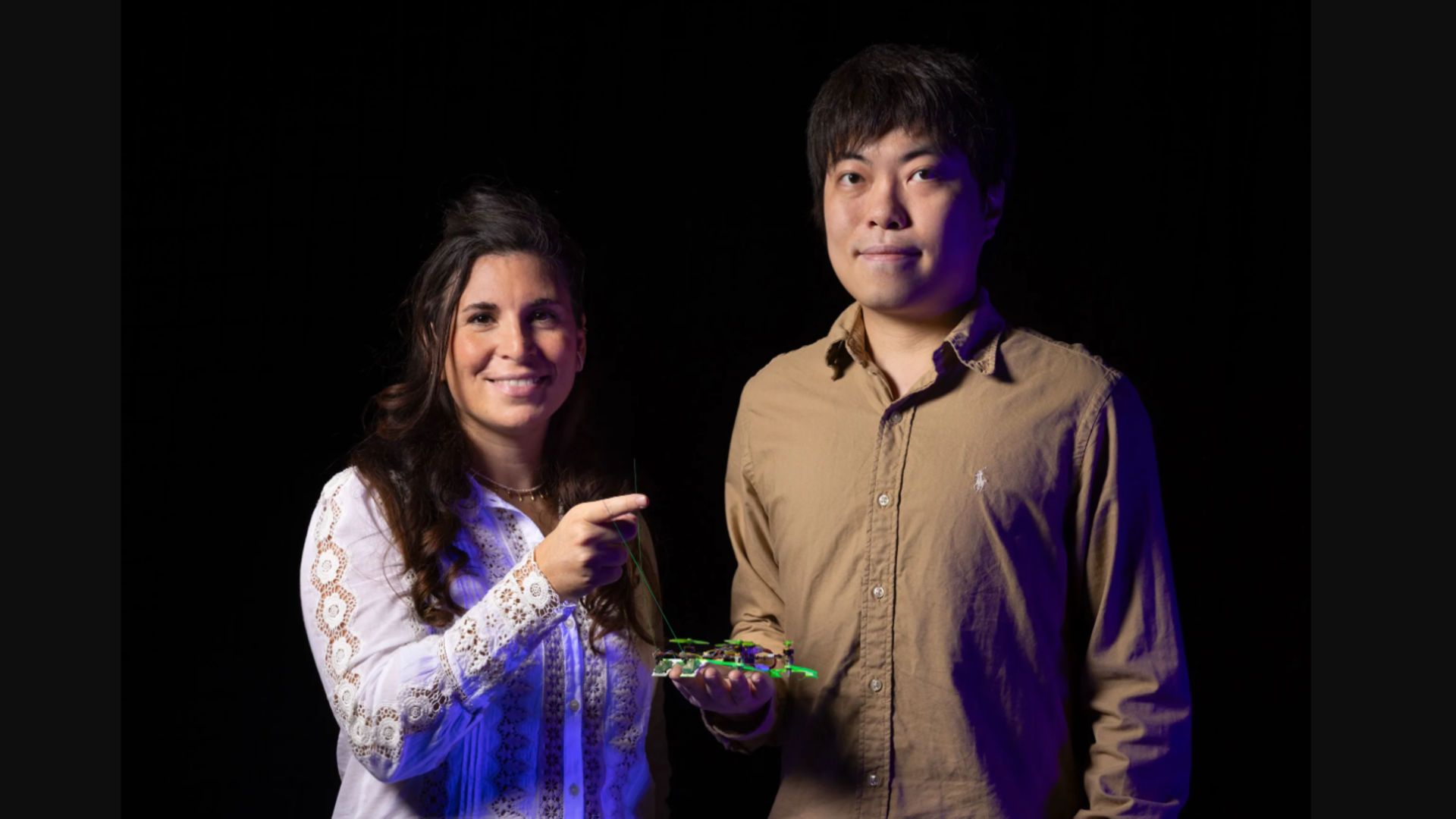

A team of researchers at Delft University of Technology has developed a lightweight drone that navigates using artificial whiskers instead of cameras or GPS. This innovation could transform how drones operate in challenging environments like collapsed buildings or areas with poor visibility.
30 SEC SUMMARY
- Delft University of Technology researchers developed a drone under 100g with artificial whiskers for navigation in dark, smoky, or GPS-denied areas.
- The drone uses pressure sensors and tactile feedback instead of cameras or GPS, processing data with just 34KB of memory.
- Inspired by rodent whiskers, the system could improve search and rescue operations in collapsed buildings or unstable environments.
- The technology addresses gaps where traditional sensors fail, offering a lightweight, low-power alternative.
TABLE OF CONTENTS
- A New Approach to Drone Navigation
- How the System Works
- Potential Use Cases
- What this means
- Key takeaways
- FAQ
- Sources
KEY HIGHLIGHTS
- The drone weighs under 100g and uses artificial whiskers to navigate where cameras or GPS are ineffective.
- Pressure sensors detect surface contact, enabling real-time navigation with minimal compute power.
- Onboard software uses just 34KB of memory, making the system highly efficient.
- Bio-inspired design mimics rodent whiskers, offering a novel approach to navigation in tight or visibility-limited spaces.
- Potential applications include search and rescue in collapsed buildings or areas with unreliable GPS.
A New Approach to Drone Navigation
According to TechRadar, a research team at Delft University of Technology in the Netherlands has developed a drone that uses artificial whiskers to navigate environments where traditional sensors struggle. The drone is designed for conditions like darkness, smoke, or dust, where cameras or GPS signals may be unreliable or unavailable.
Weighing less than 100 grams, the drone relies on tactile feedback rather than visual or satellite-based systems. Two thin filaments near the drone’s nose act as whiskers, detecting surfaces through physical contact.
How the System Works
The drone’s whiskers are equipped with miniature pressure sensors at their base. These sensors detect surface contact instantly, allowing the drone to navigate in real time. According to TechRadar, the onboard software processes this tactile data using only 34KB of memory, making it a lightweight and efficient solution.
The design is inspired by rodents and other mammals that use their facial whiskers to navigate confined or low-visibility environments. This bio-inspired approach enables the drone to operate in spaces where traditional sensors would fail.
Potential Use Cases
One of the most promising applications for this technology is search and rescue operations, particularly in unstable or collapsed buildings. TechRadar reports that such environments often pose challenges like tight spaces, poor visibility, and unreliable GPS signals, making this drone a potential tool for navigating these conditions.
The system could also serve as a complementary navigation method in scenarios where GPS is unavailable or visual data is difficult to interpret, such as in smoky or dusty areas.
What this means
LazyFounders analysis — our interpretation, not reported fact.
This development underscores how bio-inspired design can solve practical challenges in robotics and aerial navigation. For founders, it’s a reminder that not all sensing problems require complex or expensive solutions—sometimes, simplicity and efficiency win. Startups in drone technology, search and rescue, or industrial inspection could explore similar tactile systems to enhance reliability in environments where cameras or GPS are ineffective. The minimal hardware and software requirements also make it an attractive model for scaling or adapting to other use cases.
Key takeaways
- The drone weighs less than 100g and uses artificial whiskers for navigation in low-visibility or GPS-denied environments.
- Pressure sensors at the whisker base detect surface contact, enabling real-time navigation without cameras or GPS.
- Onboard software processes tactile data using only 34KB of memory, emphasizing efficiency.
- Inspired by rodents, the system could improve search and rescue operations in collapsed buildings or similar challenging conditions.
- The technology offers a lightweight, low-power alternative to traditional sensors in environments where they fail.
FAQ
How does the drone navigate without cameras or GPS?
The drone uses artificial whiskers with pressure sensors to detect physical contact with surfaces. This tactile feedback allows it to navigate environments where visual or GPS-based systems are ineffective.
What makes this drone’s design unique?
The drone’s design is inspired by rodents, which use whiskers to navigate tight or low-visibility spaces. Its lightweight (under 100g) and minimal software requirements (34KB memory) make it efficient and agile.
What are the potential applications for this technology?
The drone could be used in search and rescue operations, particularly in collapsed buildings or areas with unreliable GPS. It may also assist in environments like smoky or dusty areas where traditional sensors fail.
Related on LazyFounders
Sources
- TechRadar · 2026-09-24
This new drone comes with 'whiskers' to help it navigate in the dark or smoky and dusty areas like battlefields — and it weighs less than 100g
This story is an original summary and analysis written by LazyFounders from the reporting listed above. Facts are attributed to their original publishers; sections marked as analysis are LazyFounders's opinion. Where a source is in another language, facts were machine-translated and quotations are reported, not reproduced. Read the original coverage via the links.