
Geely Unveils 2,250 kW EV Charger, Setting New Industry Benchmark
Geely has unveiled a fifth-generation electric vehicle (EV) charging system capable of peaking at 2,250 kW, far exceeding the fastest chargers currently available on the market. The system promises to charge compatible Lynk & Co and Zeekr models from 10% to 70% in under five minutes, leveraging AI-driven optimization to manage battery health and performance. This launch arrives as competition in the ultra-fast charging space intensifies, with rivals like BYD rapidly expanding their networks across Europe.
LazyFounders
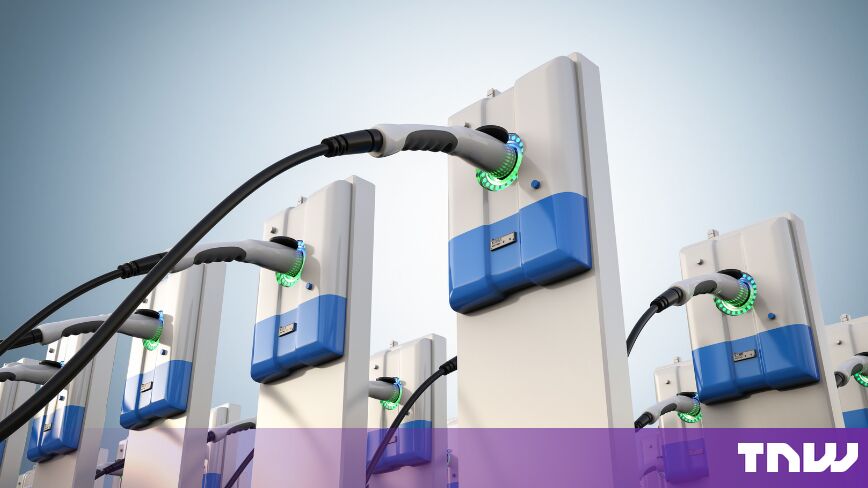

Geely has unveiled a fifth-generation electric vehicle (EV) charging system capable of peaking at 2,250 kW, far exceeding the fastest chargers currently available on the market. The system promises to charge compatible Lynk & Co and Zeekr models from 10% to 70% in under five minutes, leveraging AI-driven optimization to manage battery health and performance. This launch arrives as competition in the ultra-fast charging space intensifies, with rivals like BYD rapidly expanding their networks across Europe.
30 SEC SUMMARY
- Geely has unveiled a fifth-generation EV charging system capable of peaking at 2,250 kW, far exceeding current industry standards.
- The system claims to charge Lynk & Co and Zeekr EVs from 10% to 70% in four minutes and 30 seconds.
- EU regulations require charging pools to provide 600 kW by 2027, making Geely’s system significantly more powerful.
- Geely’s AI-driven Xingrui PowerMind optimizes charging by predicting cell temperatures and using lithium-ion pulse restoration.
- Competitors like BYD are also expanding their ultra-fast charging networks, with plans to deploy 3,000 chargers in Europe.
TABLE OF CONTENTS
- Geely’s Ultra-Fast Charging System
- Regulatory Context and Competitive Landscape
- Battery Longevity and Industry Standards
- What this means
- Key takeaways
- FAQ
- Sources
KEY HIGHLIGHTS
- Geely has launched a fifth-generation EV charging system with a peak capacity of 2,250 kW, the fastest announced to date.
- The system is claimed to charge Lynk & Co and Zeekr EVs from 10% to 70% in four minutes and 30 seconds.
- EU regulations require charging pools to provide 600 kW by 2027, far below Geely’s new system’s capacity.
- Geely’s AI system, Xingrui PowerMind, optimizes charging by predicting cell temperatures and using lithium-ion pulse restoration.
- BYD has deployed over 10,000 ultra-fast chargers globally and plans 3,000 in Europe, intensifying competition in the EV charging market.
Geely’s Ultra-Fast Charging System
According to The Next Web, Geely has revealed a fifth-generation electric vehicle (EV) charging system with a peak capacity of 2,250 kW. This significantly surpasses the fastest charging systems currently available on the market, which max out at around 400 kW in Western markets.
The system is reported to charge compatible models—specifically Lynk & Co and Zeekr EVs—from 10% to 70% in four minutes and 30 seconds. Geely’s AI-driven technology, Xingrui PowerMind, is said to play a key role in this performance. The system predicts cell temperatures and adjusts charging speeds to maintain an average of 55 degrees Celsius, with a maximum threshold of 65 degrees. It also employs a lithium-ion pulse restoration technique to mitigate battery degradation caused by repeated fast charging.
Regulatory Context and Competitive Landscape
The European Union’s Alternative Fuels Infrastructure Regulation (AFIR) mandates that charging pools along its core network must provide a total of 400 kW by the end of this year, increasing to 600 kW—with at least two charging points of 150 kW each—by 2027. Geely’s new system exceeds these requirements by nearly four times, positioning it as a potential leader in ultra-fast charging infrastructure.
However, Geely has not disclosed plans for the number of chargers it intends to deploy or their locations. This leaves uncertainty about how quickly the technology might scale or become accessible to consumers.
Competitors are also making strides in this space. According to The Next Web, BYD has already deployed over 10,000 Flash chargers globally, each capable of delivering up to 1,500 kW per connector. The company plans to install 3,000 additional chargers in Europe, starting with 300 in the United Kingdom. This aggressive expansion underscores the intensifying race to dominate ultra-fast charging networks.
Additionally, The Next Web reports that Volvo and Polestar—both part of the same corporate group as Geely—have not been offered access to this new charging technology. This suggests a strategic decision by Geely to prioritize its Lynk & Co and Zeekr brands.
Battery Longevity and Industry Standards
The European Union’s Euro 7 regulations, which take effect on November 29, introduce new requirements for battery longevity in EVs. Under these rules, batteries must retain 80% of their capacity after five years or 100,000 kilometers, and 72% after eight years or 160,000 kilometers. These standards aim to address concerns about battery degradation, particularly with the rise of ultra-fast charging.
Geely’s Xingrui PowerMind system is designed to address these challenges by using AI to optimize charging cycles. The system’s lithium-ion pulse restoration technique is reportedly capable of reactivating lithium that plates onto the anode during fast charging, potentially extending battery life.
BYD has demonstrated the durability of its batteries under extreme conditions. According to The Next Web, the company charged a single vehicle 350 times in nine days, reporting a battery retention rate of 98.7%. This highlights the progress being made in balancing fast charging with battery longevity.
What this means
LazyFounders analysis — our interpretation, not reported fact.
Geely’s announcement is a bold statement in the race to dominate ultra-fast EV charging, a critical bottleneck for mass adoption. While the 2,250 kW peak is impressive—nearly four times the power required for an entire EU charging pool by 2027—it also raises questions about practicality. Such high-power charging demands significant upgrades to grid infrastructure, battery thermal management, and vehicle design.
For founders and operators in the EV space, this move signals two things: first, the bar for charging speed is being raised aggressively, and second, AI-driven optimization is becoming a key differentiator. However, the real challenge isn’t just building faster chargers; it’s ensuring they’re reliable, widely accessible, and compatible with existing and future vehicles. Geely’s decision to limit this technology to Lynk & Co and Zeekr models—excluding Volvo and Polestar—also suggests a strategic play to bolster its own brands rather than a broad industry shift.
Competitors like BYD are already scaling their ultra-fast networks, so Geely’s next steps—particularly around deployment and partnerships—will be critical to watch.
Key takeaways
- Geely’s new 2,250 kW charging system is the fastest announced to date, significantly outpacing current industry standards.
- The system claims to charge compatible EVs from 10% to 70% in under five minutes, though real-world conditions may vary.
- EU regulations require charging pools to provide 600 kW by 2027, making Geely’s system a potential game-changer for infrastructure planning.
- Geely’s AI-driven Xingrui PowerMind optimizes charging by predicting cell temperatures and using lithium-ion pulse restoration to extend battery life.
- BYD is rapidly expanding its ultra-fast charging network, with 3,000 chargers planned for Europe, intensifying competition in the space.
FAQ
How does Geely’s 2,250 kW charger compare to current industry standards?
Geely’s new charging system is significantly more powerful than current industry standards. The fastest chargers available in Western markets today peak at around 400 kW, while the EU’s AFIR regulations require charging pools to provide only 600 kW by 2027. Geely’s system exceeds this requirement by nearly four times.
Which vehicles are compatible with Geely’s new charging system?
According to reports, Geely’s fifth-generation charging system is compatible with its Lynk & Co and Zeekr models. Volvo and Polestar, despite being part of the same corporate group, have not been offered access to this technology.
What role does AI play in Geely’s charging system?
Geely’s Xingrui PowerMind AI system optimizes the charging process by predicting cell temperatures and adjusting charging speeds to maintain an average of 55 degrees Celsius, with a ceiling of 65 degrees. It also uses a lithium-ion pulse restoration technique to reduce battery degradation caused by fast charging.
How does BYD’s charging network compare to Geely’s?
BYD has deployed over 10,000 Flash chargers globally, with plans to install 3,000 more in Europe. Each of BYD’s chargers can deliver up to 1,500 kW per connector, making them similarly powerful but more widely available than Geely’s current offering.
What are the EU’s Euro 7 regulations, and how do they impact EV charging?
The Euro 7 regulations, effective November 29, set new standards for battery longevity in EVs. Batteries must retain 80% of their capacity after five years or 100,000 kilometers, and 72% after eight years or 160,000 kilometers. These rules aim to ensure that ultra-fast charging does not significantly degrade battery life.
Related on LazyFounders
Sources
- The Next Web · 2026-09-23
Geely’s new EV charger hits 2.25 megawatts
This story is an original summary and analysis written by LazyFounders from the reporting listed above. Facts are attributed to their original publishers; sections marked as analysis are LazyFounders's opinion. Where a source is in another language, facts were machine-translated and quotations are reported, not reproduced. Read the original coverage via the links.