
Meta Unveils Lightweight VR Glasses to Challenge Apple Vision Pro
Meta took the wraps off its next-generation VR Glasses at the Connect event, rolling out a lightweight, $1,300 device aimed at challenging Apple’s Vision Pro in the mixed-reality market. Set to launch in Spring 2027, the glasses combine portability with a suite of entertainment and productivity features, including 5K displays, gesture-based controls, and content partnerships with major streaming platforms.
LazyFounders
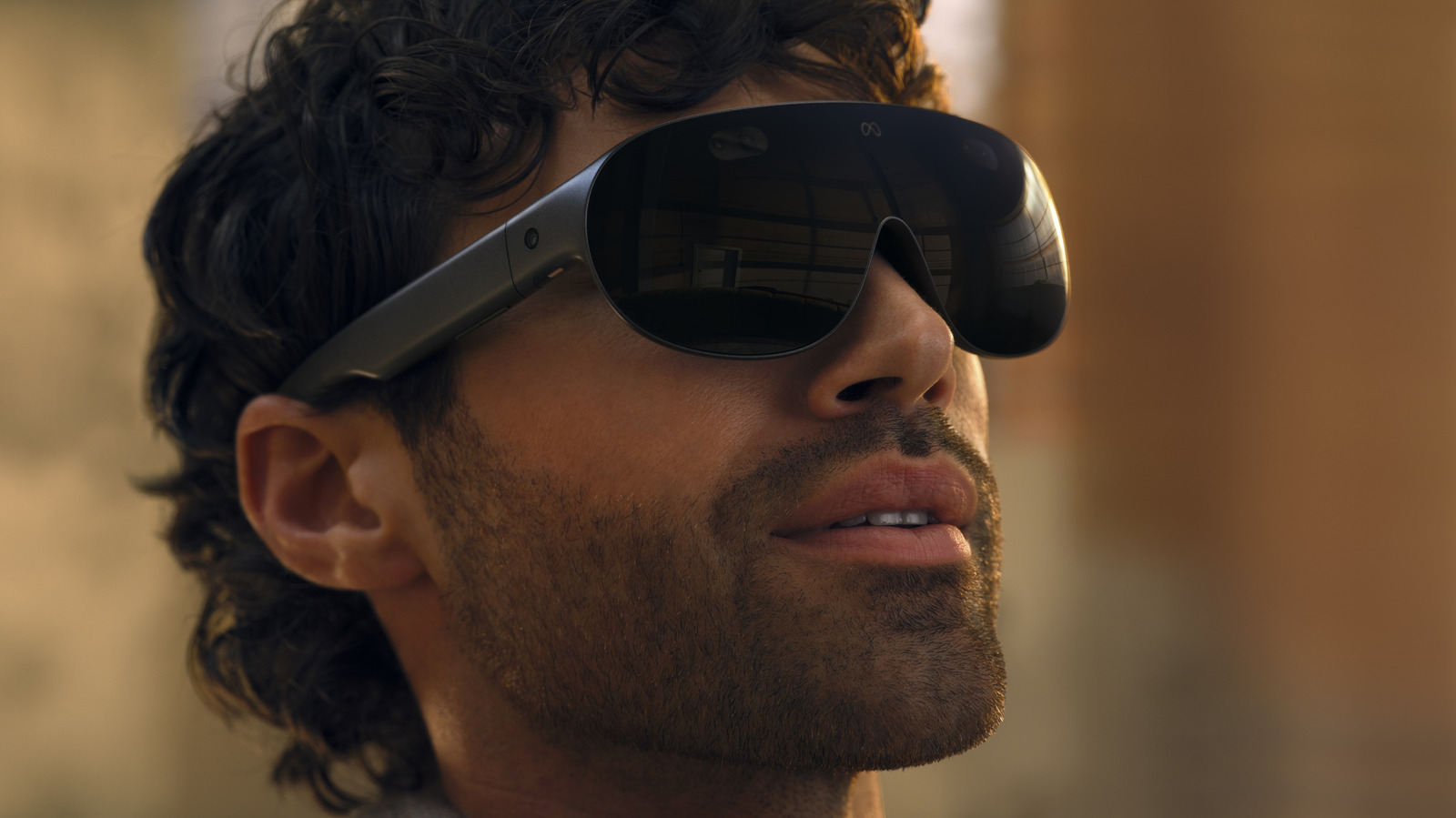

Meta took the wraps off its next-generation VR Glasses at the Connect event, rolling out a lightweight, $1,300 device aimed at challenging Apple’s Vision Pro in the mixed-reality market. Set to launch in Spring 2027, the glasses combine portability with a suite of entertainment and productivity features, including 5K displays, gesture-based controls, and content partnerships with major streaming platforms.
30 SEC SUMMARY
- Meta unveiled its next-generation VR Glasses at the Connect event, targeting a Spring 2027 launch at $1,300.
- The device weighs just 100 grams, significantly lighter than Apple’s Vision Pro, and features a 5K micro-OLED display.
- Meta positions the VR Glasses as an all-in-one productivity and entertainment device with gesture-based controls and biometric authentication.
- The glasses include an external compute puck with 12GB RAM and 128GB storage, powered by Qualcomm’s Snapdragon XR2 Gen 3 chip.
- Content partnerships with National Geographic, Disney+, and Peacock will offer 3D films and immersive video experiences.
TABLE OF CONTENTS
- Meta Unveils Lightweight VR Glasses
- Hardware and Features
- Content and Productivity Focus
- Competitive Landscape
- What this means
- Key takeaways
- FAQ
- Sources
KEY HIGHLIGHTS
- Meta revealed its next-gen VR Glasses at the Connect event, priced at $1,300 with a Spring 2027 launch.
- The device weighs 100 grams, making it significantly lighter than Apple’s Vision Pro, which costs $3,700.
- Features include a 5K micro-OLED display, gesture-based controls, and biometric iris recognition for security.
- Meta is partnering with Disney+, Peacock, and National Geographic to offer 3D films and immersive video content.
- The VR Glasses are powered by Qualcomm’s Snapdragon XR2 Gen 3 chip, with an external compute puck for processing.
Meta Unveils Lightweight VR Glasses
At its Connect event, Meta introduced its next-generation VR Glasses, a lightweight virtual reality device priced at $1,300. According to Engadget, the glasses are set to launch in Spring 2027 and are positioned as a more affordable and portable alternative to Apple’s Vision Pro.
The device resembles oversized sunglasses and weighs just 100 grams (0.2 pounds), a fraction of the Vision Pro’s bulk. An external compute puck, weighing an additional 300 grams (0.6 pounds), handles processing power and connectivity.
Hardware and Features
The Meta VR Glasses feature a 5K micro-OLED display with a 120Hz refresh rate and a 70-degree horizontal field of view. According to Engadget, the device includes six external cameras for color passthrough and motion tracking, along with four internal cameras for eye tracking.
Gesture-based controls replace traditional controllers, enabled by the onboard cameras. The glasses also support biometric iris recognition for secure authentication.
Under the hood, the device runs on Qualcomm’s Snapdragon Reality Elite processor (XR2 Gen 3), paired with 12GB of RAM and 128GB of storage via the external compute puck. A microSD card slot allows for expandable storage.
Content and Productivity Focus
Meta is marketing the VR Glasses as an all-in-one device for entertainment and productivity. At launch, the company plans to offer over 75 games designed for hand-based interactions, along with hundreds of 3D films available for purchase or rent.
Content partnerships are a key part of Meta’s strategy. National Geographic will launch a 3D video app for the glasses in 2027, featuring 180-degree immersive experiences. Disney+ and Peacock will also support a 'VR Enhanced Cinema' format, with titles like Avengers: Infinity War and Star Wars: Episode IV slated for release in this format next year.
Competitive Landscape
Meta’s VR Glasses enter a market dominated by high-priced competitors like Apple’s Vision Pro, which launched at $3,500 and now retails for $3,700. According to Engadget, some critics have accused Meta of copying features from competitors, though the company’s focus on affordability and portability may appeal to a broader audience.
Recent leadership changes at Apple, including the departure of the Vision Pro’s lead, have raised questions about the future of its mixed-reality initiatives. Meta’s device, meanwhile, benefits from Qualcomm’s latest XR-focused chipset, which also powers Microsoft’s Surface lineup refresh.
What this means
LazyFounders analysis — our interpretation, not reported fact.
Meta’s VR Glasses represent a strategic bet on blending affordability, portability, and content to carve out a niche in the mixed-reality market. By undercutting Apple’s Vision Pro on price and weight, Meta is signaling its intent to prioritize accessibility—though whether consumers will embrace gesture-based controls and a separate compute puck remains an open question.
The emphasis on 3D content and immersive video from partners like National Geographic and Disney+ suggests Meta is leaning into entertainment as a key differentiator. For founders and operators, this launch underscores two trends: first, the mixed-reality space is far from settled, with room for new players to redefine standards; and second, hardware innovation alone isn’t enough—content ecosystems and partnerships will be critical to driving adoption.
The device’s reliance on Qualcomm’s XR2 Gen 3 chip also highlights the growing importance of specialized silicon in enabling lighter, more efficient form factors. If Meta’s bet pays off, it could pressure competitors to rethink their own hardware strategies, particularly around pricing and usability.
Key takeaways
- Meta’s VR Glasses are priced at $1,300, less than half the cost of Apple’s Vision Pro, which now retails for $3,700.
- The device is ultra-lightweight at 100 grams, with an additional 300-gram compute puck for processing power.
- Key features include 5K micro-OLED displays, gesture-based controls, biometric iris recognition, and 75+ hand-powered games at launch.
- Meta is emphasizing content partnerships, including 3D films from Disney+ and Peacock, and a National Geographic 3D video app.
- The Snapdragon XR2 Gen 3 processor aims to balance performance and efficiency for mixed-use scenarios.
FAQ
How much do Meta’s VR Glasses cost?
Meta’s VR Glasses are priced at $1,300, significantly lower than Apple’s Vision Pro, which costs $3,700.
What are the key features of Meta’s VR Glasses?
The device features a 5K micro-OLED display, gesture-based controls, biometric iris recognition, six external cameras for passthrough, and an external compute puck with 12GB RAM and 128GB storage.
When will Meta’s VR Glasses be available?
The glasses are scheduled to launch in Spring 2027.
How does Meta’s VR Glasses compare to Apple’s Vision Pro?
Meta’s device is lighter (100 grams vs. the Vision Pro’s substantially heavier build) and cheaper ($1,300 vs. $3,700). It also focuses on gesture-based controls and content partnerships, while the Vision Pro emphasizes premium hardware and integration with Apple’s ecosystem.
What content will be available on Meta’s VR Glasses?
Meta has partnered with National Geographic, Disney+, and Peacock to offer 3D films, immersive video apps, and a 'VR Enhanced Cinema' format for select titles.
Related on LazyFounders
Sources
- Engadget · 2026-09-23
Meta's $1,300 VR Glasses Look Like The Vision Pro Sequel Apple Should Be Making
This story is an original summary and analysis written by LazyFounders from the reporting listed above. Facts are attributed to their original publishers; sections marked as analysis are LazyFounders's opinion. Where a source is in another language, facts were machine-translated and quotations are reported, not reproduced. Read the original coverage via the links.
