
Astronomers Detect First Radio Signals from Exoplanet Beta Pictoris b
Astronomers have achieved a milestone in planetary science by detecting radio signals from an exoplanet for the first time. The signals, originating from Beta Pictoris b—a gas giant 63 light years away—offer unprecedented insights into the planet's magnetic field and its potential to sustain habitable conditions.
LazyFounders

Astronomers have achieved a milestone in planetary science by detecting radio signals from an exoplanet for the first time. The signals, originating from Beta Pictoris b—a gas giant 63 light years away—offer unprecedented insights into the planet's magnetic field and its potential to sustain habitable conditions.
30 SEC SUMMARY
- Astronomers have detected radio signals from the exoplanet Beta Pictoris b, located 63 light years away, marking the first such discovery beyond our solar system.
- The signals confirm the planet's magnetic field, estimated at 1,250 gauss—far stronger than Earth's 0.5 gauss.
- Beta Pictoris b is a gas giant 10 to 12 times the mass of Jupiter, and the signals align with its position, not its host star.
- This discovery offers new insights into planetary magnetic fields and their role in habitability.
- Radio astronomy techniques, including the use of distant quasars, were critical in verifying the signals' origin.
TABLE OF CONTENTS
- First Radio Signals Detected from an Exoplanet
- Insights into Magnetic Fields and Habitability
- Advancements in Radio Astronomy
- What this means
- Key takeaways
- FAQ
- Sources
KEY HIGHLIGHTS
- First definitive detection of radio signals from an exoplanet, Beta Pictoris b, located 63 light years away.
- Signals confirmed to originate from the planet, not its host star, using distant quasars as reference points.
- Beta Pictoris b is a gas giant with a magnetic field strength of ~1,250 gauss, far stronger than Earth's.
- Discovery provides new insights into planetary magnetic fields and their role in habitability.
- Radio astronomy techniques prove critical for studying exoplanets in extreme environments.
First Radio Signals Detected from an Exoplanet
Astronomers have reported the first definitive detection of radio signals from an exoplanet, specifically Beta Pictoris b, a gas giant located approximately 63 light years from Earth. According to Gizmodo, the signals were faint, repeating bursts originating from the Beta Pictoris star system.
The signals were confirmed to align with the position of Beta Pictoris b rather than its host star. This alignment was verified using distant quasars as reference points, a technique that helped rule out alternative sources for the radio emissions.
Insights into Magnetic Fields and Habitability
Beta Pictoris b is a gas giant with a mass estimated to be 10 to 12 times that of Jupiter. Its magnetic field strength is roughly 1,250 gauss, which is thousands of times stronger than Earth's magnetic field, measured at about 0.5 gauss. This discrepancy highlights the extreme conditions present on the exoplanet.
The radio signals detected are believed to result from auroral radio emissions, similar to the processes that create auroras on Earth. These emissions provide direct evidence of the planet's magnetic field and its interaction with charged particles from its host star.
The planet's magnetic field is particularly significant because it acts as a shield against harmful radiation and stellar winds, factors that influence a planet's habitability. Understanding these fields could provide insights into the potential for life on other planets or their moons.
Advancements in Radio Astronomy
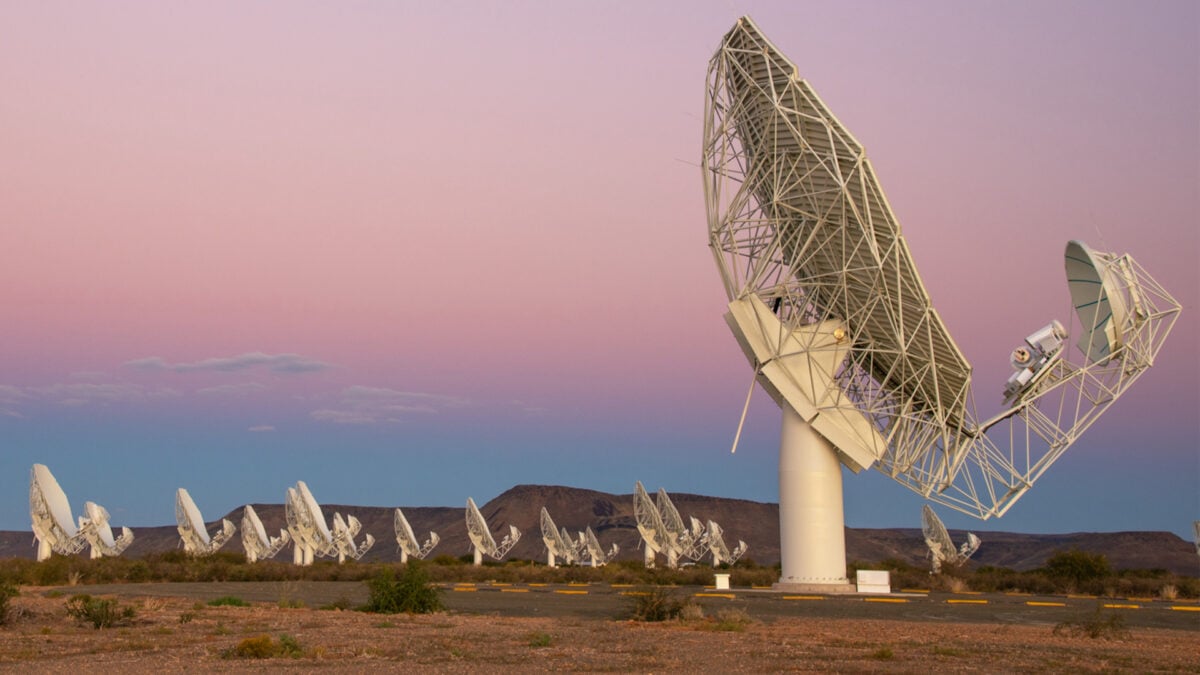
The discovery was made possible using the MeerKAT radio telescope array in South Africa. Radio astronomy techniques, such as those employed in this study, are becoming increasingly important for studying planets beyond our solar system.
This breakthrough demonstrates the potential of radio observations to reveal critical details about exoplanets, including their magnetic fields, atmospheric conditions, and even their internal structures. As technology advances, such observations could become a standard tool for planetary science.
What this means
LazyFounders analysis — our interpretation, not reported fact.
For founders and operators in the technology and space sectors, this discovery is a reminder of how rapidly scientific tools are advancing. The ability to detect radio signals from an exoplanet opens new avenues for research into planetary formation, magnetic fields, and even the potential for life beyond our solar system.
While this breakthrough is primarily scientific, it could have long-term implications for industries like space exploration, satellite technology, and telecommunications. For example, understanding magnetic fields at this scale could inform the development of shielding for spacecraft or improve models for space weather prediction.
For startups, this is also a signal that collaboration between private enterprises and research institutions is becoming increasingly valuable. Breakthroughs like this rely on advanced infrastructure—such as the MeerKAT radio telescope—and often require interdisciplinary expertise. If your business operates in adjacent fields, now might be the time to explore partnerships or innovative applications of this technology.
Key takeaways
- This is the first definitive detection of radio signals from an exoplanet, specifically Beta Pictoris b, located 63 light years away.
- The signals were confirmed to originate from the planet, not its host star, using advanced radio astronomy techniques.
- Beta Pictoris b is a gas giant with a mass 10 to 12 times that of Jupiter and a magnetic field strength of ~1,250 gauss.
- The discovery provides insights into planetary magnetic fields, which play a critical role in protecting planets from stellar radiation.
- Radio observations could become a key tool for studying exoplanets and their habitability in extreme environments.
FAQ
Why is the detection of radio signals from Beta Pictoris b significant?
This discovery is significant because it marks the first time radio signals have been definitively linked to an exoplanet. It provides direct evidence of the planet's magnetic field, which is crucial for understanding its structure, atmosphere, and potential habitability.
How was the origin of the radio signals confirmed?
The signals were confirmed to originate from Beta Pictoris b by aligning their position with the planet rather than its host star. Astronomers used distant quasars as reference points to rule out other potential sources of the radio emissions.
What does this discovery tell us about Beta Pictoris b's magnetic field?
The radio signals indicate that Beta Pictoris b has a magnetic field strength of roughly 1,250 gauss, which is significantly stronger than Earth's magnetic field. This suggests the planet experiences intense interactions with its host star's radiation and charged particles.
Could this discovery impact future space exploration or technology?
While primarily a scientific breakthrough, this discovery could have long-term implications for space exploration and technology. understanding planetary magnetic fields could inform the development of shielding for spacecraft, improve space weather models, and inspire new methods for studying exoplanets.
Related on LazyFounders
Sources
- Gizmodo · 2026-09-23
Astronomers Finally Pick Up Radio Signals From a Planet Beyond Our Solar System
This story is an original summary and analysis written by LazyFounders from the reporting listed above. Facts are attributed to their original publishers; sections marked as analysis are LazyFounders's opinion. Where a source is in another language, facts were machine-translated and quotations are reported, not reproduced. Read the original coverage via the links.
