
Alberta’s Referendum on Independence: Economic Promises and Risks
Alberta will hold a referendum on 19 October, offering residents the choice to remain in Canada or advance toward a formal binding vote on independence. The debate hinges on whether the province would be economically better off alone, with proponents touting tens of billions in potential savings and opponents warning of massive transition costs and economic instability.

Editor, Lazyfounder
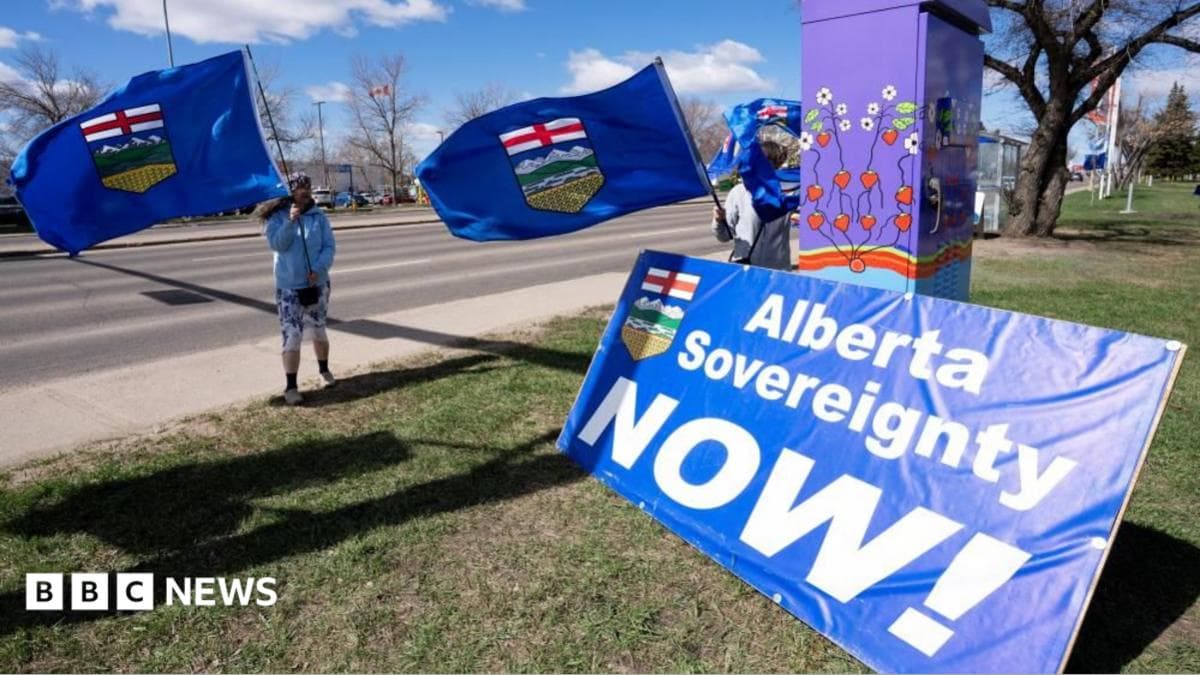
Alberta will hold a referendum on 19 October, offering residents the choice to remain in Canada or advance toward a formal binding vote on independence. The debate hinges on whether the province would be economically better off alone, with proponents touting tens of billions in potential savings and opponents warning of massive transition costs and economic instability.
30 SEC SUMMARY
- Alberta will hold a referendum on 19 October, offering residents the choice to remain in Canada or proceed toward a formal binding referendum on independence.
- Proponents argue independence would allow Alberta to retain more of its oil and gas wealth, while opponents warn of significant transition costs and economic uncertainty.
- A government report estimates separation costs between C$50bn and C$170bn over five years, with potential additional debt of C$258bn to C$333bn.
- Opinion polling shows 20% to 25% of Albertans support moving ahead with a binding separation referendum.
- Alberta's oil reserves are the fourth-largest in the world, with crude oil exports valued at C$142bn in 2025.
TABLE OF CONTENTS
- Referendum Details and Public Support
- Economic Arguments for Independence
- Economic Risks and Costs of Separation
- Logistical Challenges of Independence
- What this means
- Key takeaways
- FAQ
- Sources
KEY HIGHLIGHTS
- Alberta to hold referendum on 19 October, offering residents a choice between remaining in Canada or pursuing a future binding referendum on independence.
- Government report estimates separation costs between C$50bn and C$170bn over five years, with potential additional debt of C$258bn to C$333bn.
- Alberta’s oil reserves are the fourth-largest globally, with crude oil exports worth C$142bn in 2025.
- Opinion polling indicates 20% to 25% of Albertans support proceeding with a binding independence referendum.
- Pro-independence groups claim Alberta could save up to C$47bn annually by ending federal tax payments, but economists warn of economic risks.
Referendum Details and Public Support
On 19 October, Alberta will hold a referendum offering residents two choices: vote to remain in Canada or vote to proceed toward a formal binding referendum on independence at a later date. According to BBC News, this initial vote is non-binding but could set the stage for a future decision on separation.
Public opinion polling cited by BBC News indicates that 20% to 25% of Albertans support moving ahead with a binding referendum on independence. While this represents a minority, it suggests a significant base of support for further discussion.
Economic Arguments for Independence
Proponents of independence argue that Alberta would retain a larger share of its oil and gas wealth if it separated from Canada. The province’s oil reserves are the fourth-largest in the world, and crude oil exports were valued at C$142bn in 2025 alone, according to BBC News.
Since 2007, Alberta has contributed a net total of C$322bn to the federal government, averaging C$17bn annually. The Alberta Prosperity Project, a group advocating for independence, estimates that ending federal tax payments could save the province up to C$47bn per year. They also project an annual surplus of C$24bn to C$46bn after accounting for essential and new expenses.
Economic Risks and Costs of Separation
Opponents of independence warn of substantial transition costs and economic uncertainty. A report commissioned by the Alberta government estimates separation costs could range from C$50bn to C$170bn over five years. BBC News reports that some estimates suggest transition costs alone could reach as high as C$400bn.
Additional risks include potential debt obligations. The same report estimates that Alberta could be responsible for C$258bn to C$333bn in additional debt if it becomes independent. Economists also warn that separation could reduce Albertans’ disposable income by an average of 5.8% due to a projected hit to GDP and increased costs.
If Alberta’s economy suffered a 6% contraction post-independence—comparable to the economic impact of Brexit—it could shrink by C$62bn annually and result in the loss of 175,000 jobs, according to BBC News.
Logistical Challenges of Independence
Should Alberta proceed with independence, it would need to establish a range of new institutions and systems. According to BBC News, this includes agencies for managing taxes and national security, a constitution, legal and court systems, and pension plans. The province would also need to negotiate the division of federal assets, such as national parks and military bases, with the Canadian government.
Annual costs for national defence and international diplomacy alone are estimated at up to C$31.6bn, further complicating the financial viability of independence.
What this means
Lazyfounder analysis — our interpretation, not reported fact.
For founders and business operators, Alberta’s referendum reflects a broader trend of regional economic tensions within federations, particularly where resource wealth is concentrated. The debate highlights the risks of political uncertainty on investment and economic stability. If the referendum advances toward a binding vote, businesses in Alberta—especially those in oil and gas, agriculture, and related industries—may face volatility in policy, taxation, and market access.
The economic arguments mirror those seen in other separatist movements, such as Brexit: proponents focus on retained wealth and autonomy, while opponents emphasize transition costs and market disruptions. Even if independence does not materialize, the mere possibility could influence federal-provincial relations, regulatory frameworks, and long-term business planning. Founders should monitor this development not only for its direct impact on Alberta but as a case study in managing political risk in resource-dependent economies.
Key takeaways
- The referendum on 19 October is non-binding but could pave the way for a future formal vote on Alberta’s independence.
- Economic arguments for independence focus on retaining oil and gas wealth, while opponents highlight transition costs and potential economic instability.
- Estimated separation costs range from C$50bn to C$400bn, with additional debt and GDP contraction risks.
- Public support for a binding referendum remains a minority, with 20% to 25% of Albertans in favor.
- Alberta’s net contributions to Ottawa since 2007 total C$322bn, averaging C$17bn annually.
FAQ
What is the purpose of Alberta’s 19 October referendum?
The referendum offers Albertans the choice to either remain in Canada or proceed toward a formal binding referendum on independence at a later date. The vote itself is non-binding but could trigger further action depending on the outcome.
How much could Alberta save if it becomes independent?
The Alberta Prosperity Project estimates annual savings of up to C$47bn if the province stops paying federal taxes. However, this figure does not account for the costs of establishing new institutions or potential economic contractions.
What are the potential economic risks of Alberta’s independence?
Risks include transition costs estimated between C$50bn and C$400bn, potential additional debt of C$258bn to C$333bn, and a projected 5.8% reduction in disposable income for Albertans. A 6% economic contraction could also shrink the province’s GDP by C$62bn annually and eliminate 175,000 jobs.
What institutions would Alberta need to establish if it becomes independent?
An independent Alberta would need to create agencies for taxes, national security, and international diplomacy, as well as develop its own constitution, legal and court systems, and pension plans. It would also need to negotiate the division of federal assets like national parks and military bases.
How much support is there for Alberta’s independence?
Opinion polling reported by BBC News shows that 20% to 25% of Albertans support proceeding with a binding referendum on independence.
Related on Lazyfounder
Sources
- BBC News (Tech & Business) · 2026-10-07
What independence could mean for oil-rich Alberta's economy
This story is an original summary drafted with AI by Lazyfounder from the reporting listed above and checked by automated validation. Facts are attributed to their original publishers; sections marked as analysis are Lazyfounder's. Where a source is in another language, facts were machine-translated and quotations are reported, not reproduced. Read the original coverage via the links, and see our AI policy and corrections policy.

About the author
Editor, Lazyfounder
Tarun Mottlia edits LazyFounders, covering Indian startups, funding rounds, AI and product launches. Every story on the site is AI-assisted and checked against its cited sources before publication.
More stories by Tarun MottliaGet the LazyFounder Brief
Startup, funding and AI news in a five-minute read. Join the early-access list.
