
YouTube’s Mukbang Crackdown: Creators Delete Videos Over Ad Revenue Fears
YouTube creators, particularly in South Korea’s mukbang community, are deleting videos and pausing uploads due to the platform’s crackdown on eating-disorder content. The 2023 policy update, which targets 'imitable behavior' in disordered eating content, has led to monetization suspensions and self-censorship among creators reliant on ad revenue.

Editor, Lazyfounder
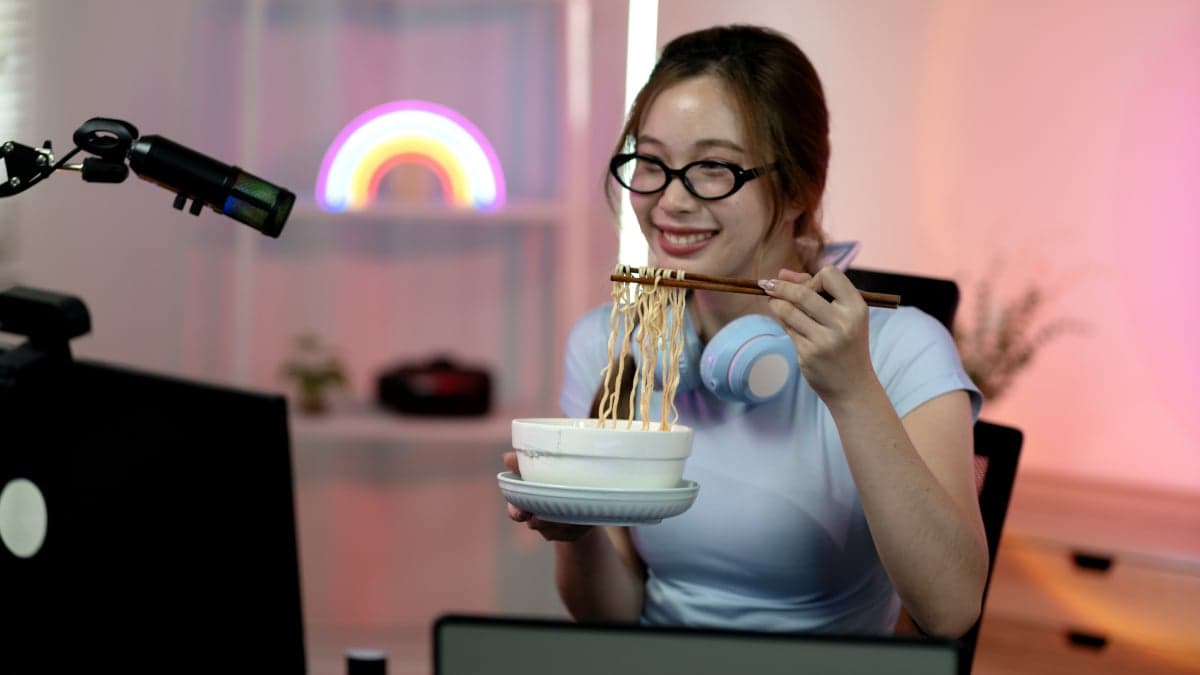
YouTube creators, particularly in South Korea’s mukbang community, are deleting videos and pausing uploads due to the platform’s crackdown on eating-disorder content. The 2023 policy update, which targets 'imitable behavior' in disordered eating content, has led to monetization suspensions and self-censorship among creators reliant on ad revenue.
30 SEC SUMMARY
- YouTube’s 2023 policy update targets eating-disorder content, affecting mukbang creators’ ad revenue eligibility.
- Creators like Salppaejo and Miso faced monetization suspensions, leading to video deletions and self-censorship.
- Over 30 billion views for mukbang videos were recorded globally from January to July 2024.
- Guidelines prohibit content depicting binge eating, weight tracking, or extreme dieting, impacting creators’ revenue.
- A 2026 study highlighted concerns about YouTube’s algorithm recommending harmful content to young viewers.
TABLE OF CONTENTS
- YouTube’s Policy Update Targets Eating-Disorder Content
- Creators Respond with Video Deletions and Self-Censorship
- Popularity and Risks of Mukbang Content
- Background: Platform Policies and Creator Monetization
- What this means
- Key takeaways
- FAQ
- Sources
KEY HIGHLIGHTS
- YouTube’s 2023 policy update prohibits eating-disorder content featuring 'imitable behavior,' affecting ad revenue for mukbang creators.
- Creators like Salppaejo and Miso faced monetization suspensions, leading to the deletion of hundreds of videos.
- Videos with 'mukbang' in the title garnered over 30 billion views globally from January to July 2024.
- A 2026 study found YouTube’s algorithm recommended harmful eating-disorder content to young viewers.
YouTube’s Policy Update Targets Eating-Disorder Content
In 2023, YouTube updated its guidelines to prohibit content depicting eating disorders that feature 'imitable behavior,' such as binge eating, hiding food, or tracking weight loss. According to Mashable, the policy aims to prevent vulnerable viewers from copying harmful actions. However, it has also created uncertainty for mukbang creators, whose content often overlaps with these restrictions.
The platform’s guidelines now state that videos focused on disordered eating behaviors 'will not receive ad revenue.' Examples of prohibited content include references to binge eating, displaying a lowest weight or BMI, or documenting weight-loss progress. These rules have forced creators to review their content for potential violations or risk losing monetization.
Creators Respond with Video Deletions and Self-Censorship
YouTube creators in South Korea, a major hub for mukbang content, are deleting videos and pausing uploads in response to monetization suspensions. Salppaejo, a creator with approximately 447,000 subscribers, reported that YouTube suspended their channel’s monetization, according to Mashable.
Miso, a diet and food YouTuber with about 100,000 subscribers, faced a temporary suspension after a guideline violation. In response, she deleted 339 out of 667 videos, citing concerns that content featuring weight-loss routines or specific diet figures could pose risks to vulnerable viewers. Many creators are now erring on the side of caution, removing older content or avoiding new uploads to prevent further penalties.
The lack of clarity in enforcement has led to widespread self-censorship. Creators are preemptively removing content that might violate guidelines, even if it doesn’t explicitly promote disordered eating.
Popularity and Risks of Mukbang Content
Mukbang, a Korean term combining 'eating' and 'broadcast,' originated as a live format in South Korea and has since become a global phenomenon. Videos with 'mukbang' in the title accumulated over 30 billion views worldwide from January to July 2024, underscoring the genre’s massive popularity.
Despite its popularity, concerns about the genre’s impact on viewers have grown. A 2026 study highlighted issues with YouTube’s recommendation algorithm, which reportedly suggested harmful eating-disorder content to young viewers. This has intensified scrutiny of mukbang and similar genres, prompting platforms to impose stricter guidelines.
While the policy changes aim to protect audiences, they also risk alienating creators who depend on ad revenue. The lack of transparency in enforcement has left many unsure of how to adapt, leading to a cautious approach to content creation.
Background: Platform Policies and Creator Monetization
YouTube’s Partner Program allows creators to earn a share of ad revenue from eligible videos, even years after upload. This model has enabled niche creators, including mukbang broadcasters, to build sustainable income streams. However, policy changes can disrupt these revenue streams, forcing creators to reassess their strategies.
The crackdown on eating-disorder content reflects broader trends in social media regulation, where platforms face pressure to address harmful content while balancing creator livelihoods. Similar tensions have emerged in other areas, such as political content or extremism, where policy enforcement can have unintended consequences for monetization.
What this means
Lazyfounder analysis — our interpretation, not reported fact.
YouTube’s recent policy changes reflect a growing tension between platform responsibility and creator livelihoods. For founders and operators in the digital content space, this situation serves as a cautionary tale about the risks of relying solely on ad revenue from a single platform.
The unpredictability of policy enforcement—where creators are left guessing what content might trigger demonetization—underscores the need for diversification. Startups in the creator economy should consider building tools that help creators monetize through multiple channels, such as subscriptions, sponsorships, or direct fan support.
Additionally, this crackdown highlights the broader challenge platforms face in balancing safety with creator freedom. For operators, it’s a reminder that algorithmic recommendations and policy enforcement can have unintended consequences, particularly when dealing with sensitive topics like eating disorders. Clearer guidelines and appeals processes could mitigate some of these issues, but the onus remains on creators to adapt.
Key takeaways
- YouTube’s 2023 policy update targets eating-disorder content, affecting mukbang creators’ ad revenue eligibility.
- Creators are deleting videos and pausing uploads due to monetization suspensions and unclear enforcement.
- Mukbang videos remain highly popular, with over 30 billion views globally in 2024.
- The policy aims to protect vulnerable viewers but risks collateral damage to creators reliant on ad revenue.
- A 2026 study raised concerns about YouTube’s algorithm recommending harmful content despite policy changes.
FAQ
What is mukbang?
Mukbang is a Korean term that combines 'eating' and 'broadcast.' It refers to livestreams or videos where creators consume large quantities of food while interacting with their audience. The genre originated in South Korea and has gained global popularity on platforms like YouTube.
Why are YouTube creators deleting mukbang videos?
Creators are deleting videos due to YouTube’s 2023 policy update, which prohibits eating-disorder content featuring 'imitable behavior.' Violations can lead to monetization suspensions, prompting creators to remove potentially risky content to avoid penalties.
How does YouTube’s policy affect ad revenue?
YouTube’s policy states that videos depicting disordered eating behaviors, such as binge eating or weight tracking, will not receive ad revenue. This has led to suspensions for creators who rely on ad revenue for income.
Is mukbang banned on YouTube?
No, YouTube has not banned mukbang outright. However, creators must ensure their content complies with guidelines targeting eating-disorder behaviors to maintain ad revenue eligibility.
What alternatives do creators have if their videos are demonetized?
Creators can diversify their income streams by exploring sponsorships, merchandise sales, subscriptions, or direct fan support. However, these alternatives require additional effort and may not fully replace lost ad revenue.
Related on Lazyfounder
Sources
- Mashable · 2026-09-29
Mukbang creators are deleting videos and pausing uploads. Here’s why.
This story is an original summary drafted with AI by Lazyfounder from the reporting listed above and checked by automated validation. Facts are attributed to their original publishers; sections marked as analysis are Lazyfounder's. Where a source is in another language, facts were machine-translated and quotations are reported, not reproduced. Read the original coverage via the links, and see our AI policy and corrections policy.

About the author
Editor, Lazyfounder
Tarun Mottlia edits LazyFounders, covering Indian startups, funding rounds, AI and product launches. Every story on the site is AI-assisted and checked against its cited sources before publication.
More stories by Tarun MottliaGet the LazyFounder Brief
Startup, funding and AI news in a five-minute read. Join the early-access list.
