
Xona raises $250 million at $2.45 billion valuation for satellite navigation network
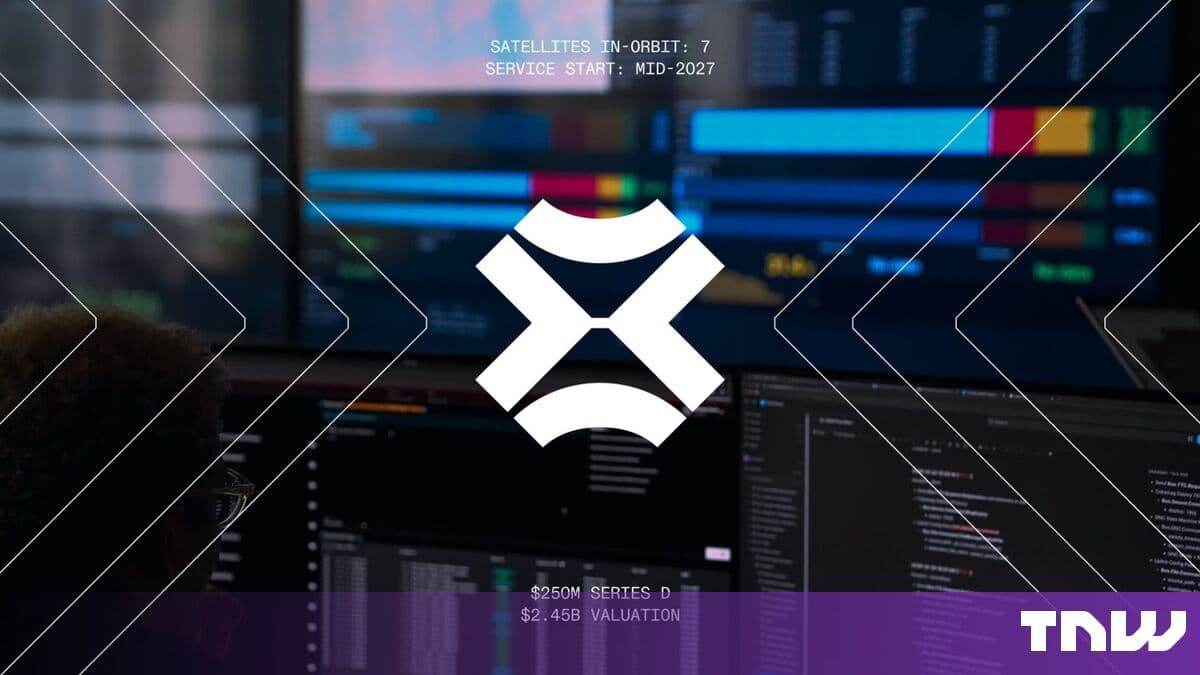
Xona, a California-based startup developing a private satellite navigation network, has raised $250 million in a Series D funding round at a $2.45 billion valuation. The round was led by Future Ventures, whose co-founder Steve Jurvetson has now backed the company alongside SpaceX and Planet.

Editor, Lazyfounder
30 SEC SUMMARY
- Xona raised $250 million in a Series D round at a $2.45 billion valuation, led by Future Ventures.
- The startup aims to rival GPS with its Pulsar satellite network, offering stronger, more accurate signals.
- Xona launched six Pulsar satellites this month, with beta service planned for early 2027.
- The Federal Communications Commission granted Xona the first licence for a private navigation network.
TABLE OF CONTENTS
KEY HIGHLIGHTS
- $250 million Series D round at a $2.45 billion valuation, led by Future Ventures.
- Total funding since 2019 exceeds $570 million.
- Xona launched six Pulsar satellites in October 2026, with beta service set for early 2027.
- Pulsar signals are designed to resist jamming and work indoors, compatible with existing commercial receivers.
- FCC authorised Xona’s constellation in August 2026, the first licence for a private navigation network.
Funding and valuation
Xona, a California-based startup, has raised $250 million in a Series D funding round at a valuation of $2.45 billion. The round was led by Future Ventures, the venture capital firm co-founded by Steve Jurvetson. This brings Xona’s total funding since 2019 to over $570 million, according to The Next Web.
Pulsar: A GPS alternative
Xona is developing Pulsar, a satellite navigation network designed to compete with GPS by offering stronger, more precise signals. The company claims Pulsar’s signals are accurate to the centimetre, resistant to jamming, and capable of reaching receivers indoors—features existing commercial receivers can support without hardware modifications.
The startup launched its first test satellite, Pulsar-0, last year. This month, it deployed six additional Pulsar satellites, four of which will enable beta service in several countries starting in early 2027.
Xona’s factory in Burlingame, California, is scaled to produce multiple satellites per week for its full constellation.
Regulatory milestone and competition
In August 2026, the Federal Communications Commission authorised Xona’s satellite constellation, marking the first licence for a private navigation network intended to operate alongside government systems like GPS. This regulatory approval positions Xona as a pioneer in the commercial satellite navigation space.
Xona faces competition from companies like Amazon and Open Cosmos, both of which are exploring low Earth orbit satellite networks. However, Xona’s FCC licence and early deployment give it a head start in the race to deploy a private navigation alternative.
Investor backing and leadership
Future Ventures led the Series D round, with managing partner Steve Jurvetson reportedly investing $78.5 million. Jurvetson has previously backed only two other space companies: SpaceX (communications) and Planet (Earth imaging). His participation underscores confidence in Xona’s potential to dominate the navigation segment of the satellite market.
Brian Manning, Xona’s co-founder and CEO, is a former SpaceX engineer. Manning’s leadership and the company’s technical team have been pivotal in advancing the Pulsar network’s development and securing regulatory approval.
What this means
Lazyfounder analysis — our interpretation, not reported fact.
Xona’s $250 million Series D and its FCC licence for a private navigation network signal a shift in the satellite industry, where commercial players are now positioned to compete with long-standing government systems like GPS. For founders and operators, this funding round and regulatory milestone highlight three key takeaways:
-
Validation of private navigation: The FCC’s approval of Xona’s constellation is a rare green light for a commercial alternative to GPS. This regulatory endorsement could encourage other startups to explore private navigation networks, particularly in sectors like autonomous vehicles, logistics, and IoT, where signal reliability and precision are critical.
-
Investor confidence in space infrastructure: Steve Jurvetson’s backing—alongside his investments in SpaceX and Planet—suggests that space infrastructure is maturing beyond communications and imaging into navigation. For startups in aerospace or satellite technology, this round demonstrates that investors are willing to bet big on companies building foundational infrastructure, not just end-user applications.
-
Competitive pressure in low Earth orbit: With Amazon and Open Cosmos also active in this space, Xona’s progress adds urgency for startups working on satellite-based technologies. The ability to deploy satellites quickly and secure regulatory approvals will be critical differentiators. Founders in this space should watch how Xona’s beta service performs in 2027, as early adoption could set a benchmark for customer expectations around signal strength, accuracy, and reliability.
Key takeaways
- Xona’s FCC licence is the first for a private navigation network, potentially opening opportunities for startups in sectors reliant on GPS alternatives.
- The $250 million round signals strong investor interest in space infrastructure beyond communications and imaging.
- Early deployment of Pulsar satellites gives Xona a competitive edge over rivals like Amazon and Open Cosmos.
Related on Lazyfounder
Sources
- The Next Web · 2026-10-22
Xona raises $250M at a $2.45B valuation to build a rival to GPS
This story is an original summary drafted with AI by Lazyfounder from the reporting listed above and checked by automated validation. Facts are attributed to their original publishers; sections marked as analysis are Lazyfounder's. Where a source is in another language, facts were machine-translated and quotations are reported, not reproduced. Read the original coverage via the links, and see our AI policy and corrections policy.

About the author
Editor, Lazyfounder
Tarun Mottlia edits LazyFounders, covering Indian startups, funding rounds, AI and product launches. Every story on the site is AI-assisted and checked against its cited sources before publication.
More stories by Tarun MottliaGet the LazyFounder Brief
Startup, funding and AI news in a five-minute read. Join the early-access list.
