

Xera Robotics builds modular underwater robots for infrastructure inspection
Xera Robotics, founded in Chennai, has developed modular underwater robots designed for inspecting dams, ports, pipelines, and other critical infrastructure. The startup also produces electric boat propulsion systems, leveraging its expertise in marine robotics to serve industries ranging from defence to environmental monitoring.

Editor, Lazyfounder
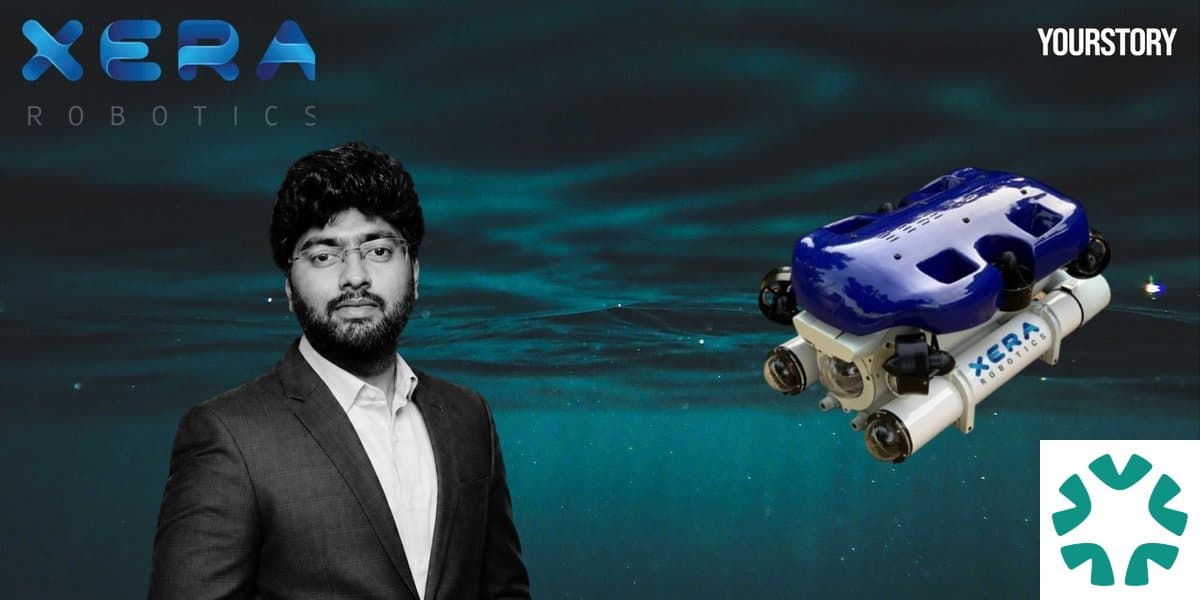
TABLE OF CONTENTS
What Xera Robotics builds
Xera Robotics, based in Chennai, develops modular underwater robots under its DeepDive series, specifically the ROMAR (Remotely Operated Marine Robot) platform. The company describes ROMAR as a modular system with interchangeable payloads, position hold, obstacle avoidance, and 360-degree rotation capabilities. These features are designed to address varied underwater inspection tasks, from infrastructure and dams to pipelines and environmental monitoring.
The startup also produces electric propulsion systems for boats, which share engineering principles with its underwater robots. This dual product line allows Xera Robotics to apply its expertise in marine robotics to both inspection and propulsion markets.
Target markets and use cases
According to the company, its DeepDive ROMAR platform is used for infrastructure inspection, including dams, bridges, and pipelines. It also serves defence applications such as harbour security and surveillance, environmental monitoring of reefs and pollution, and industrial inspection in oil and gas, shipping, and power plants.
The modular design of ROMAR allows it to adapt to different tasks. For example, the same vehicle can inspect a bridge pier one week and monitor a reef the next, making it a cost-effective solution for organisations that require occasional underwater inspections.
The company has also highlighted confined-space inspection, such as storage tanks, where sending human divers is hazardous and undesirable.
Funding and backing
Xera Robotics has raised funds through two rounds, both undisclosed. The first was a grant from StartupTN, the Tamil Nadu government’s startup agency, awarded in November 2022. The second was a seed round in July 2025, with investors including IIMK LIVE, the incubator at IIM Kozhikode, and Cochin Shipyard.
The company has received recognition from the Tamil Nadu government, including an award from the state’s MSME minister at the Global Investors Meet and participation in the state’s startup convention in Coimbatore. Tamil Nadu has been active in supporting hardware startups through grants and its startup agency.
Corporate filings show the startup’s paid-up capital at Rs 1.11 lakh. No customers, contracts, or deliveries have been publicly announced.
Competitive landscape in Chennai
Chennai has emerged as a hub for marine robotics, with multiple startups in the city competing for underwater inspection contracts. The city’s proximity to ports, shipyards, and offshore infrastructure makes it a strategic location for companies like Xera Robotics.
The modular approach taken by Xera Robotics distinguishes it from competitors offering purpose-built robots for specific tasks. While modular systems present engineering challenges—such as optimising for multiple configurations—they offer cost advantages for buyers with varied inspection needs.
What this means
Lazyfounder analysis — our interpretation, not reported fact.
Xera Robotics’ focus on modularity reflects a broader trend in hardware startups: building flexible platforms that can serve multiple markets rather than single-use products. For founders and operators, this approach reduces customer acquisition costs by appealing to a wider range of industries, though it demands trade-offs in performance optimisation for any single use case.
The startup’s presence in Chennai’s growing marine robotics ecosystem is noteworthy. For other startups in the region, it signals both opportunities—such as partnerships with local ports or shipyards—and competition for talent and contracts. Tamil Nadu’s direct support for hardware startups, including grants and visibility at state events, may also encourage founders in similar sectors to explore public backing.
However, the lack of disclosed customers or contracts suggests Xera Robotics is still in the early stages of commercialisation. Its trajectory could serve as a case study for hardware startups navigating the gap between product development and market adoption, particularly in industries where buyers prefer proven solutions.
Sources
- yourstory.com
Xera Robotics builds modular underwater robots for inspecting dams, ports and pipelines
This story is an original summary drafted with AI by Lazyfounder from the reporting listed above and checked by automated validation. Facts are attributed to their original publishers; sections marked as analysis are Lazyfounder's. Where a source is in another language, facts were machine-translated and quotations are reported, not reproduced. Read the original coverage via the links, and see our AI policy and corrections policy.

About the author
Editor, Lazyfounder
Tarun Mottlia edits LazyFounders, covering Indian startups, funding rounds, AI and product launches. Every story on the site is AI-assisted and checked against its cited sources before publication.
More stories by Tarun MottliaGet the LazyFounder Brief
Startup, funding and AI news in a five-minute read. Join the early-access list.
