
Microsoft Rolls Out Disc-to-Digital for Xbox and AI Security Tools for Enterprises
Microsoft has launched two major initiatives: a Disc-to-Digital program for Xbox users and a suite of AI security tools for enterprises. The Disc-to-Digital feature allows gamers to convert physical discs into digital licenses, though with limitations. Meanwhile, Microsoft is addressing AI risks with Guardian Agents and dynamic security controls, as well as expanding its sovereign cloud for compliance with European regulations.

Editor, Lazyfounder
30 SEC SUMMARY
- Microsoft has launched Disc-to-Digital for Xbox, allowing users to convert physical game discs into digital licenses for Xbox One and Xbox Series X consoles.
- The feature, now out of beta, has limitations, including incomplete game support and unclear licensing terms.
- Microsoft introduced Guardian Agents, a security framework to monitor and control AI agents in enterprise environments, addressing risks like overprivileged access and unpredictable behavior.
- New AI-driven security tools, such as Dynamic Permissions and Dynamic Conditional Access, aim to limit AI agents' access and dynamically adjust their risk levels.
- Microsoft is expanding its sovereign cloud with tools like Data Guardian to comply with European regulations and enhance data control.
TABLE OF CONTENTS
KEY HIGHLIGHTS
- Microsoft’s Disc-to-Digital feature lets Xbox users convert physical game discs into digital licenses for Xbox One and Xbox Series X consoles.
- Disc-to-Digital is available to all users after beta testing, with no Xbox Game Pass subscription required.
- Not all games are supported; first-party titles like Halo and Forza Horizon work, but third-party and older titles may not.
- Digital licenses are tied to the user’s Xbox account, but users must retain physical discs to maintain access.
- Microsoft introduced Guardian Agents to monitor AI agents in enterprises, treating them as "agentic insiders" with potential risks.
- New security tools like Dynamic Permissions and Dynamic Conditional Access limit AI agents' access and adjust permissions based on risk scores.
- Microsoft’s sovereign cloud now includes Data Guardian and Production Touch Ledger for EU and EFTA customers, enhancing data control and compliance.
Xbox Disc-to-Digital: How It Works
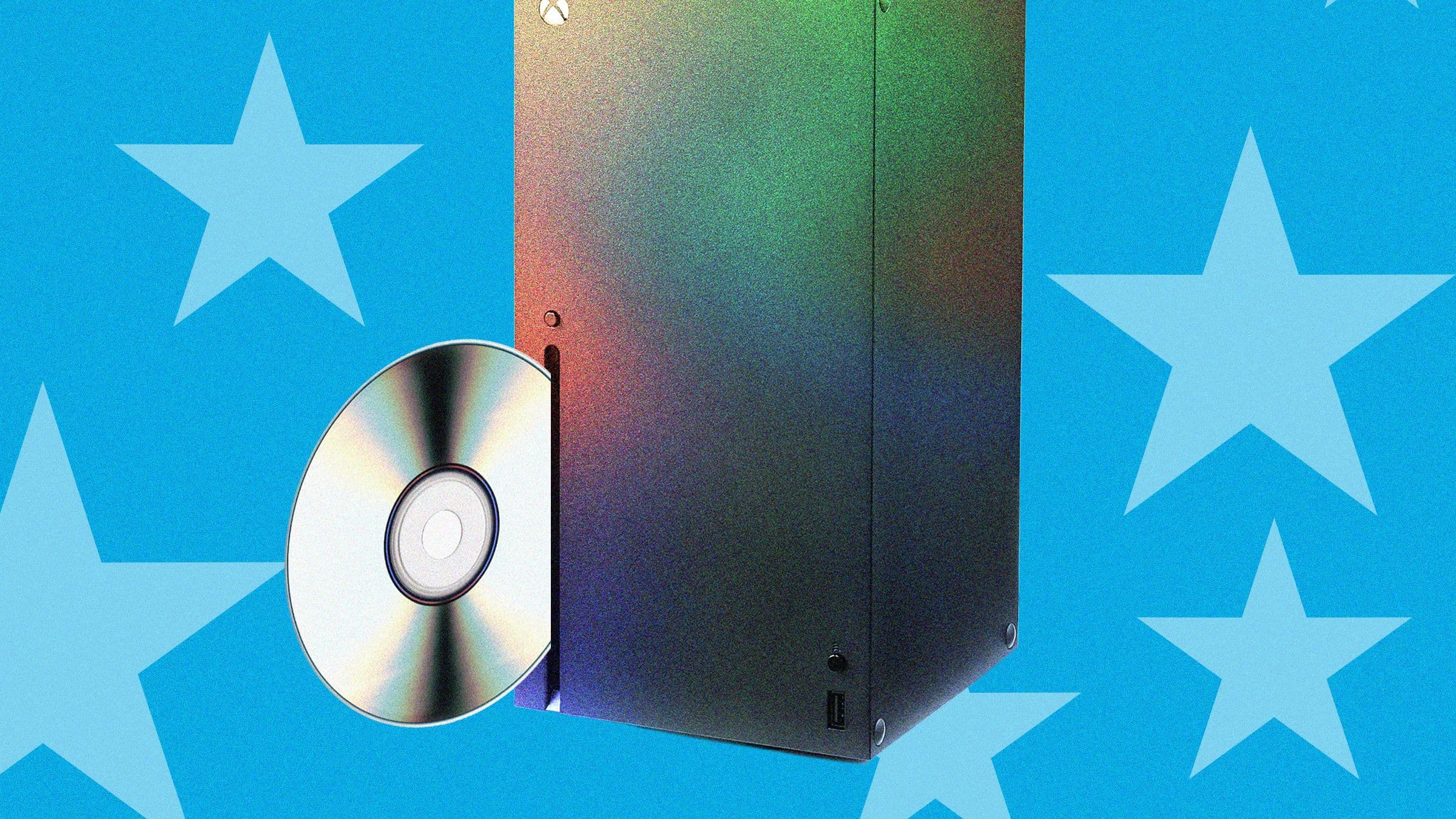
Microsoft has released Disc-to-Digital, a feature allowing Xbox One and Xbox Series X users to claim digital licenses for physical game discs. The feature is now available to all users after beta testing with Xbox Insiders.
To use Disc-to-Digital, users select the "Claim Digital License" option while hovering over a game tile in their library. The feature does not require an Xbox Game Pass subscription and works on Xbox One consoles with a disc drive.
However, Disc-to-Digital has limitations. Microsoft has not published a list of supported games, and compatibility varies. First-party titles like Halo and Forza Horizon are supported, but older or third-party games, such as Fallout 4 and Dead Rising 3, may not be.
Digital licenses are tied to the user’s Xbox account, not the console. Microsoft advises users to retain their physical discs, as the company has not clarified whether periodic re-insertion is required to maintain the digital license.
The feature is limited to Xbox One and Xbox Series X games. Xbox 360 titles are not supported. Digitized Xbox One games can be played on Xbox Series consoles, but the reverse is not true. Access to digitized games on PC or cloud gaming depends on whether the title is part of Microsoft’s Play Anywhere catalog.
AI Security: Guardian Agents and Dynamic Controls
Microsoft has introduced Guardian Agents, a security framework designed to monitor and manage risks posed by AI agents in enterprise environments. The tool is part of Project Perception, a platform launched earlier this year to address AI-driven cybersecurity threats.
Guardian Agents treat AI agents as "agentic insiders," recognizing that they require extensive access to data and systems but can behave unpredictably. Frontier AI models, according to Microsoft, cannot be fully trusted due to their unpredictability, even if they are not malicious.
To mitigate risks, Microsoft has rolled out Dynamic Permissions, which ensures AI agents receive only the access necessary for a specific task and for the duration of that task. Dynamic Agent Risk assigns a continuously updated risk score to each agent, while Dynamic Conditional Access adjusts permissions or restricts actions as risk levels rise.
Microsoft can now detect 60 types of AI agents on employee devices, including Anthropic’s Claude Code, OpenAI’s Codex, and GitHub Copilot. Guardian Agents investigate changes in risk scores and can recommend or apply containment measures, such as isolating an agent’s runtime.
Satya Nadella, Microsoft’s CEO, emphasized the need to separate the "supply of intelligence" from "authority over it." He warned that enterprises should not outsource responsibility for AI actions, even if model providers offer assurances of safety.
Sovereign Cloud Expands with Data Guardian
Microsoft is enhancing its sovereign cloud with new tools to comply with European regulations and address concerns about data control. The updates include Data Guardian, a feature that ensures a trusted European partner oversees Microsoft engineers’ remote access to customers’ production systems.
Production Touch Ledger will maintain immutable records of access, preventing unauthorized changes. Customers in the European Union and European Free Trade Association (EFTA) can now hold the master key for their data on their own hardware, providing greater control over data security.
Most new tools run on Azure Local, a version of Microsoft’s cloud hosted in customers’ own data centers. Foundry Local and GitHub Enterprise Local, which can operate fully offline, are now generally available. Microsoft 365 Local is in preview for approved customers, allowing organizations to link to their own SharePoint and Exchange servers.
The Sovereign Control Panel, entering public preview at Microsoft’s Ignite conference in November, provides a dashboard to monitor system status and flag compliance gaps. Microsoft has partnered with 29 companies, including Bleu, Delos Cloud, Mistral, Nvidia, and Dell, to support these efforts.
Hardware and Pricing Challenges
Microsoft’s new Surface Laptop Ultra, priced at $2,600, reflects the rising cost of enterprise hardware driven by AI capabilities. The company is reportedly developing a more affordable 12-inch Surface Laptop to compete with Apple’s rumored MacBook Neo, which is expected to cost $700.
High component costs, particularly for memory and AI-specific hardware, are also impacting the next-gen Xbox console, codenamed Project Helix. The console is projected to cost between $1,200 and $1,800, with a handheld version expected for the 2027 holiday season and a full release in 2028.
Xbox CEO Asha Sharma hinted at a "family" of Project Helix devices, suggesting a broader strategy to reach 1 billion daily users, up from the current 100 million. However, rising costs and potential price hikes could pose challenges for Microsoft’s gaming division.
Developing: what is not yet confirmed
The following is reported but has not been independently confirmed.
Microsoft has not provided a definitive list of games supported by Disc-to-Digital, leaving users to discover compatibility on a case-by-case basis.
The company has not clarified whether digital licenses require periodic re-verification by re-inserting the physical disc. Users are advised to retain their discs until more information is available.
Disc-to-Digital does not guarantee access to digitized games on PC or cloud gaming. Availability depends on whether the game is included in Microsoft’s Play Anywhere catalog.
What this means
Lazyfounder analysis — our interpretation, not reported fact.
For Xbox users, Disc-to-Digital is a step toward simplifying game collections, but its limitations—such as incomplete game support and unclear licensing terms—may frustrate some. Founders and operators should note that Microsoft’s approach reflects a broader trend: offering convenience while retaining control over access and compatibility. This could serve as a case study for balancing user experience with technical and legal constraints.
For enterprises, Microsoft’s Guardian Agents and dynamic security tools signal a shift in how AI risks are managed. The idea of treating AI agents as "insiders" with potential risks is gaining traction, and Microsoft’s framework could become a benchmark for other companies. Founders building AI-driven products should prioritize transparency in how agents operate and interact with data, as well as implementing safeguards to prevent unintended actions.
The expansion of Microsoft’s sovereign cloud highlights the growing importance of compliance, particularly in regulated markets like Europe. Companies operating in these regions should take note of tools like Data Guardian, which offer greater control over data access and auditing. This reflects a broader trend of customers demanding more sovereignty over their data, especially as AI and cloud computing become more integrated into business operations.
Key takeaways
- Disc-to-Digital simplifies game collection management but lacks universal support, so check compatibility before converting discs.
- Retain physical discs after digitization, as Microsoft has not clarified if periodic re-verification is required to maintain digital licenses.
- AI agents in enterprise environments require robust oversight—dynamic permissions and risk scoring can help mitigate unintended actions.
- Microsoft’s sovereign cloud tools offer greater control over data access and compliance, particularly for regulated industries in Europe.
- High hardware costs, driven by AI and component demands, may impact pricing for next-gen devices like the Xbox Project Helix.
Related on Lazyfounder
Sources
- WIRED · 2026-10-19
How the Xbox’s Disc-to-Digital Program Works - Mashable · 2026-10-19
Everything AI allows you to do in Windows 11 that saves you time - The Next Web · 2026-10-19
Microsoft adds tools to limit and monitor AI agents in Microsoft 365 E7 - TechCrunch · 2026-10-19
Microsoft says AI agents are like insider threats as ‘frontier models can’t be trusted’ - SiliconANGLE · 2026-10-19
Microsoft targets the ‘agentic insider’ with new controls for rogue AI agents - The Next Web · 2026-10-20
Microsoft adds EU access oversight and offline AI to its sovereign cloud - TechRadar · 2026-10-20
Microsoft admits 'frontier models can't be trusted', unveils new security tools to treat AI agents as insider threats - Gizmodo · 2026-10-20
The Next, Tiniest Microsoft Surface Laptop Could Actually Be Affordable - Engadget · 2026-10-20
The Next Xbox Might Cost $1,800, Report Says
This story is an original summary drafted with AI by Lazyfounder from the reporting listed above and checked by automated validation. Facts are attributed to their original publishers; sections marked as analysis are Lazyfounder's. Where a source is in another language, facts were machine-translated and quotations are reported, not reproduced. Read the original coverage via the links, and see our AI policy and corrections policy.

About the author
Editor, Lazyfounder
Tarun Mottlia edits LazyFounders, covering Indian startups, funding rounds, AI and product launches. Every story on the site is AI-assisted and checked against its cited sources before publication.
More stories by Tarun MottliaGet the LazyFounder Brief
Startup, funding and AI news in a five-minute read. Join the early-access list.
