
Archaeologists link reused Roman sarcophagus at Westminster Abbey to two 11th-century abbots
Researchers have narrowed the identity of a body interred in a reused Roman sarcophagus at Westminster Abbey to two 11th-century abbots, Ælfwig or Wulfnoth. Carbon-14 dating and osteological analysis revised earlier assessments, providing new details about the occupant’s age and health.

Editor, Lazyfounder
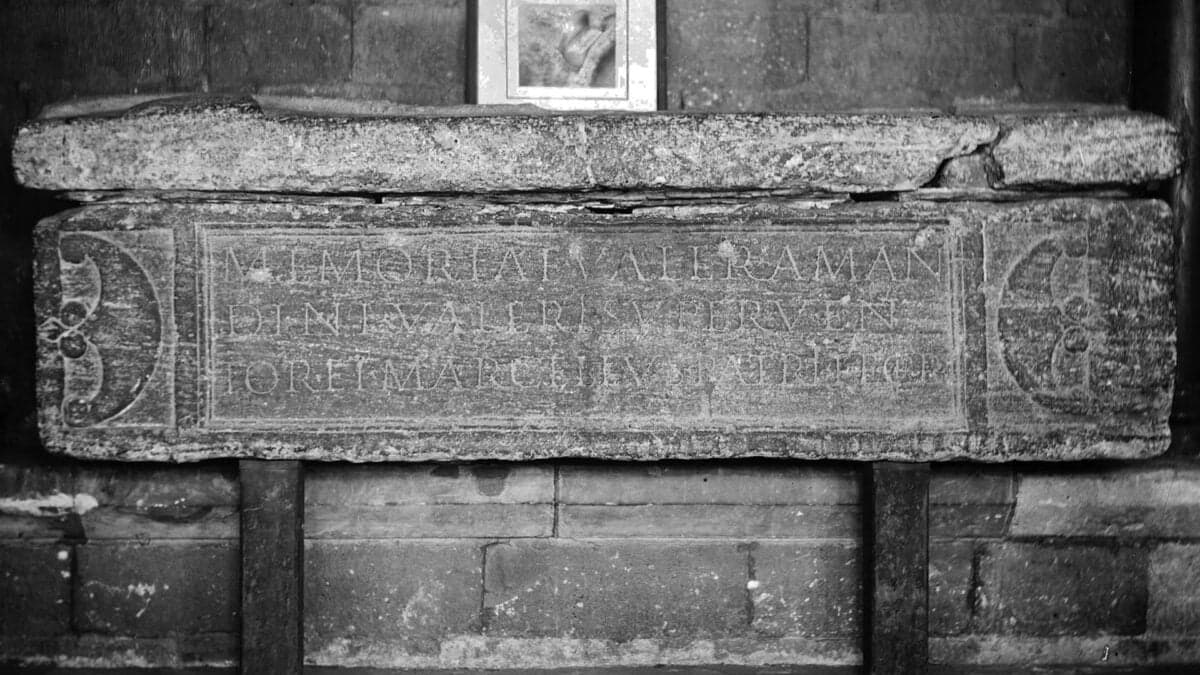
Discovery of the reused sarcophagus
A Roman-era sarcophagus discovered over 200 years ago near Westminster Abbey was originally inscribed for Valerius Amandinus, a figure from Londinium, according to Gizmodo. The sarcophagus was repurposed in the 11th century, with a new lid in late Anglo-Saxon style added to it.
Narrowing the identity of the occupant
Osteological analysis and carbon dating have narrowed the identity of the sarcophagus’s occupant to two 11th-century abbots of Westminster Abbey: Ælfwig and Wulfnoth. Warwick Rodwell, consulting archaeologist at Westminster Abbey, considers Ælfwig the more likely candidate due to his long tenure and burial at the abbey.
The remains were initially thought to belong to someone under 30, but carbon dating of a bone sample placed the individual’s death between 987 and 1052 CE. Osteologist James Young Langthorne’s analysis revised the age estimate to between 35 and 49, supported by evidence of osteoarthritis.
Historical context and complications
The sarcophagus was accidentally disturbed by workmen in 1820, complicating efforts to study the remains. Despite this, the honor of burial in a fine sarcophagus with a 6-foot Latin cross suggests the deceased held a position of significance, likely an abbot.
The research, published in the Journal of the British Archaeological Association, highlights the challenges of interpreting historically disturbed sites but provides new insights into medieval burial practices at Westminster Abbey.
What this means
Lazyfounder analysis — our interpretation, not reported fact.
This discovery underscores the value of modern archaeological techniques—such as carbon dating and osteology—in revisiting historical artifacts and correcting long-held assumptions. For researchers and institutions involved in historical preservation, it demonstrates how even disturbed or previously studied remains can yield new insights when re-examined with updated methods. While not directly tied to the startup or business world, the findings remind us of the importance of evidence-based analysis in challenging established narratives, a principle applicable to industries reliant on data and historical trends.
Sources
- Gizmodo · 2026-10-23
Someone Reused This Roman Sarcophagus. We May Finally Know Who’s Inside
This story is an original summary drafted with AI by Lazyfounder from the reporting listed above and checked by automated validation. Facts are attributed to their original publishers; sections marked as analysis are Lazyfounder's. Where a source is in another language, facts were machine-translated and quotations are reported, not reproduced. Read the original coverage via the links, and see our AI policy and corrections policy.

About the author
Editor, Lazyfounder
Tarun Mottlia edits LazyFounders, covering Indian startups, funding rounds, AI and product launches. Every story on the site is AI-assisted and checked against its cited sources before publication.
More stories by Tarun MottliaGet the LazyFounder Brief
Startup, funding and AI news in a five-minute read. Join the early-access list.
